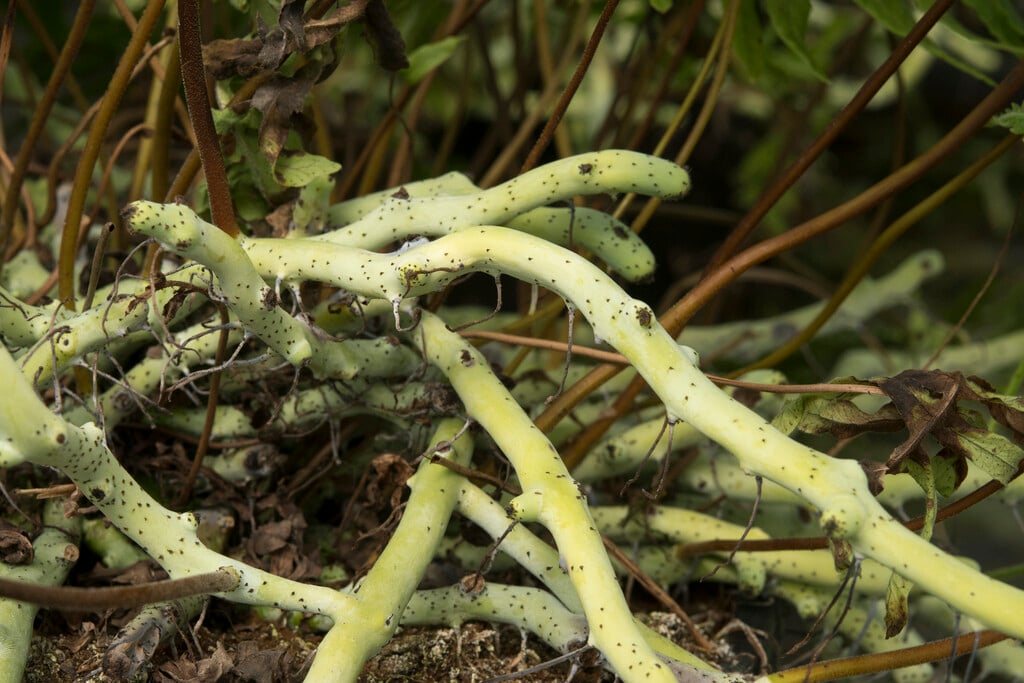
Polypodiodes formosana

RHS Plant Profile
caterpillar fern
caterpillar fern visionspictures.com

Other common names

grub fern

Synonyms

Polypodium formosanum
Goniophlebium formosanum

Award of Garden Merit
Ferns

An epiphytic evergreen fern, with a creeping, blue-green rhizome and pinnatifid pale green fronds to 50cm long, held on straw-coloured stalks

Position

Partial shade

Soil Types

Sand

Max Height

0.1-0.5 metres

Max Spread

0.5-1 metres

Size

Time to Maturity
2–5 years
Max Spread
0.5-1 metres
Max Height
0.1-0.5 metres

Growing Conditions

Sand
Moisture
Moist but well–drained
pH
Acid or Alkaline or Neutral

Position

Partial shade
Aspect
East–facing or West–facing
Exposure
Sheltered
Hardiness
H3

Colour & Scent

Season Stem Flower Foliage Fruit
Spring
Summer
Autumn
Winter

Botanical Details

Family
Polypodiaceae
Native to GB/Ireland
No
Foliage
Evergreen
Habit
Spreading branched
Genus
Name Status
Correct
Plant Range
China, Taiwan, Japan

How to Grow

Cultivation

May be grown outdoors in the mildest areas of the UK if well-protected in winter; plant in moderately fertile, well-drained gritty soil, or in containers that can be moved indoors over winter. In colder areas, grow under glass, in equal parts fine-grade bark, perlite and charcoal See how to grow tender ferns outdoors

Propagation

Propagate by spores, or by division in spring or early summer

Suggested planting locations and garden types

  • Houseplants
  • Sub-tropical
  • Conservatory and greenhouse

Pruning

No pruning required

Pests

Generally pest-free

Diseases

Generally disease-free