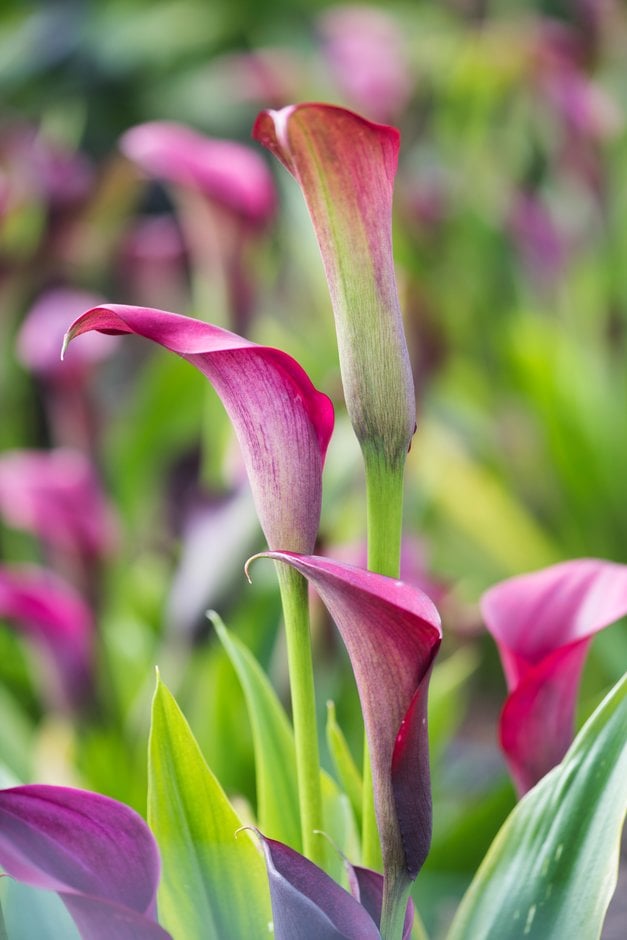
Zantedeschia 'Choco Queen'

RHS Plant Profile
arum lily 'Choco Queen'
arum lily 'Choco Queen' RHS / Joanna Kossak
Bedding Conservatory Greenhouse

A clump-forming, tuberous perennial with lance-shaped green leaves flecked with white. Each flowering stem produced in summer bears a purple to dark pink spathe surrounding the small cluster of yellow flowers

Position

Full sun

Soil Types

Clay, Loam

Max Height

0.5-1 metres

Max Spread

0.1-0.5 metres

Size

Time to Maturity
2–5 years
Max Spread
0.1-0.5 metres
Max Height
0.5-1 metres

Growing Conditions

Clay Loam
Moisture
Moist but well–drained or Poorly–drained
pH
Acid or Alkaline or Neutral

Position

Full sun
Aspect
South–facing or West–facing
Exposure
Sheltered
Hardiness
H1C

Colour & Scent

Season Stem Flower Foliage Fruit
Spring
Summer
Autumn
Winter

Botanical Details

Family
Araceae
Native to GB/Ireland
No
Foliage
Deciduous
Habit
Clump forming
Potentially harmful
Harmful if eatenskin/eye irritant. Wear gloves and other protective equipment when handling. Pets: Harmful if eatenskin/eye irritant - for further information and contact numbers regarding pets, see the HTA guide to potentially harmful plants
Genus
Zantedeschia can be deciduous or semi-evergreen, tuberous perennials with lance-shaped or arrow-shaped leaves and tiny yellow flowers forming a dense spike-like spadix, with a showy, hood-like spathe, sometimes followed by orange berry-like fruits
Name Status
Unresolved

How to Grow

Cultivation

Plant tubers in peat-free, loam-based compost in spring. Plants may be grown under glass all year, at a minimum of 10°C; alternatively use as bedding plants in summer once all risk of frost has passed. Keep well-watered in the growing season. Bring outdoor pots indoors, or lift and store tubers in a frost-free place, in autumn. See Zantedeschia cultivation

Propagation

Propagate by division in spring

Suggested planting locations and garden types

  • Patio and container plants
  • Sub-tropical
  • City and courtyard gardens
  • Flower borders and beds

Pruning

No pruning required

Pests

May be susceptible to aphids, glasshouse red spider mite or glasshouse whitefly

Diseases

May be susceptible to fungal rots