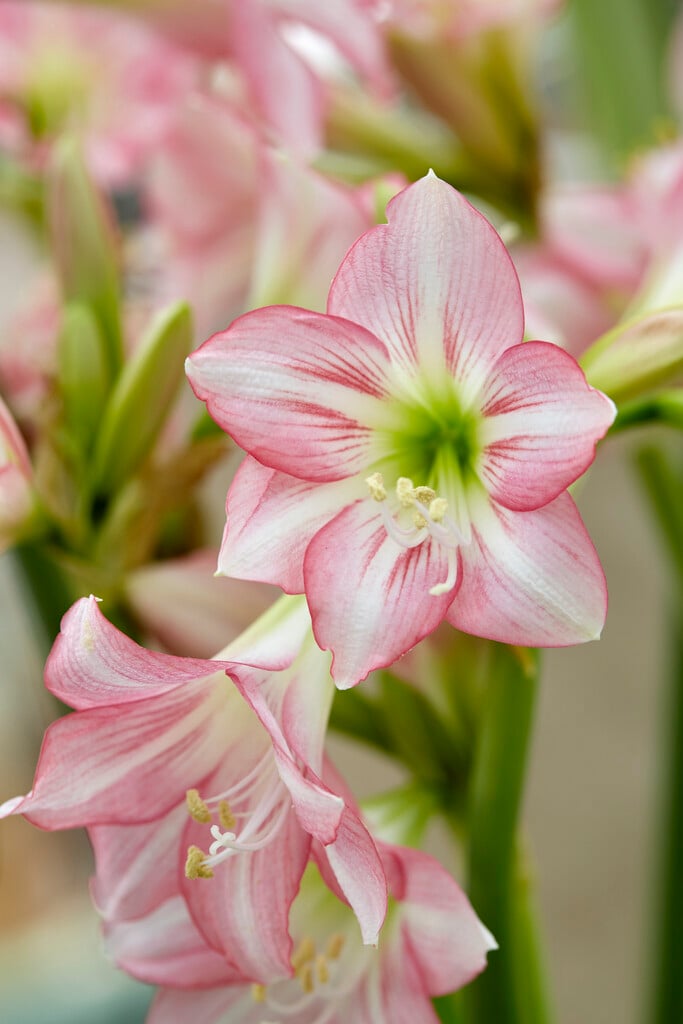
Hippeastrum (Colibri Group) 'Pink Rascal'

RHS Plant Profile
amaryllis 'Pink Rascal'
Bulbs Herbaceous Perennial

A deciduous, bulbous perennial with fleshy, strap-shaped leaves and several, very sturdy stems of large, funnel-shaped pink flowers

Position

Full sun, Partial shade

Soil Types

Loam

Max Height

0.1-0.5 metres

Max Spread

0.1-0.5 metres

Size

Time to Maturity
2–5 years
Max Spread
0.1-0.5 metres
Max Height
0.1-0.5 metres

Growing Conditions

Loam
Moisture
Moist but well–drained
pH
Neutral

Position

Full sun Partial shade
Aspect
South–facing or West–facing or East–facing
Exposure
Sheltered
Hardiness
H3

Colour & Scent

Season Stem Flower Foliage Fruit
Spring
Summer
Autumn
Winter

Botanical Details

Family
Amaryllidaceae
Native to GB/Ireland
No
Foliage
Deciduous
Habit
Clump forming
Potentially harmful
Harmful if eaten. Wear gloves and other protective equipment when handling. Pets (dogs, cats): Harmful if eaten. For further information and contact numbers regarding pets, see the HTA guide to potentially harmful plants
Genus
Hippeastrum are deciduous bulbous perennials with slightly fleshy, strap-shaped leaves and stout, leafless stems bearing umbels of large, funnel-shaped flowers usually in winter or spring
Name Status
Accepted

How to Grow

Cultivation

Plant bulbs in the autumn with the neck and shoulder above the soil surface. Grow in a peat-free, loam-based potting compost. Water sparingly until in active growth, water regulary when in growth and feed fortnightly with a balanced liquid feed. After flowering, reduce the watering as the leaves die off. Keep dry when dormant. This hippeastrum can also be planted in a dry, sunny border but will need winter protection. See hippeastrum cultivation

Propagation

Propagate by seed as soon as they are ripe, keep seedlings growng wihout a dormant period to encourage earlier flowering. Remove bulb offsets in autumn

Suggested planting locations and garden types

  • Houseplants
  • Conservatory and greenhouse
  • Cut flowers

Pruning

Cut back flowering stems as they go over. Cut back leaves as they go yellow, when bulb is going into dormancy

Pests

May be susceptible to bulb scale mite, large narcissus bulb fly and slugs and snails throughout the summer months

Diseases

May be susceptible to various fungal diseases