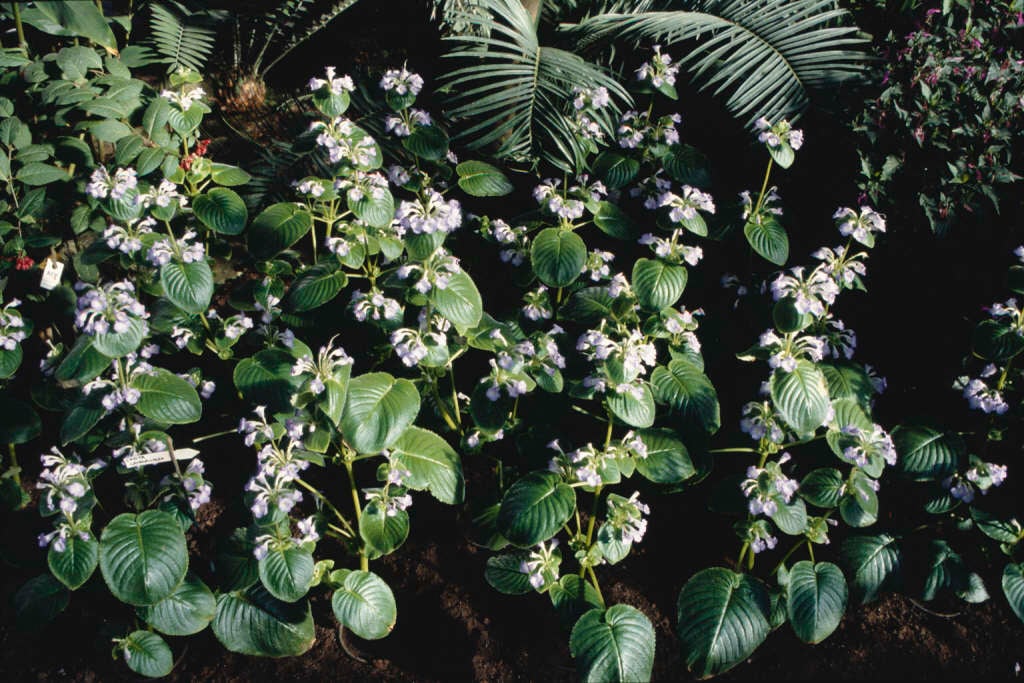
Microchirita lavandulacea

RHS Plant Profile
lavender microchirita
lavender microchirita RHS 1999

Other common names

lavender chirita

Synonyms

Chirita lavandulacea

Conservatory Greenhouse Houseplants

An erect annual with hairy elliptic leaves to 20cm in length, and white-throated, tubular funnel-shaped, light violet-blue flowers 3cm across in summer and autumn

Position

Partial shade

Soil Types

Loam, Sand

Max Height

0.5-1 metres

Max Spread

0.1-0.5 metres

Size

Time to Maturity
1–2 years
Max Spread
0.1-0.5 metres
Max Height
0.5-1 metres

Growing Conditions

Loam Sand
Moisture
Well–drained
pH
Acid or Alkaline or Neutral

Position

Partial shade
Aspect
South–facing or East–facing
Exposure
Sheltered
Hardiness
H1C

Colour & Scent

Season Stem Flower Foliage Fruit
Spring
Summer
Autumn
Winter

Botanical Details

Family
Gesneriaceae
Native to GB/Ireland
No
Foliage
Deciduous
Habit
Bushy
Genus
Microchirita are a genus of annual plants native to India and the Himalayas. Most cultivars have yellow flowers and foliage that is either plain green or marked with red. Many species have an unusual crest-like flower head emerging from the leaf, with flowers opening in sequence.
Name Status
Correct
Plant Range
Asia

How to Grow

Cultivation

Grow in well-drained, humus-rich, gritty soil in partial shade.

Propagation

Propagate by seed sown under glass at a temperature of 19-24°C in late winter to spring. Plant out when danger of frost is over

Suggested planting locations and garden types

  • Patio and container plants
  • Sub-tropical

Pruning

Pruning group 10; deadhead after flowering. Trimming in late summer prevents plants from becoming straggly, but you can leave plants for a season to benefit wildlife with seeds or as shelter if you prefer. Avoid pruning in autumn in wet or cold regions as this may leave plants vulnerable to winter damage. Avoid cutting back into old wood

Pests

May be susceptible to rosemary beetle and cuckoo spit (froghoppers)

Diseases

May be susceptible to stem rot in damp conditions