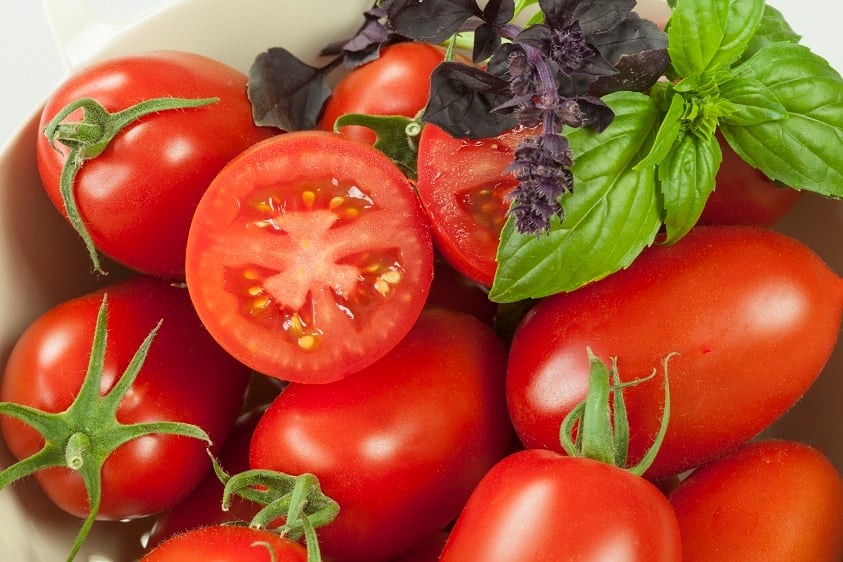
Solanum lycopersicum 'Nagina'

RHS Plant Profile
tomato 'Nagina'

Synonyms

Solanum lycopersicum 'Crimson Plum'
Solanum lycopersicum Crimson Plum

Annual Biennial

'Nagina' is a cordon plum tomato cultivar grown as an annual either in an unheated greenhouse or outdoors. It produces an abundance of early-ripening, plump, red fruits with a sweet and tangy taste suited for eating or cooking

Position

Full sun

Soil Types

Clay, Loam, Sand

Max Height

1-1.5 metres

Max Spread

0.5-1 metres

Size

Time to Maturity
1 year
Max Spread
0.5-1 metres
Max Height
1-1.5 metres

Growing Conditions

Clay Loam Sand
Moisture
Moist but well–drained
pH
Acid or Alkaline or Neutral

Position

Full sun
Aspect
West–facing or South–facing
Exposure
Sheltered
Hardiness
H1C

Colour & Scent

Fragrance Foliage
Season Stem Flower Foliage Fruit
Spring
Summer
Autumn
Winter

Botanical Details

Family
Solanaceae
Native to GB/Ireland
No
Foliage
Semi evergreen
Habit
Bushy, Climbing
Genus
Solanum can be annuals, perennials, evergreen or deciduous shrubs or twining climbers, with simple or pinnnately lobed leaves and star- or bowl-shaped, 5-lobed flowers with prominent stamens, followed by fleshy fruits
Name Status
Accepted

How to Grow

Cultivation

Start from seed or buy as small plants and grow on in a heated greenhouse or on a warm windowsill. Move to an unheated greenhouse or outside once all risk of frost has passed. Water regularly to keep the growing media evenly moist, feed every 10-14 days with a balanced liquid fertiliser before switching to a high potassium liquid feed once the first fruits have set. Provide support for cordon tomatoes. See tomato cultivation. For help with diagnosing tomato problems see our video What's gone wrong with my tomatoes?

Propagation

Propagate by seed. See sowing vegetable seeds or sowing seeds indoors for further advice

Suggested planting locations and garden types

  • Cottage and informal garden
  • City and courtyard gardens
  • Patio and container plants

Pruning

Remove all side shoots and pinch out the growing tip when the plant has reached the top of the greenhouse or have set seven trusses indoors or four trusses outdoors

Pests

May be susceptible to glasshouse whitefly and tomato moth

Diseases

May be susceptible to honey fungus (rarely), May be susceptible to Tomato leaf mould and tomato viruses. This cultivar shows good resistance to Tomato blight