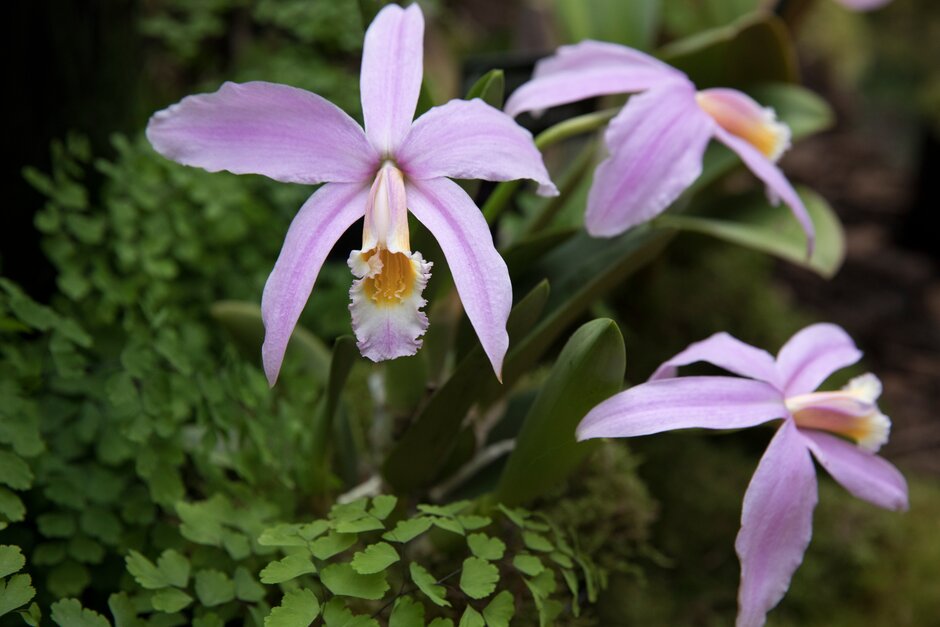
Cattleya jongheana

<em>Cattleya</em> <em>jongheana</em> RHS
Conservatory Greenhouse Houseplants

An epiphytic orchid to 17cm tall often remaining evergreen in cultivation with a single, leathery, oblong to elliptic 12cm-long leaf. Comparatively large flowers, 10-16cm in diameter, are borne in late winter and early spring; pinkish-purple petals surround a downward-pointing 5cm-long lip that is pale lilac on the outside and golden-yellow inside

Position

Partial shade

Soil Types

Loam

Max Height

0.1-0.5 metres

Max Spread

0.1-0.5 metres

Size

Time to Maturity
2–5 years
Max Spread
0.1-0.5 metres
Max Height
0.1-0.5 metres

Growing Conditions

Loam
Moisture
Well–drained
pH
Acid or Neutral

Position

Partial shade
Aspect
West–facing or East–facing or North–facing
Exposure
Sheltered
Hardiness
H1C

Colour & Scent

Season Stem Flower Foliage Fruit
Spring
Summer
Autumn
Winter

Botanical Details

Family
Orchidaceae
Native to GB/Ireland
No
Foliage
Semi evergreen
Habit
Columnar upright
Genus
A genus of tropical orchids native to South and Central America. Thick fleshy roots of these epiphytic plants grow from thick rhizome. Cylindrical, swollen stems called pseudobulbs serve as storage of water and nutrients. Large, long-lasting flowers are held at the top of newly formed, mature pseudobulbs. Genus Cattleya is often cross bred with other similar genera, and can be traced in parentage of numerous, inter-generic, orchid hybrids
Name Status
Unresolved

How to Grow

Cultivation

Grow in epiphytic orchid compost and from late spring to summer, in partial shade with good ventilation, day temperatures between 18-25°C and night between 13-15°C, water freely adding orchid fertiliser every third watering and provide high humidity by misting twice daily. Keep in well lit conditions from autumn to early spring. See indoor orchid cultivation

Propagation

Propagate by division when the plant over-fills the pot

Suggested planting locations and garden types

  • Patio and container plants

Pruning

No pruning required, cut down flowered stems as necessary

Pests

May be susceptible to aphids, glasshouse red spider mite and mealybugs

Diseases

Generally disease-free