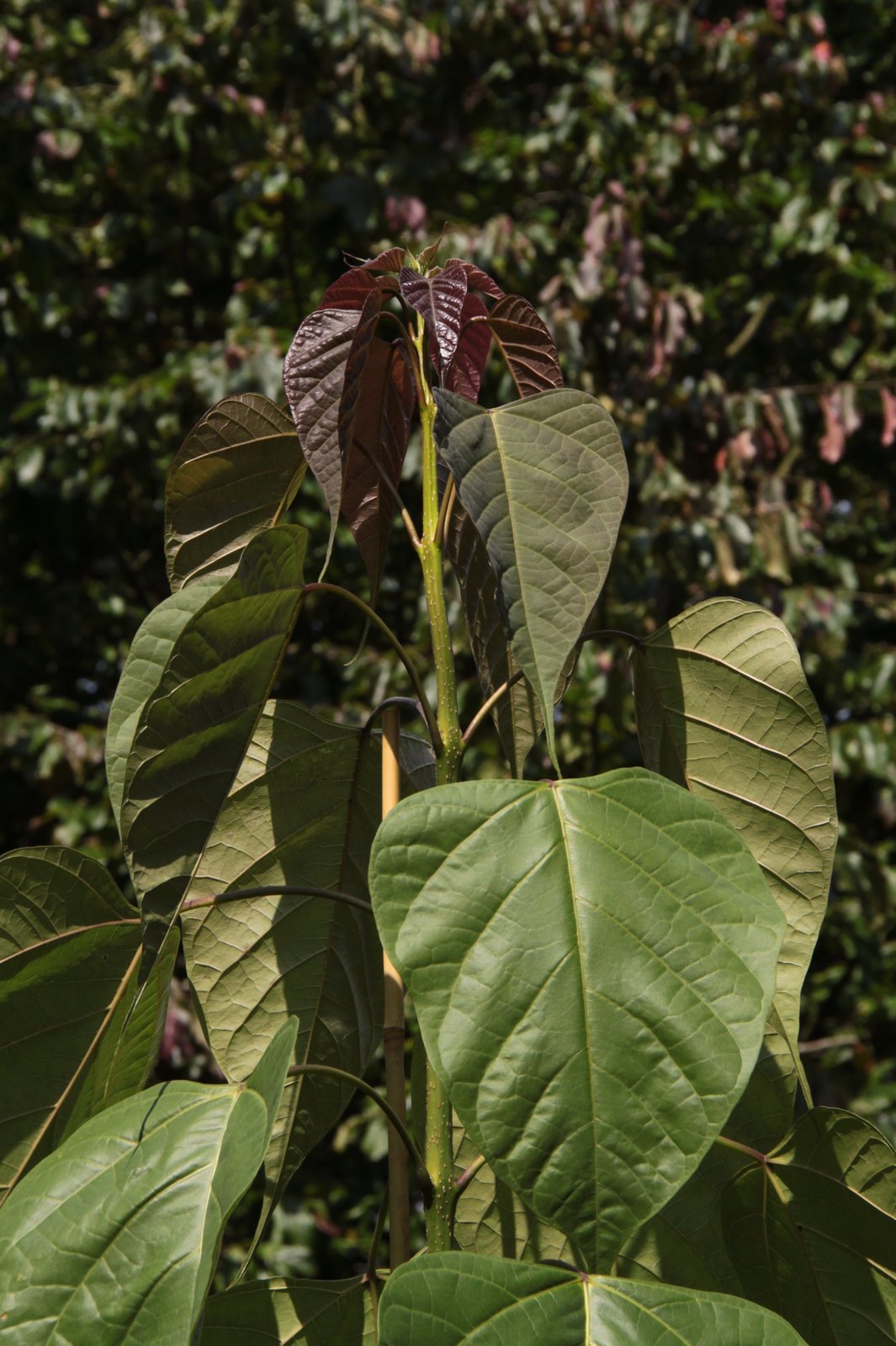
Catalpa bungei Duclouxii Group

RHS Plant Profile
Chinese bean tree
Chinese bean tree Wolfgang Bopp

Synonyms

Catalpa fargesii f. duclouxii
Catalpa duclouxii
Catalpa sutchuensis

Trees

A good flowering form bearing panicles of trumpet-shaped flowers of pale pink, with brown and orange-spotted throats. These are followed by narrow bean-like seed pods. Large, simple, pointed leaves are tinged bronze in spring. Matures to a round-crowned tree up to 8m in height

Position

Full sun, Partial shade

Soil Types

Chalk, Loam, Sand

Max Height

8-12 metres

Max Spread

4-8 metres

Size

Time to Maturity
10–20 years
Max Spread
4-8 metres
Max Height
8-12 metres

Growing Conditions

Chalk Loam Sand
Moisture
Moist but well–drained
pH
Acid or Alkaline or Neutral

Position

Full sun Partial shade
Aspect
South–facing or North–facing or West–facing or East–facing
Exposure
Sheltered
Hardiness
H6

Colour & Scent

Season Stem Flower Foliage Fruit
Spring
Summer
Autumn
Winter

Botanical Details

Family
Bignoniaceae
Native to GB/Ireland
No
Foliage
Deciduous
Habit
Spreading branched
Genus
Catalpa are deciduous trees of spreading habit, with handsome, large leaves and erect panicles of showy, bell-shaped flowers in late summer, followed by persistent, slender bean-like seed capsules
Name Status
Accepted
Plant Range
W China

How to Grow

Cultivation

Grow in a moist but well-drained, fertile soil in sun or part shade. Shelter from strong winds as these may shred the large leaves. Protect from late spring frosts when young

Propagation

Propagate by softwood cuttings in summer or chip budding in late summer

Suggested planting locations and garden types

  • Architectural
  • Low Maintenance

Pruning

Pruning group 1, or pruning group 7 when grown as a stooled shrub for foliage effect

Pests

Generally pest-free

Diseases

May be susceptible to verticillium wilt and rarely, honey fungus