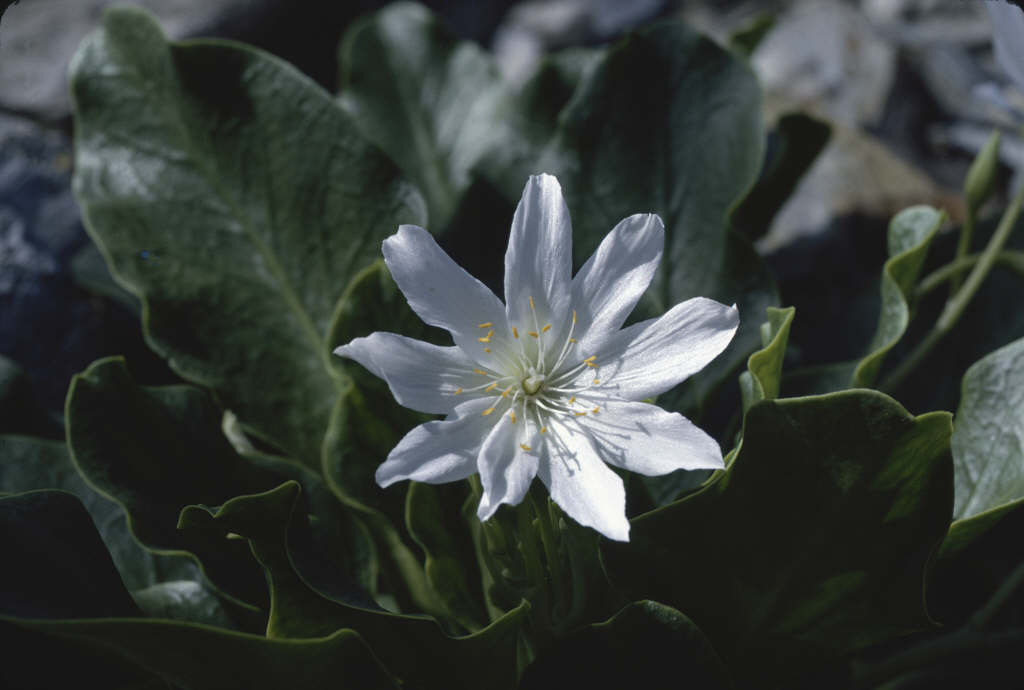
Lewisiopsis tweedyi 'Alba'

RHS Plant Profile
Tweedy's lewisia 'Alba'
Tweedy's lewisia 'Alba' RHS 1999

Synonyms

Lewisia tweedyi 'Alba'

Alpine Rockery

Has a loose rosette of fleshy, spoon-shaped leaves and slender-stalked sprays of funnel-shaped white flowers to 6cm wide in spring and early summer on stems to 25cm long

Position

Full sun, Partial shade

Soil Types

Loam, Sand

Max Height

0.1-0.5 metres

Max Spread

0.1-0.5 metres

Size

Time to Maturity
2–5 years
Max Spread
0.1-0.5 metres
Max Height
0.1-0.5 metres

Growing Conditions

Loam Sand
Moisture
Well–drained
pH
Acid or Neutral

Position

Full sun Partial shade
Aspect
South–facing or North–facing or West–facing or East–facing
Exposure
Exposed or Sheltered
Hardiness
H4

Colour & Scent

Season Stem Flower Foliage Fruit
Spring
Summer
Autumn
Winter

Botanical Details

Family
Montiaceae
Native to GB/Ireland
No
Foliage
Evergreen
Habit
Matforming
Genus
A genus of one species of flowering plant, endemic to the rocky regions of western North America and British Columbia, with oval-shaped, leathery, glossy, dark green foliage and coral, apricot, yellow or pink flowers which appear from spring to summer
Name Status
Accepted

How to Grow

Cultivation

Grow in moderately fertile, humus-rich, sharply-drained, neutral to acid soil. Lewisias dislike winter wet. A position in light shade is ideal. Planting in a crevice or wall can provide all of these requirements

Propagation

Propagate by seed in a seedbed as soon as ripe, or divide in early spring

Suggested planting locations and garden types

  • Gravel garden
  • Patio and container plants
  • Rock garden

Pruning

No pruning required

Pests

slugs and snails can problematic

Diseases

Neck rot can affect them in wet conditions