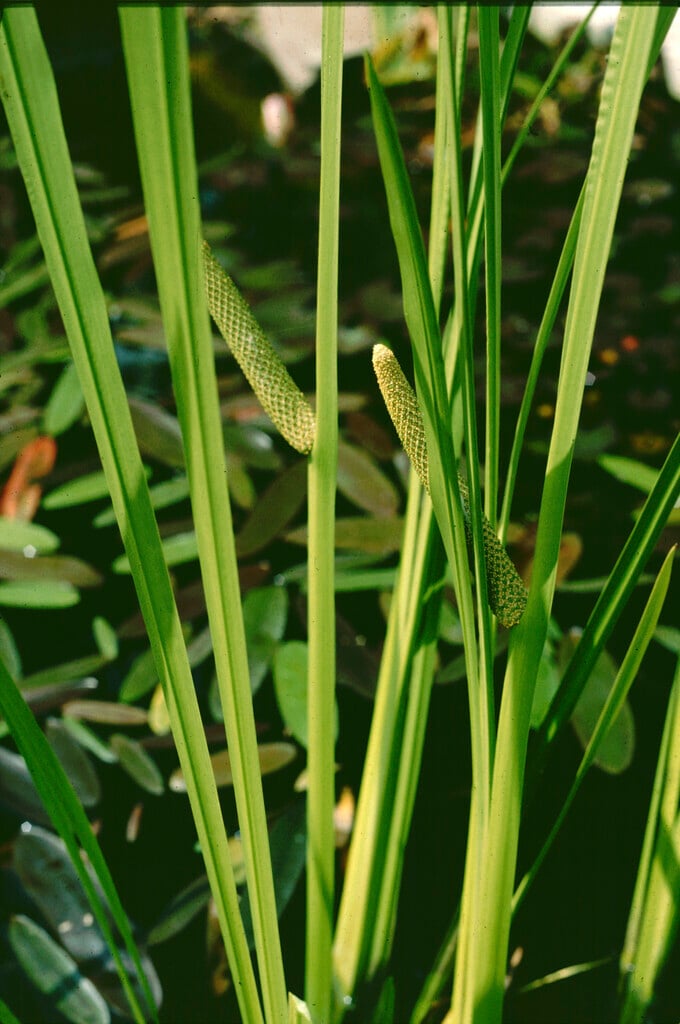
Acorus calamus

RHS Plant Profile
sweet flag
sweet flag visionspictures.com

Other common names

beewort, calamus, cinnamon sedge, flagroot, myrtle flag, myrtle grass, myrtle sedge, sea sedge, sedge grass, sweet calamus, sweet myrtle, sweet sedge, water iris

Aquatic Herbaceous Perennial

Spreading, deciduous, marginal aquatic perennial 60-90cm in height, with strap-shaped, aromatic bright green leaves. Insignificant brown flowers to 7cm long are produced just below the tips of the leaf-like flower stems in midsummer

Position

Full sun

Soil Types

Clay

Max Height

0.5-1 metres

Max Spread

0.5-1 metres

Size

Time to Maturity
2–5 years
Max Spread
0.5-1 metres
Max Height
0.5-1 metres

Growing Conditions

Clay
Moisture
Moist but well–drained or Poorly–drained
pH
Acid or Alkaline or Neutral

Position

Full sun
Aspect
South–facing or West–facing
Exposure
Exposed or Sheltered
Hardiness
H7

Colour & Scent

Season Stem Flower Foliage Fruit
Spring
Summer
Autumn
Winter

Botanical Details

Family
Acoraceae
Native to GB/Ireland
No
Foliage
Deciduous
Habit
Clump forming
Genus
Acorus are deciduous or semi-evergreen, moisture-loving rhizomatous perennials forming tufts of linear or sword-shaped leaves, with insignificant spike-like flowers borne near the tips of central leaf-like stems
Name Status
Correct

How to Grow

Cultivation

Grow at pond margins in very moist or wet soils in full sun. Grows best in water no deeper than 22cm. Divide every few years to prevent congestion, See bog gardening, pond plants and Ornamental grasses cultivation

Propagation

Propagate by rhizome division at the beginning of the growing season. Pot up and plant out only when fully established

Suggested planting locations and garden types

  • Cottage and informal garden

Pruning

Cut back after flowering

Pests

Generally pest-free

Diseases

Generally disease-free