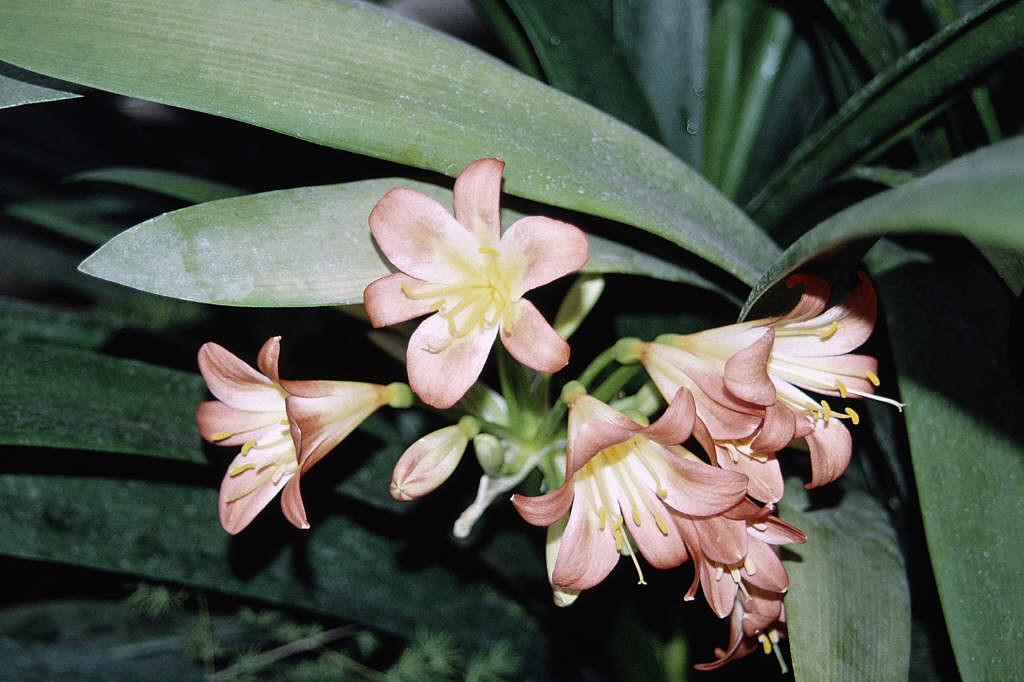
Clivia miniata

RHS Plant Profile
Natal lily
Natal lily RHS 2002
Award of Garden Merit
Houseplants Conservatory Greenhouse

A perennial forming a clump of evergreen, strap-like leaves to 60cm in length, with erect stems bearing a terminal umbel of funnel-shaped, yellow-throated, orange-red flowers up to 7cm in length

Position

Full sun, Partial shade

Soil Types

Chalk, Clay, Loam, Sand

Max Height

0.1-0.5 metres

Max Spread

0.1-0.5 metres

Size

Time to Maturity
2–5 years
Max Spread
0.1-0.5 metres
Max Height
0.1-0.5 metres

Growing Conditions

Chalk Clay Loam Sand
Moisture
Well–drained
pH
Acid or Alkaline or Neutral

Position

Full sun Partial shade
Aspect
North–facing or West–facing or East–facing
Exposure
Sheltered
Hardiness
H1C

Colour & Scent

Season Stem Flower Foliage Fruit
Spring
Summer
Autumn
Winter

Botanical Details

Family
Amaryllidaceae
Native to GB/Ireland
No
Foliage
Evergreen
Habit
Clump forming
Potentially harmful
All parts may cause a stomach upset if ingestedsap may irritate skin. Wear gloves and other protective equipment when handling
Genus
Clivia are evergreen perennials, the strap-shaped leaves sheathing to form a swollen bulb-like base. Showy trumpet-shaped or tubular flowers are borne in an umbel on a stout erect stem
Name Status
Correct
Plant Range
S Africa (Natal)

How to Grow

Cultivation

Under glass grow in peat-free, loam-based potting compost with added leaf mould and grit, in bright filtered light with shade from hot sun. Water freely in summer and keep barely moist in winter. Apply a balanced liquid fertiliser weekly when in growth up to flower bud formation. Do not repot regularly as these plants resent root disturbance and need a restricted root run to encourage flowering

Propagation

Propagate by seed at 16-21°C as soon as ripe or by division in late winter or early spring

Suggested planting locations and garden types

  • Patio and container plants

Pruning

No pruning required

Pests

May be susceptible to mealybugs

Diseases

Generally disease-free
