Apium graveolens

RHS Plant Profile
celery
celery visionspictures.com

Other common names

ach, celery seed, marche, marsh parsley, smallage, smalledge, sweet parsley, Venus's herb, wild celery, ache, mers

Annual Biennial Herbs - Culinary

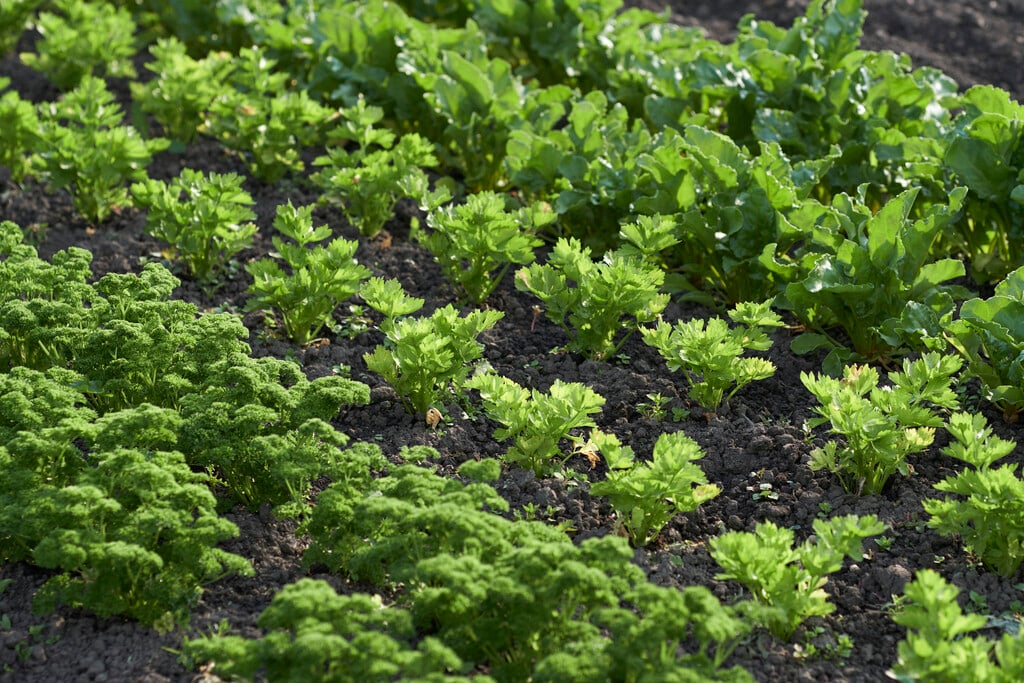
This is the wild plant from which celery and celeriac has been bred. It is a biennial of damp ground which can tolerate salty conditions. In the first year, it grows a clump of bright green aromatic leaves and in the second year, blooms with clusters of small white flowers. These ripen to light brown seeds. Leaves and seeds can be eaten in small quantities to flavour food

Position

Full sun, Partial shade

Soil Types

Chalk, Clay, Loam, Sand

Max Height

0.1-0.5 metres

Max Spread

0.1-0.5 metres

Size

Time to Maturity
1–2 years
Max Spread
0.1-0.5 metres
Max Height
0.1-0.5 metres

Growing Conditions

Chalk Clay Loam Sand
Moisture
Moist but well–drained or Poorly–drained
pH
Acid or Alkaline or Neutral

Position

Full sun Partial shade
Aspect
East–facing or North–facing or South–facing or West–facing
Exposure
Sheltered
Hardiness
H6

Colour & Scent

Fragrance Foliage
Season Stem Flower Foliage Fruit
Spring
Summer
Autumn
Winter

Botanical Details

Family
Apiaceae
Native to GB/Ireland
Yes
Foliage
Semi evergreen
Habit
Columnar upright
Potentially harmful
Harmful to skin with sunlight. Wear gloves and other protective equipment when handling
Genus
Apium can be annual, biennial or perennial herbaceous plants, with leaves divided into three leaflets, or pinnate; in summer, tiny white flowers are borne in umbels
Name Status
Correct

How to Grow

Cultivation

Grow in reliably moist soil in full sun or light shade. See celery cultivation for more advice

Propagation

Propagate by seed. See sowing vegetable seeds

Suggested planting locations and garden types

  • Cottage and informal garden

Pruning

No pruning required

Pests

May be susceptible to slugs and snails and and celery leaf miner

Diseases

May be susceptible to celery leaf spot