Actinidia pilosula (Finet & Gagnep.) Stapf ex Hand.-Mazz.

RHS Plant Profile
variegated kiwi
variegated kiwi visionspictures.com
Climber Wall Shrub Fruit Edible

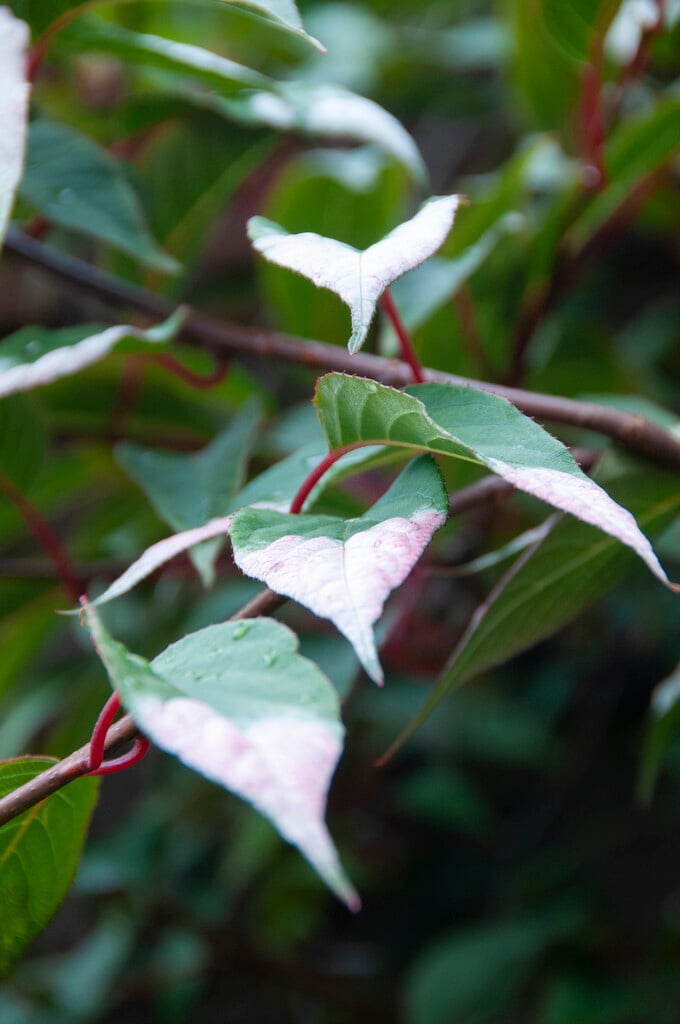
A deciduous twining climber with long elegant ovate green leaves that can be variegated with pink and cream, with white tips, some flushed pink, on red stems. Small cup-shaped, fragrant pink flowers, if pollinated, are followed on female plants by edible yellow green fruit, ready to harvest by the first frosts of autumn.

Position

Full sun, Partial shade

Soil Types

Sand, Loam, Clay

Max Height

4-8 metres

Max Spread

4-8 metres

Size

Time to Maturity
5–10 years
Max Spread
4-8 metres
Max Height
4-8 metres

Growing Conditions

Sand Loam Clay
Moisture
Moist but well–drained or Well–drained
pH
Acid or Neutral

Position

Full sun Partial shade
Aspect
South–facing or West–facing
Exposure
Sheltered
Hardiness
H3

Colour & Scent

Fragrance Flower
Season Stem Flower Foliage Fruit
Spring
Summer
Autumn
Winter

Botanical Details

Family
Actinidiaceae
Native to GB/Ireland
No
Foliage
Deciduous
Habit
Climbing
Genus
Actinidia are vigorous, mostly deciduous, twining climbers with simple ovate leaves which are variegated in some species. Small cup-shaped flowers may be followed on female or hermaphrodite plants by edible fruits
Name Status
Correct
Plant Range
SW China

How to Grow

Cultivation

Grow in fertile, well-drained soil in a sheltered site. Prone to late frost and wind scorch damage. Plenty of sun will encourage the best foliage colours. See kiwi cultivation.

Propagation

Take softwood cuttings in the spring or propagate by layering.

Suggested planting locations and garden types

  • City and courtyard gardens
  • Sub-tropical
  • Climber and wall shrubs
  • Conservatory and greenhouse
  • Edible fruit

Pruning

When grown for fruit, pruning is carried out in winter and summer. See kiwi fruit pruning and training.

Pests

Generally pest-free

Diseases

May be susceptible to honey fungus and phytophthora root rot