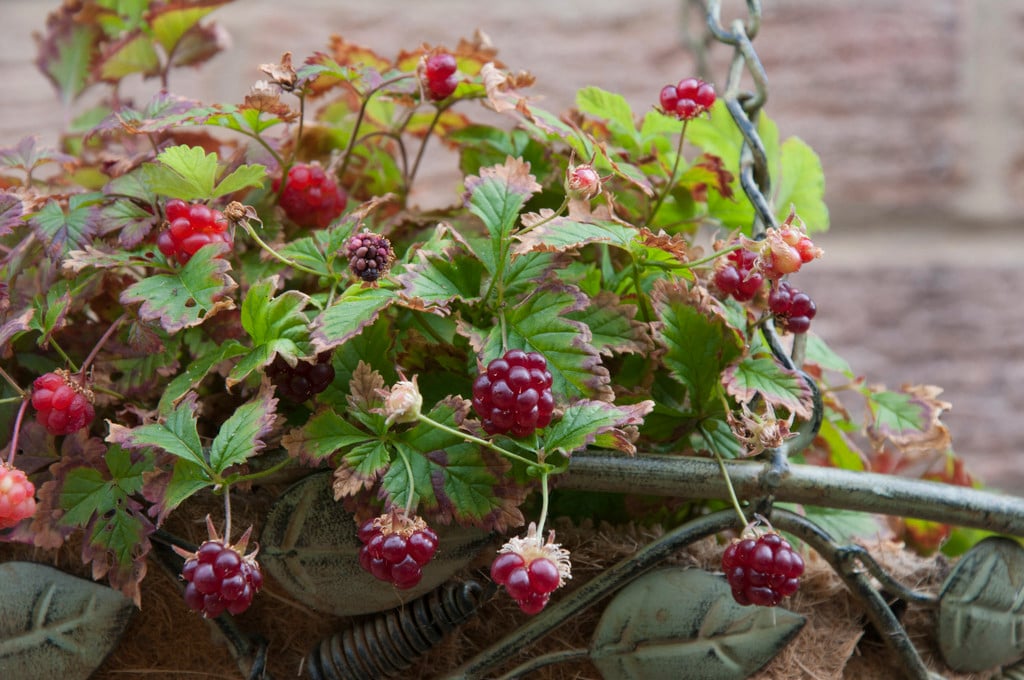
Rubus arcticus

RHS Plant Profile
arctic bramble
arctic bramble RHS

Other common names

all fieldberry, allåkerbär, arctic raspberry, crimson bramble, dwarf bramble, dwarf crimson-flowered bramble

Shrubs Fruit Edible Herbaceous Perennial

A thornless, deciduous, spreading perennial or subshrub to 30cm tall and up to 1m wide with three-lobed, serrated-edged leaves. Pink to rose-purple flowers up to 2.5cm across are borne in summer in groups of 1-3 and are followed by deep red or dark purple edible, roundish fruits up to 1cm in diameter

Position

Full sun, Partial shade

Soil Types

Loam, Sand

Max Height

0.1-0.5 metres

Max Spread

0.5-1 metres

Size

Time to Maturity
2–5 years
Max Spread
0.5-1 metres
Max Height
0.1-0.5 metres

Growing Conditions

Loam Sand
Moisture
Moist but well–drained or Poorly–drained
pH
Acid or Alkaline or Neutral

Position

Full sun Partial shade
Aspect
South–facing or North–facing or East–facing or West–facing
Exposure
Exposed or Sheltered
Hardiness
H7

Colour & Scent

Season Stem Flower Foliage Fruit
Spring
Summer
Autumn
Winter

Botanical Details

Family
Rosaceae
Native to GB/Ireland
Yes
Foliage
Deciduous
Habit
Clump forming, Spreading branched
Genus
Rubus can be deciduous or evergreen shrubs, often scrambling with bristly or prickly stems bearing simple, lobed, palmate or pinnate leaves and 5-petalled flowers followed by juicy, sometimes edible fruits
Name Status
Correct
Plant Range
Subarctic and Northern Temperate

How to Grow

Cultivation

Grows best in a moist, acidic or neutral soil in full sun or partial shade

Propagation

Propagate by seed

Suggested planting locations and garden types

  • Wildflower meadow
  • Patio and container plants
  • Banks and slopes
  • Ground cover

Pruning

No pruning required

Pests

Generally pest-free

Diseases

May be susceptible to grey moulds and honey fungus (rarely)