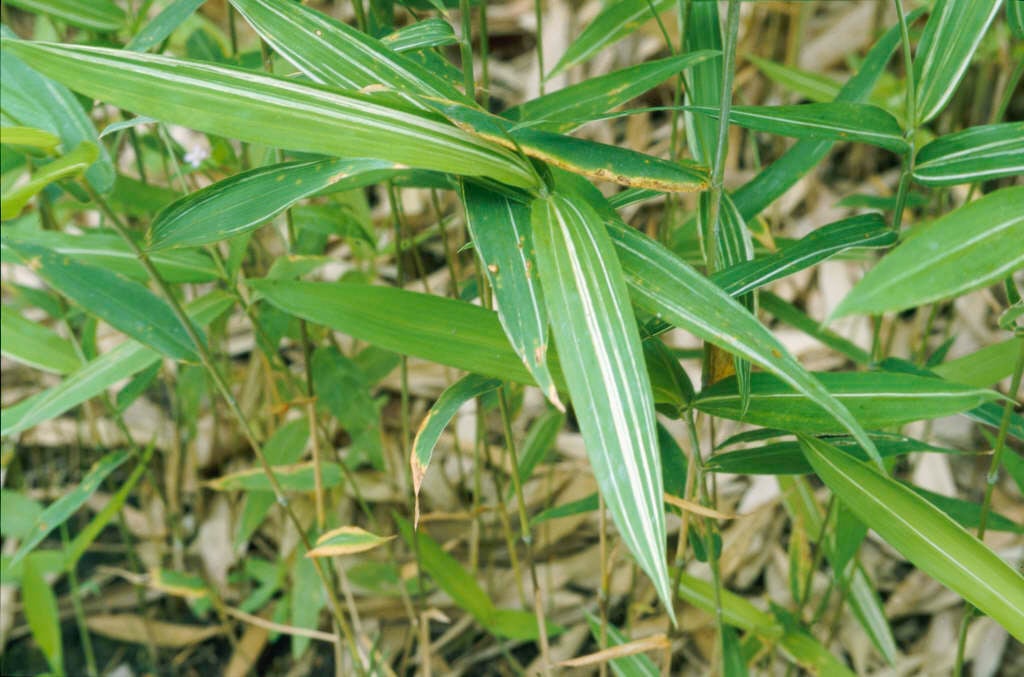
Sasaella masamuneana 'Albostriata' (v)

RHS Plant Profile
white-striped hairy bamboo
white-striped hairy bamboo RHS 2002

Other common names

fuiri-shiiya-zasa

Synonyms

Pleioblastus glaber 'Albostriatus'
Sasa glabra f. albostriata
Sasaella masamuneana f. albostriata

Bamboos

An evergreen bamboo forming a loose spreading clump of thin canes to 2m high with white and green striped leaves

Position

Full shade, Full sun, Partial shade

Soil Types

Clay, Loam, Sand

Max Height

1.5-2.5 metres

Max Spread

1.5-2.5 metres

Size

Time to Maturity
5–10 years
Max Spread
1.5-2.5 metres
Max Height
1.5-2.5 metres

Growing Conditions

Clay Loam Sand
Moisture
Moist but well–drained
pH
Acid or Alkaline or Neutral

Position

Full shade Full sun Partial shade
Aspect
South–facing or North–facing or West–facing or East–facing
Exposure
Exposed or Sheltered
Hardiness
H5

Colour & Scent

Season Stem Flower Foliage Fruit
Spring
Summer
Autumn
Winter

Botanical Details

Family
Poaceae
Native to GB/Ireland
No
Foliage
Evergreen
Habit
Clump forming, Suckering
Genus
Sasaella are small, extremely vigorous bamboos, very wide-spreading with very slender, erect, canes bearing horizontal branches with lance-shaped leaves
Name Status
Accepted

How to Grow

Cultivation

Grow in fertile, humus-rich, moist but well-drained soil, best in partial shade. Protect from cold drying winds. Creeping rootstock can become very invasive in warm, moist or favourable conditions and need restraining ; see bamboo control and bamboo cultivation

Propagation

Propagate by young rhizome cuttings and the division of established plants in Spring

Suggested planting locations and garden types

  • Architectural
  • Hedging and screens

Pruning

Remove weak, dead, damaged or spindly stems in spring and thin to show off stems to best effect. Cut out any flowering shoots promptly to discourage more from forming - see bamboo cultivation

Pests

May be susceptible to slugs

Diseases

Generally disease-free