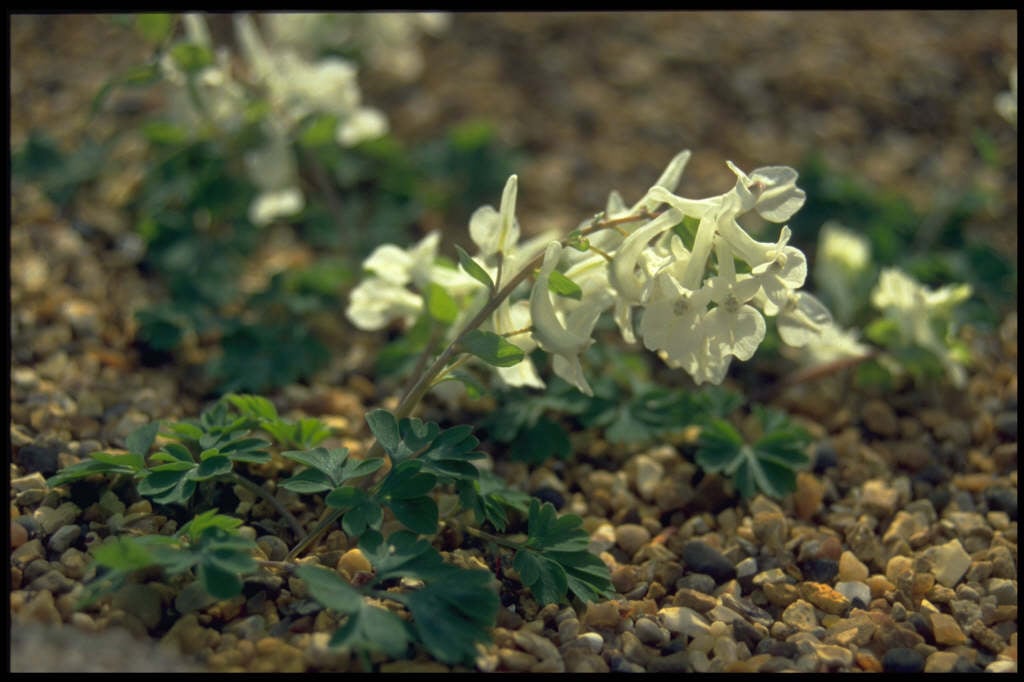
Corydalis malkensis

RHS Plant Profile
Malka corydalis
Malka corydalis RHS 1998

Other common names

alexeenkoana of gardens

Synonyms

Corydalis caucasica var. alba misapplied

Award of Garden Merit
Bulbs Alpine Rockery

A tuberous-rooted herbaceous perennial to 15cm in height, with pale green leaves palmately divided into narrow segments, and erect racemes of white, tubular flowers 2cm in length, with broad lips

Position

Full sun, Partial shade

Soil Types

Chalk, Loam, Sand

Max Height

0.1-0.5 metres

Max Spread

0.1-0.5 metres

Size

Time to Maturity
2–5 years
Max Spread
0.1-0.5 metres
Max Height
0.1-0.5 metres

Growing Conditions

Chalk Loam Sand
Moisture
Well–drained
pH
Acid or Alkaline or Neutral

Position

Full sun Partial shade
Aspect
East–facing or South–facing
Exposure
Exposed or Sheltered
Hardiness
H5

Colour & Scent

Season Stem Flower Foliage Fruit
Spring
Summer
Autumn
Winter

Botanical Details

Family
Papaveraceae
Native to GB/Ireland
No
Foliage
Deciduous
Habit
Clump forming
Genus
Corydalis can be annuals, biennials or tuberous or rhizomatous perennials, with ternately or pinnately lobed leaves and racemes of spurred, tubular flowers
Name Status
Correct
Plant Range
Caucasus

How to Grow

Cultivation

Grow in sharply drained, moderately fertile soil in sun or partial shade in a rock garden, or grow in pots in an alpine house. Prefers more moisture in winter and partially drying out in summer, plant tubers in autumn, if using pots plunge the pots in damp sand up to the collar of the pot to prevent drying out. Repot annually

Propagation

Propagate by allowing tubers to increase each year. Propagate by seed sown as soon as it is ripe in pots in an open frame; germination may be erratic

Suggested planting locations and garden types

  • Gravel garden
  • Patio and container plants
  • Rock garden
  • City and courtyard gardens
  • Cottage and informal garden
  • Flower borders and beds

Pruning

No pruning required

Pests

May be susceptible to slugs and snails

Diseases

Generally disease-free