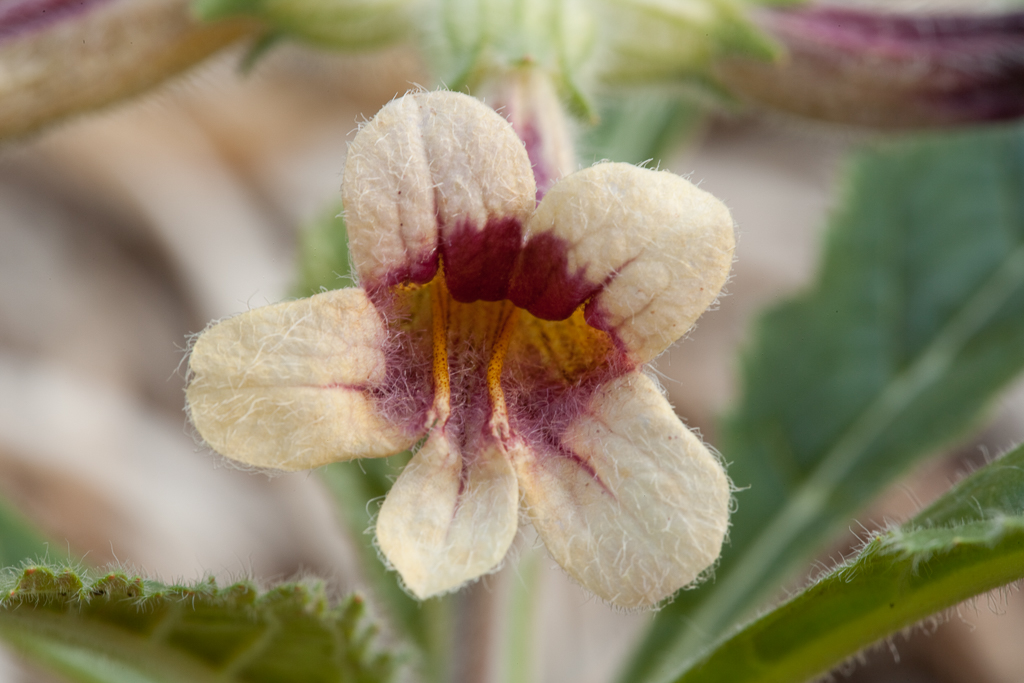
Rehmannia glutinosa

RHS Plant Profile
adhesive rehmannia
adhesive rehmannia John Fielding
Herbaceous Perennial

A half-hardy rhizomatous perennial to 30cm, forming a basal rosette of sticky, coarsely-toothed, obovate leaves and sending out slender runners. Pendent, tubular two-lipped flowers to 7.5cm long, reddish-brown with pale pink lips and purple markings in the throat, are produced in small clusters on short stems or singly in the axils of leafy flowering stems, from late spring to early summer. Leaves, stems and flowers have a covering of fine downy hairs

Position

Full sun

Soil Types

Chalk, Loam, Sand

Max Height

0.1-0.5 metres

Max Spread

0.1-0.5 metres

Size

Time to Maturity
1–2 years
Max Spread
0.1-0.5 metres
Max Height
0.1-0.5 metres

Growing Conditions

Chalk Loam Sand
Moisture
Well–drained
pH
Acid or Neutral

Position

Full sun
Aspect
South–facing or West–facing
Exposure
Sheltered
Hardiness
H3

Colour & Scent

Season Stem Flower Foliage Fruit
Spring
Summer
Autumn
Winter

Botanical Details

Family
Orobanchaceae
Native to GB/Ireland
No
Foliage
Semi evergreen
Habit
Clump forming
Genus
Rehmannia are erect perennials with large leaves in basal rosettes, and large, 2-lipped, trumpet-shaped flowers
Name Status
Unresolved

How to Grow

Cultivation

In mild, frost-free areas, grow in well-drained, moderately fertile soil, in a sheltered position in full sun. In colder areas, grow in under glass or in containers that can be moved to a cool, dry place indoors over winter. Under glass, grow in peat-free, loam-based potting compost in bright, filtered light, water freely while in growth and keep just moist in winter

Propagation

Propagate by seed sown at 13-16°C (55-61°F) in late winter, by root cuttings in late autumn, or by softwood cuttings from basal shoots before flowering

Suggested planting locations and garden types

  • Cottage and informal garden
  • Wildflower meadow

Pruning

No pruning required

Pests

May be susceptible to slug and snail damage

Diseases

Generally disease-free