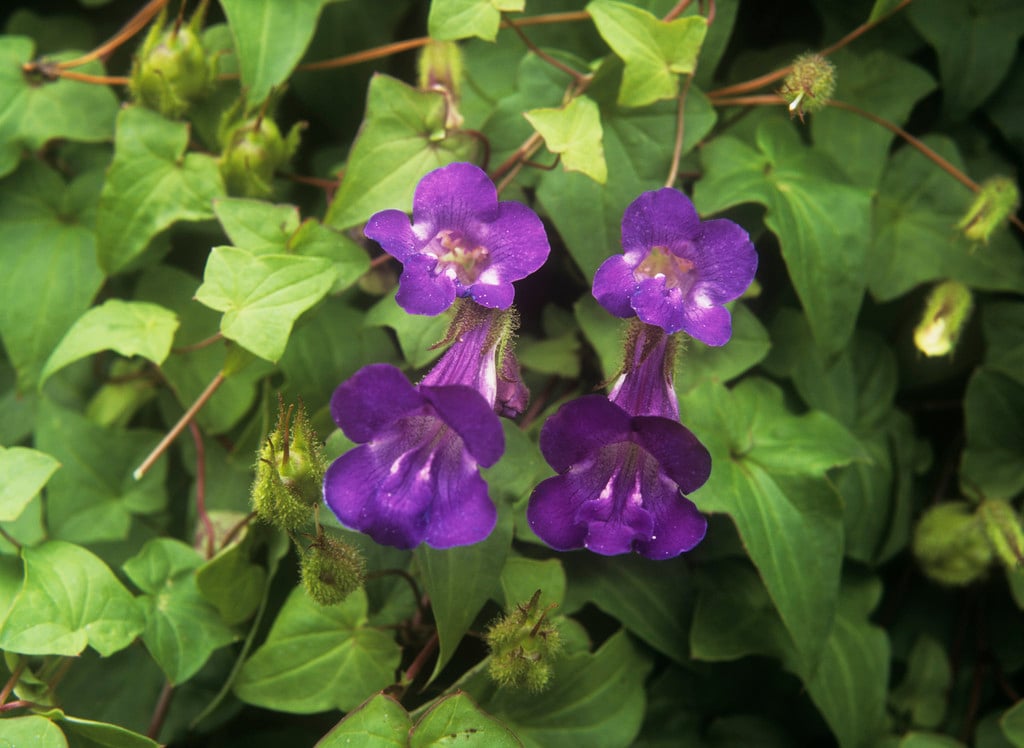
Maurandya barclayana

RHS Plant Profile
Mexican viper
Mexican viper RHS

Other common names

angels trumpet

Synonyms

Asarina barclaiana

Award of Garden Merit
Climber Wall Shrub Conservatory Greenhouse Herbaceous Perennial

A herbaceous climberwith soft, bright green, ivy-shaped leaves and flared, tubular flowers with white tubes and white, pink or dark purple petal lobes, produced in summer and autumn

Position

Full sun

Soil Types

Loam, Sand

Max Height

2.5-4 metres

Max Spread

1.5-2.5 metres

Size

Time to Maturity
2–5 years
Max Spread
1.5-2.5 metres
Max Height
2.5-4 metres

Growing Conditions

Loam Sand
Moisture
Moist but well–drained
pH
Acid or Alkaline or Neutral

Position

Full sun
Aspect
West–facing or South–facing
Exposure
Sheltered
Hardiness
H2

Colour & Scent

Season Stem Flower Foliage Fruit
Spring
Summer
Autumn
Winter

Botanical Details

Family
Plantaginaceae
Native to GB/Ireland
No
Foliage
Deciduous
Habit
Climbing
Genus
Maurandya are twining, woody-based, herbaceous perennial climbers. The leaves are triangular to broadly-oval, sometimes lobed, and the trumpet-shaped blooms are produced over a long period in summer and autumn
Name Status
Correct
Plant Range
Mexico

How to Grow

Cultivation

Under glass grow in peat-free, loam-based compost in bright light but with shade from hot sun. May also be grown as a tender annual outdoors in moist but well-drained soil in full sun

Propagation

Propagate by seed sown at 13-18°C in early spring, or root softwood cuttings with bottom heat in late spring

Suggested planting locations and garden types

  • Cottage and informal garden
  • Patio and container plants
  • City and courtyard gardens
  • Mediterranean climate plants
  • Flower borders and beds
  • Wall side borders

Pruning

Remove dead top growth in autumn

Pests

Generally pest-free

Diseases

Generally disease-free