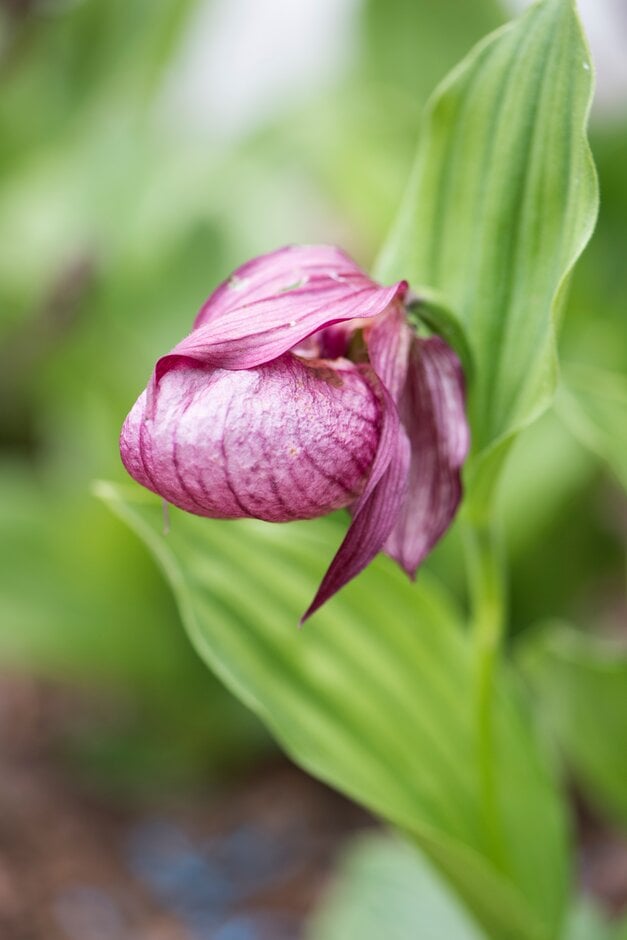
Cypripedium × ventricosum

RHS Plant Profile
lady's slipper orchid hybrid
lady's slipper orchid hybrid RHS / Joanna Kossak

Synonyms

Cypripedium Ventricosum gx
Cypripedium Vintri gx
Cypripedium × barbeyi

Award of Garden Merit
Herbaceous Perennial

Cypripedium x ventricosum is a deciduous, terrestrial orchid with ovate, parallel-veined leaves and upright stems to 45cm tall topped with 1-2 flowers in late spring. Flowers have white pouches heavily veined and speckled with deep pink and purple and purple-striped tepals

Position

Partial shade

Soil Types

Clay, Loam, Sand

Max Height

0.1-0.5 metres

Max Spread

0.1-0.5 metres

Size

Time to Maturity
2–5 years
Max Spread
0.1-0.5 metres
Max Height
0.1-0.5 metres

Growing Conditions

Clay Loam Sand
Moisture
Moist but well–drained
pH
Acid or Alkaline or Neutral

Position

Partial shade
Aspect
East–facing or North–facing or West–facing
Exposure
Sheltered
Hardiness
H5

Colour & Scent

Season Stem Flower Foliage Fruit
Spring
Summer
Autumn
Winter

Botanical Details

Family
Orchidaceae
Native to GB/Ireland
No
Foliage
Deciduous
Habit
Columnar upright
Potentially harmful
Skin allergen. Wear gloves and other protective equipment when handling
Genus
Cypripedium are terrestrial orchids with slender rhizomes and soft fan-shaped leaves, spirally arranged or in opposite pairs. Flowers are born in racemes of up to 12 flowers during summer have white, pink, red or purple tepals and a yellow, white, pink or purple pouch
Name Status
Correct

How to Grow

Cultivation

Grow in moist, fertile, leafy, humus-rich slightly alkaline soil in a sheltered site with dappled or partial shade - ideally with some morning sunshine. Provide an annual winter mulch of leaf mould. If late frosts damage flowers, grow in an unheated greenhouse

Propagation

Propagate by division in early spring and replant immediately. Some of the soil from the root ball, which contains beneficial fungi, should be planted with each division

Suggested planting locations and garden types

  • City and courtyard gardens
  • Cottage and informal garden
  • Patio and container plants
  • Flower borders and beds
  • Underplanting of roses and shrubs

Pruning

No pruning required, allow foliage to die down naturally

Pests

May be susceptible to slugs

Diseases

May be susceptible to grey moulds