Size
Ultimate height
0.1–0.5 metresTime to ultimate height
1–2 yearsUltimate spread
0.1–0.5 metresGrowing conditions
Moisture
Well–drainedpH
Acid, Alkaline, NeutralColour & scent
| Stem | Flower | Foliage | Fruit | |
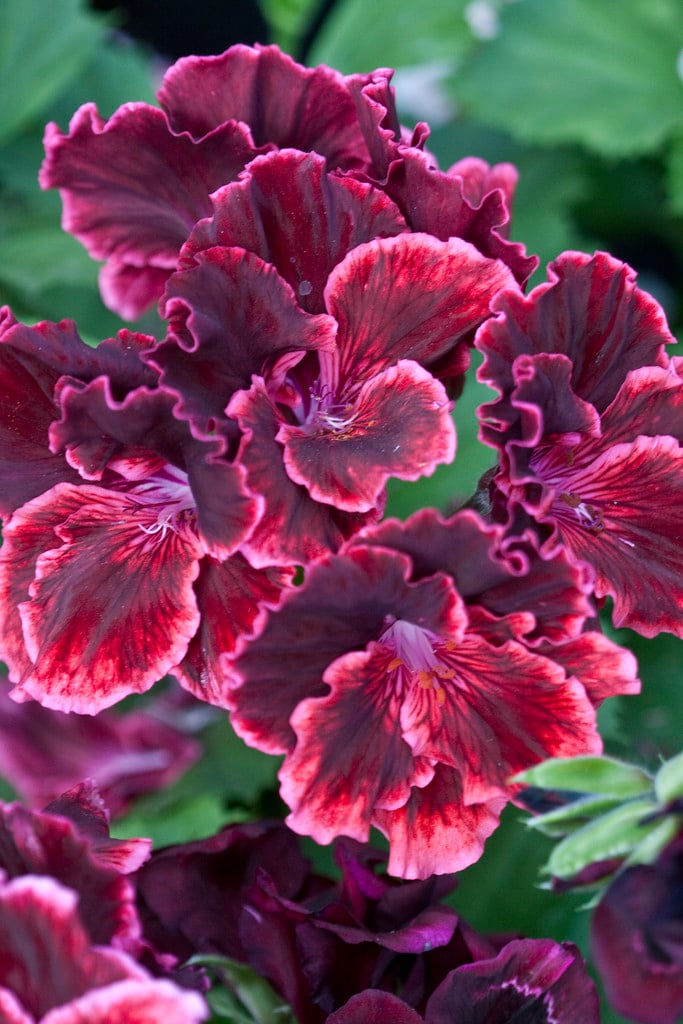
| Spring | Purple Red | Green | ||
|---|---|---|---|---|
| Summer | Purple Red | Green | ||
| Autumn | Green | |||
| Winter | Green |
Position
- Full sun
- Partial shade
Aspect
South–facing or East–facing or West–facing
Exposure
Sheltered Hardiness
H1CBotanical details
- Family
- Geraniaceae
- Native to GB / Ireland
- No
- Foliage
- Evergreen
- Habit
- Bushy
- Genus
Pelargonium can be perennials, sub-shrubs or shrubs, sometimes succulent and mostly evergreen, with palmately lobed or pinnately divided leaves and clusters of slightly irregular, 5-petalled flowers
- Name status
Accepted
- Horticultural Group
- Regal pelargoniums are evergreen perennials or subshrubs, bushy in habit, with rounded, often lobed leaves and usually single flowers to 4cm across, borne in clusters in late spring and into summer, in shades of pink, red, orange and purple or white
How to grow
Cultivation
Grow in fertile well-drained soil. Feed regularly through the growing season. Over winter in frost-free conditions in good light. See pelargonium cultivation
Propagation
Propagate by softwood cuttings of non-flowering shoots in spring or summer
Suggested planting locations and garden types
- City and courtyard gardens
- Coastal
- Cottage and informal garden
- Patio and container plants
- Flower borders and beds
Pruning
Deadhead regularly. Cut back if bringing older plants indoors for overwintering
Pests
Generally trouble-free but may be susceptible to the usual glasshouse pests such as aphids in spring and glasshouse whitefly
Diseases
Generally disease-free, but may be susceptible to grey moulds, pelargonium rusts and pelargonium viruses
Get involved
The Royal Horticultural Society is the UK’s leading gardening charity. We aim to enrich everyone’s life through plants, and make the UK a greener and more beautiful place.