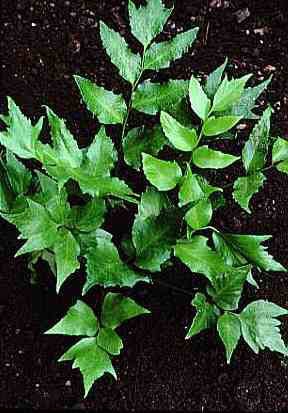
Cyrtomium falcatum

RHS Plant Profile
Japanese holly fern
Japanese holly fern Dorling Kindersley 2003

Other common names

fishtail fern, holly fern, house holly fern

Synonyms

Polystichum falcatum
Phanerophlebia falcata

Award of Garden Merit
Ferns

An evergreen fern, deciduous in cold areas, forming a tuft of leathery, pinnate fronds to 70cm long, composed of dark glossy green, broadly sickle-shaped leaflets

Position

Full shade, Partial shade

Soil Types

Chalk, Clay, Loam, Sand

Max Height

0.5-1 metres

Max Spread

0.5-1 metres

Size

Time to Maturity
2–5 years
Max Spread
0.5-1 metres
Max Height
0.5-1 metres

Growing Conditions

Chalk Clay Loam Sand
Moisture
Moist but well–drained
pH
Acid or Alkaline or Neutral

Position

Full shade Partial shade
Aspect
South–facing or East–facing
Exposure
Sheltered
Hardiness
H3

Colour & Scent

Season Stem Flower Foliage Fruit
Spring
Summer
Autumn
Winter

Botanical Details

Family
Dryopteridaceae
Native to GB/Ireland
No
Foliage
Evergreen
Habit
Tufted
Genus
Cyrtomium can be tufted evergreen or deciduous ferns with simply pinnate leaves composed of sickle-shaped pinnae; spore-heaps are scattered over the lower surface of the frond
Name Status
Correct
Plant Range
E Asia

How to Grow

Cultivation

Can be grown outdoors in a moderately fertile, humus-rich soil but will require protection from frosts

Propagation

Propagate by spores sown at 16°C in late summer

Suggested planting locations and garden types

  • Rock garden
  • Low Maintenance
  • Banks and slopes
  • Ground cover
  • Underplanting of roses and shrubs

Pruning

No pruning required but frost-damaged fronds can be removed in spring

Pests

Generally pest-free

Diseases

Generally disease-free