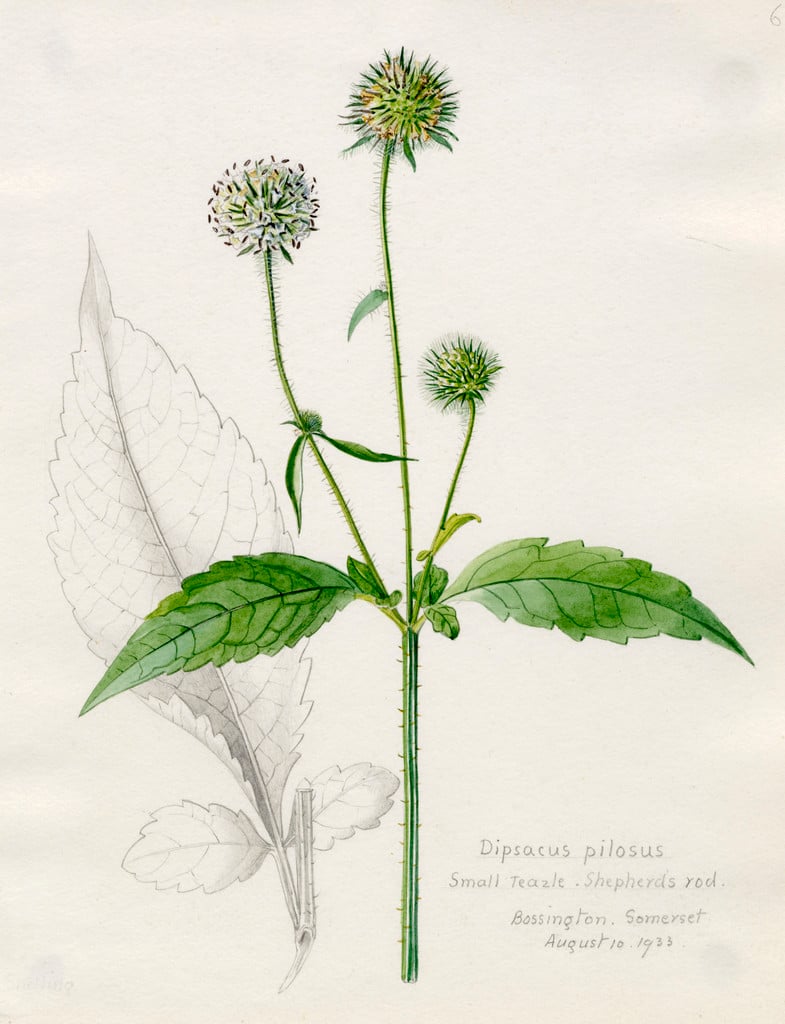
Dipsacus pilosus

RHS Plant Profile
small teasel
small teasel RHS

Other common names

shepherd's rod, ffon y bugail

Annual Biennial

A biennial, to 1.2-1.5m tall, with erect, sparsely-prickly stems. Basal leaves appear in the first year; in the second year it produces globose flowerheads of whitish flowers from late summer to early autumn

Position

Full sun, Partial shade

Soil Types

Chalk, Clay, Loam, Sand

Max Height

1-1.5 metres

Max Spread

0.5-1 metres

Size

Time to Maturity
1–2 years
Max Spread
0.5-1 metres
Max Height
1-1.5 metres

Growing Conditions

Chalk Clay Loam Sand
Moisture
Moist but well–drained or Poorly–drained
pH
Alkaline or Neutral

Position

Full sun Partial shade
Aspect
South–facing or East–facing or West–facing
Exposure
Exposed or Sheltered
Hardiness
H7

Colour & Scent

Season Stem Flower Foliage Fruit
Spring
Summer
Autumn
Winter

Botanical Details

Family
Caprifoliaceae
Native to GB/Ireland
Yes
Foliage
Deciduous
Habit
Columnar upright
Genus
Dipsacus are erect biennials or perennials with simple or pinnate leaves and crowded heads of numerous small flowers in dense terminal capitula, the calyx teeth bristly
Name Status
Correct

How to Grow

Cultivation

Prefers moister soils and partial shade. The flowerheads can be harvested for air-drying from mid to late summer, or left for birds over winter

Propagation

Propagate by seed in situ in autumn or spring

Suggested planting locations and garden types

  • Architectural
  • Cottage and informal garden
  • Wildlife gardens
  • Low Maintenance
  • Banks and slopes
  • Cut flowers
  • Flower borders and beds

Pruning

No pruning required

Pests

May be susceptible to aphids

Diseases

Generally disease-free