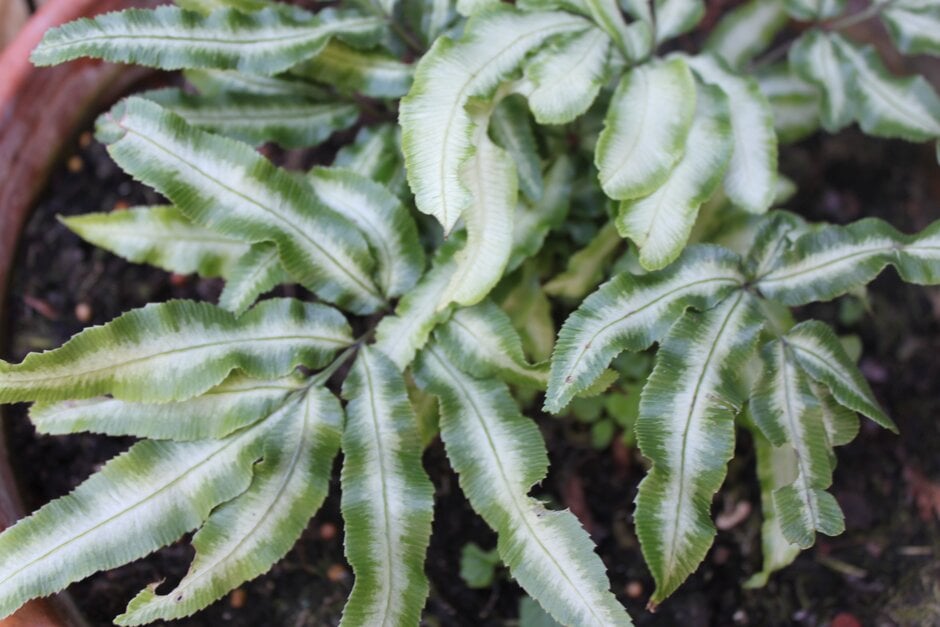
Pteris nipponica 'Cristata'

RHS Plant Profile
white-striped Cretan brake 'Cristata'
white-striped Cretan brake 'Cristata' James Lawrence

Synonyms

Pteris cretica 'Albo-lineata Cristata'
Pteris cretica var. albolineata 'Cristata'

Conservatory Greenhouse Ferns Houseplants

A clump-forming, evergreen fern with long, slender, ruffled and variegated green foliage with a silvery-white central band. Makes an ideal houseplant or conservatory plant

Position

Partial shade

Soil Types

Chalk, Clay, Loam, Sand

Max Height

0.5-1 metres

Max Spread

0.1-0.5 metres

Size

Time to Maturity
1–2 years
Max Spread
0.1-0.5 metres
Max Height
0.5-1 metres

Growing Conditions

Chalk Clay Loam Sand
Moisture
Moist but well–drained
pH
Neutral

Position

Partial shade
Aspect
East–facing or North–facing or West–facing
Exposure
Sheltered
Hardiness
H2

Colour & Scent

Season Stem Flower Foliage Fruit
Spring
Summer
Autumn
Winter

Botanical Details

Family
Pteridaceae
Native to GB/Ireland
No
Foliage
Evergreen
Habit
Clump forming
Genus
Pteris can be evergreen, semi-evergreen or deciduous ferns, with short or long rhizomes and fronds that may be pinnate to 4-pinnate
Name Status
Unresolved

How to Grow

Cultivation

Indoors, grow in moist but well-drained compost in a humid location in bright, filtered light. Water regularly to keep soil moist but avoid waterlogging. Repot in spring if showing signs of outgrowing their pot. Feed monthly during the growing sesason (Apr-Sept). See how to grow ferns as houseplants for further advice

Propagation

Propagate by spores or division of rhizomes or rootball in spring or when re-potting. Include healthy fronds or leaf buds when dividing

Suggested planting locations and garden types

  • Hanging Basket
  • Houseplants
  • Low Maintenance
  • Conservatory and greenhouse

Pruning

No pruning required. Remove dead fronds as required

Pests

May be susceptible to mealybugs, aphids and red spider mite

Diseases

May be susceptible to leaf spot, bacterial wilt and a virus