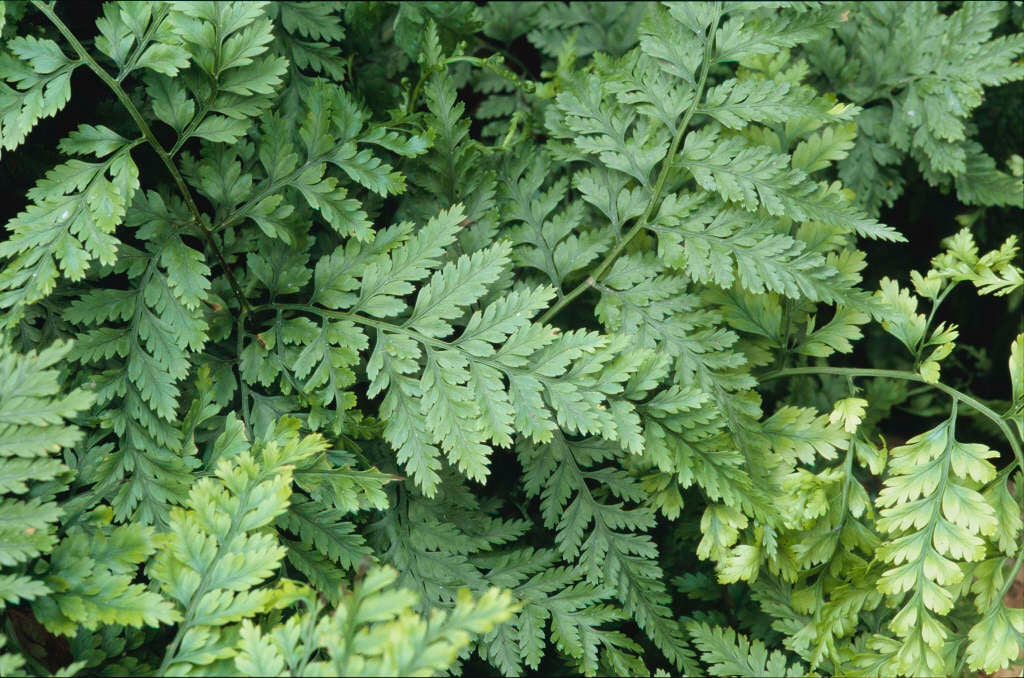
Davallia mariesii

RHS Plant Profile
squirrel's foot fern
squirrel's foot fern RHS

Other common names

ball fern, Japan hare's foot fern

Award of Garden Merit
Ferns

A deciduous fern with creeping rhizomes covered with brown scales; fronds to 25cm, triangular-ovate, finely dissected

Position

Partial shade

Soil Types

Loam

Max Height

0.1-0.5 metres

Max Spread

0.5-1 metres

Size

Time to Maturity
5–10 years
Max Spread
0.5-1 metres
Max Height
0.1-0.5 metres

Growing Conditions

Loam
Moisture
Moist but well–drained
pH
Acid or Neutral

Position

Partial shade
Aspect
West–facing or East–facing or North–facing
Exposure
Sheltered
Hardiness
H2

Colour & Scent

Season Stem Flower Foliage Fruit
Spring
Summer
Autumn
Winter

Botanical Details

Family
Davalliaceae
Native to GB/Ireland
No
Foliage
Deciduous
Habit
Matforming
Genus
Davallia can be evergreen or deciduous ferns with finely divided ovate or triangular fronds arising singly from a creeping, conspicuously scaly rhizome
Name Status
Correct
Plant Range
East Asia

How to Grow

Cultivation

Grow in moist, open leafy soil in partial shade; hardy to -7°C (19°F) if protected in winter. Under glass grow in equal parts coarse leaf mould or peat substitute and moss, bark, sharp sand, charcoal and pine needles. See how to grow tender ferns outdoors for further advice

Propagation

Divide rhizomes in spring, ensuring each division has roots

Suggested planting locations and garden types

  • City and courtyard gardens
  • Cottage and informal garden
  • Patio and container plants
  • Rock garden
  • Flower borders and beds
  • Ground cover
  • Underplanting of roses and shrubs

Pruning

No pruning required but tidy any winter damaged fronds in early spring

Pests

Generally pest-free

Diseases

Generally disease-free