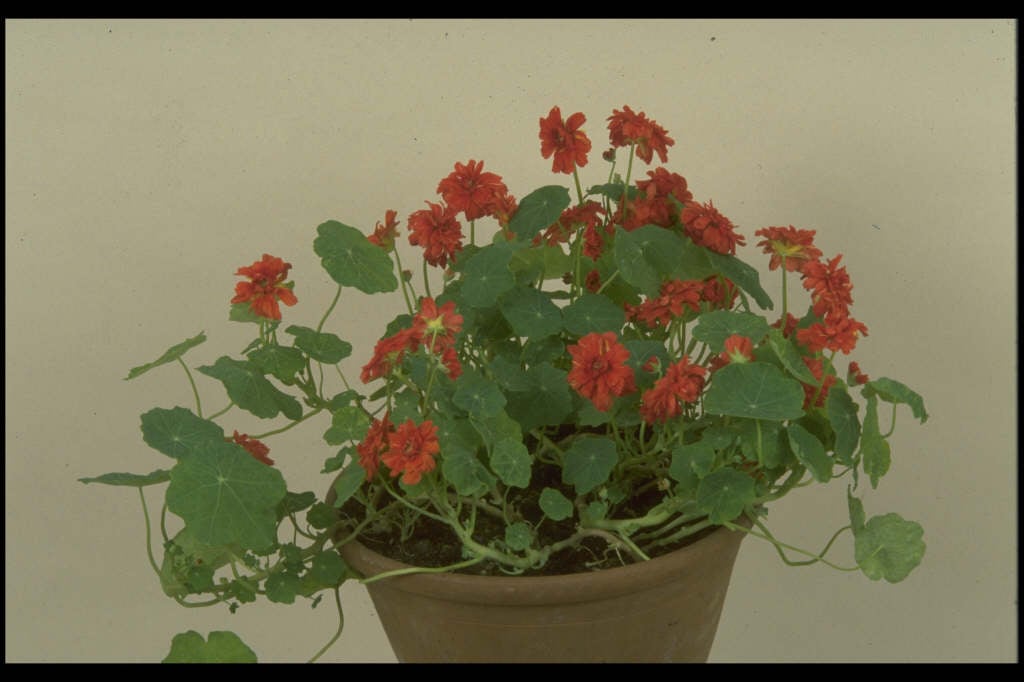
Tropaeolum majus 'Hermine Grashoff' (d)

RHS Plant Profile
nasturtium 'Hermine Grashoff'
nasturtium 'Hermine Grashoff' www.gardenworldimages.com

Synonyms

Nasturtium 'Hermine Grashoff'

Bedding Herbaceous Perennial

A trailing perennial to 20cm in height, with rounded or kidney-shaped light green leaves, and double orange-scarlet flowers 6cm across, from summer to autumn

Position

Full sun

Soil Types

Chalk, Loam, Sand

Max Height

0.1-0.5 metres

Max Spread

0.1-0.5 metres

Size

Time to Maturity
1–2 years
Max Spread
0.1-0.5 metres
Max Height
0.1-0.5 metres

Growing Conditions

Chalk Loam Sand
Moisture
Well–drained
pH
Acid or Alkaline or Neutral

Position

Full sun
Aspect
West–facing or South–facing
Exposure
Exposed or Sheltered
Hardiness
H3

Colour & Scent

Season Stem Flower Foliage Fruit
Spring
Summer
Autumn
Winter

Botanical Details

Family
Tropaeolaceae
Native to GB/Ireland
No
Foliage
Deciduous
Habit
Trailing
Potentially harmful
Skin allergen. Wear gloves and other protective equipment when handling
Genus
Tropaeolum can be annuals or perennials, bushy, trailing or climbing by twining stems, with simple or palmately lobed leaves and showy funnel-shaped flowers with five long-clawed petals and often a spur
Name Status
Accepted

How to Grow

Cultivation

Best grown in poor, well-drained soil in full sun, if the soil is too rich foliage will be produced at the expense of flowers

Propagation

Propagate by stem tip cuttings

Suggested planting locations and garden types

  • City and courtyard gardens
  • Cottage and informal garden
  • Patio and container plants
  • Flower borders and beds

Pruning

Cut back after flowering

Pests

May be susceptible to glasshouse whitefly and glasshouse red spider mite and whitefly

Diseases

May be susceptible to virus diseases