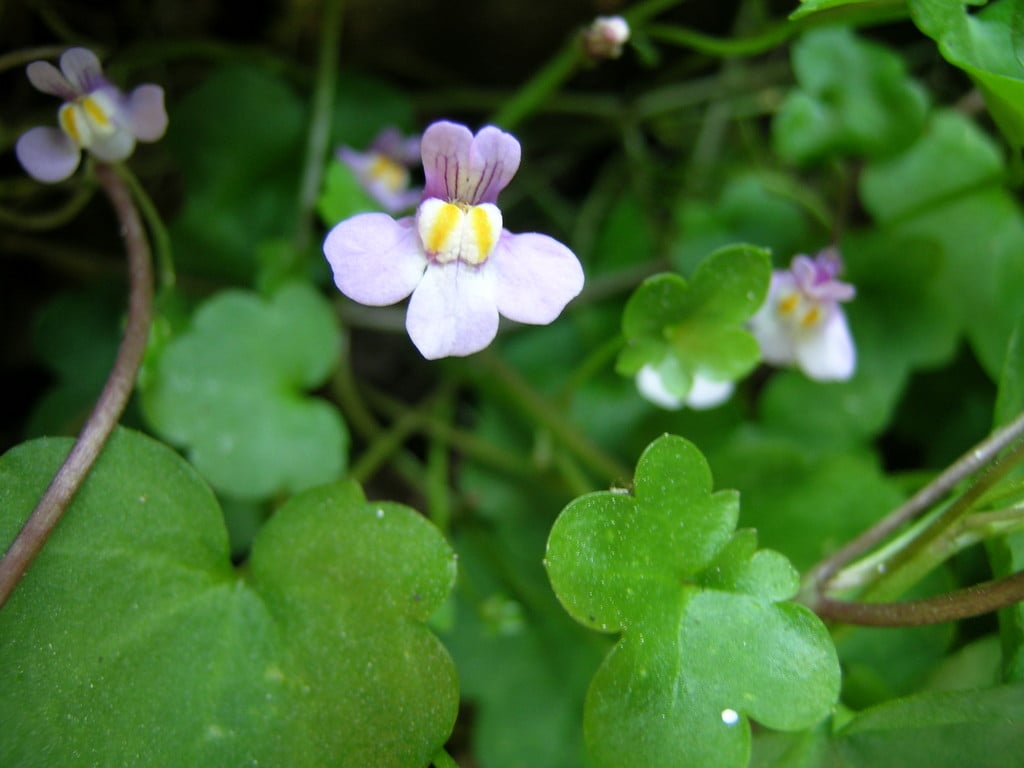
Cymbalaria muralis

RHS Plant Profile
ivy-leaved toadflax
ivy-leaved toadflax RHS

Other common names

climbing sailor, Colisseum ivy, devil's ribbon, ivy weed, ivy wort, Kenilworth ivy, Kentucky ivy, Oxford ivy, Oxford weed, penny leaf, roving sailor, Wandering Jew, wandering sailor, female fluellen, mother of thousands, pennywort, Aaron's beard

Synonyms

Antirrhinum cymbalaria
Linaria cymbalaria

Herbaceous Perennial

Produces a low mat of small, lobed, more or less evergreen leaves from creeping stems that root as they go. Small, lilac, snapdragon-like flowers are produced all summer

Position

Full sun, Partial shade

Soil Types

Chalk, Loam, Sand

Max Height

Up to 10 cm

Max Spread

0.1-0.5 metres

Size

Time to Maturity
2–5 years
Max Spread
0.1-0.5 metres
Max Height
Up to 10 cm

Growing Conditions

Chalk Loam Sand
Moisture
Moist but well–drained or Well–drained
pH
Acid or Alkaline or Neutral

Position

Full sun Partial shade
Aspect
West–facing or South–facing or North–facing or East–facing
Exposure
Exposed or Sheltered
Hardiness
H5

Colour & Scent

Season Stem Flower Foliage Fruit
Spring
Summer
Autumn
Winter

Botanical Details

Family
Plantaginaceae
Native to GB/Ireland
No
Foliage
Semi evergreen
Habit
Trailing
Genus
Cymbalaria are low, creeping perennials with rounded, mostly lobed leaves and small, two-lipped, spurred flowers in shades of purple, or white
Name Status
Correct

How to Grow

Cultivation

Grow in semi-shade, or full sun where the soil is not too dry. Good for cracks in paving, or for trailing down walls

Propagation

Propagate by seed, or by removing rooted sections of stem

Suggested planting locations and garden types

  • Cottage and informal garden
  • Patio and container plants
  • Gravel garden
  • Rock garden
  • Wildlife gardens
  • Ground cover
  • Wall side borders

Pruning

No pruning required

Pests

Generally pest-free

Diseases

Generally disease-free