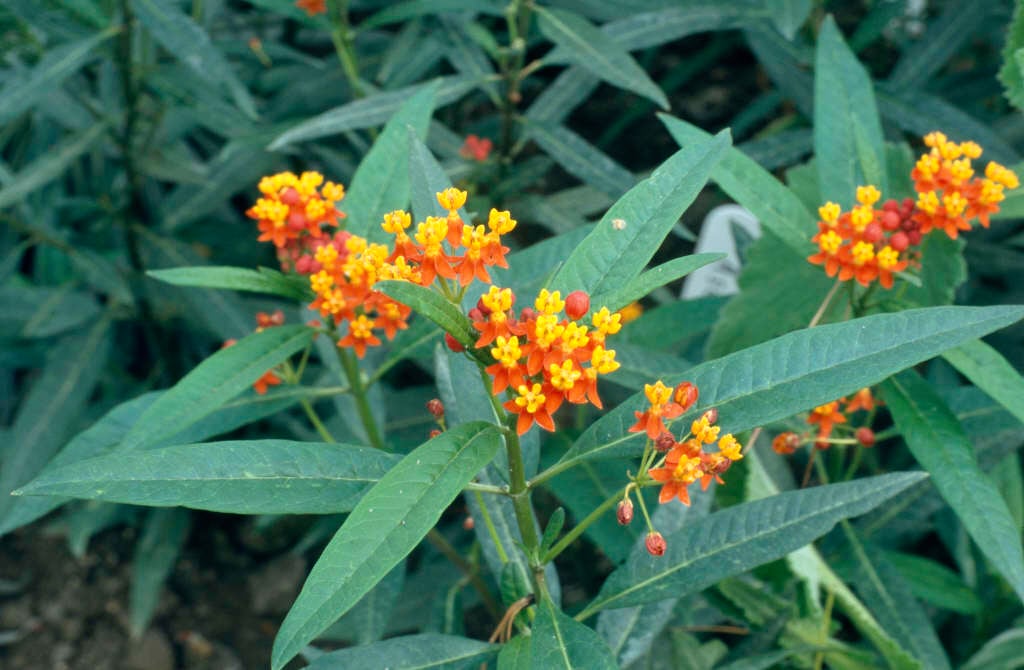
Asclepias curassavica

RHS Plant Profile
bloodflower
bloodflower RHS 2002

Other common names

bastard ipecacuanha, bastard pecacuanha, Indian root, matac, matal, red head, wild ipecacuanha, blood flower, swallow wort

Conservatory Greenhouse

An upright evergreen sub-shrub with lance-shaped leaves and umbel-like terminal clusters of orange-red flowers 2cm across, in summer and autumn, sometimes followed by erect, ovoid fruit 6-8cm in length

Position

Full sun

Soil Types

Loam, Sand

Max Height

0.5-1 metres

Max Spread

0.1-0.5 metres

Size

Time to Maturity
2–5 years
Max Spread
0.1-0.5 metres
Max Height
0.5-1 metres

Growing Conditions

Loam Sand
Moisture
Well–drained
pH
Acid or Neutral

Position

Full sun
Aspect
South–facing or West–facing
Exposure
Sheltered
Hardiness
H1C

Colour & Scent

Season Stem Flower Foliage Fruit
Spring
Summer
Autumn
Winter

Botanical Details

Family
Apocynaceae
Native to GB/Ireland
No
Foliage
Evergreen
Habit
Bushy
Potentially harmful
Harmful if eaten. Wear gloves and other protective equipment when handling
Genus
Asclepias can be evergreen or deciduous perennials or subshrubs, with simple, entire leaves and umbel-like clusters of small, distinctively shaped flowers followed by paired fruits containing seeds embedded in silky fibres
Name Status
Correct

How to Grow

Cultivation

Grow outdoors in fertile well-drained loamy soil in full sun in frost-free area. Under glass grow in peat-free, loam-based compost. Reduce watering after flowering and keep almost dry in the winter

Propagation

Propagate by seed, division or basal cuttings

Suggested planting locations and garden types

  • Sub-tropical
  • Patio and container plants

Pruning

No pruning required

Pests

May be susceptible to glasshouse whitefly under glass

Diseases

Generally disease-free