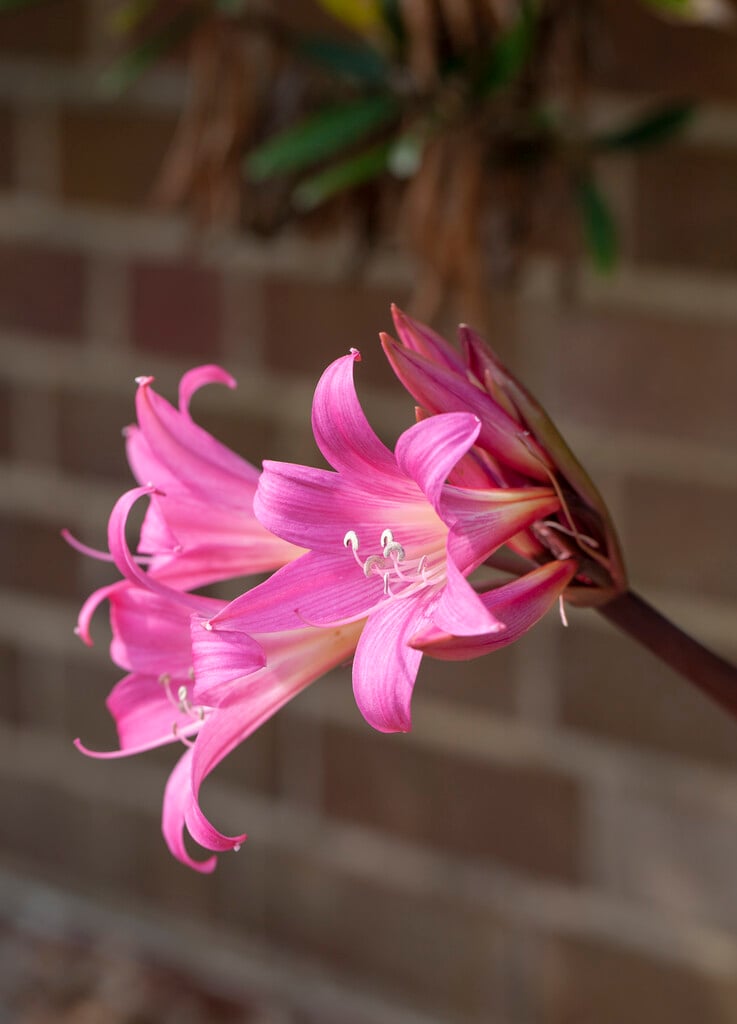
Amaryllis belladonna 'Johannesburg'

<em>Amaryllis</em> <em>belladonna</em> 'Johannesburg' visionspictures.com
Bulbs

A bulbous perennial with erect stems, each bearing an umbel of funnel-shaped, fragrant rose-pink trumpet-shaped flowers, which open in late summer before the narrowly strap-shaped leaves appear

Position

Full sun

Soil Types

Chalk, Loam, Sand

Max Height

0.1-0.5 metres

Max Spread

0-0.1 metre

Size

Time to Maturity
5–10 years
Max Spread
0-0.1 metre
Max Height
0.1-0.5 metres

Growing Conditions

Chalk Loam Sand
Moisture
Moist but well–drained or Well–drained
pH
Acid or Alkaline or Neutral

Position

Full sun
Aspect
South–facing or West–facing
Exposure
Sheltered
Hardiness
H4

Colour & Scent

Fragrance Flower
Season Stem Flower Foliage Fruit
Spring
Summer
Autumn
Winter

Botanical Details

Family
Amaryllidaceae
Native to GB/Ireland
No
Foliage
Deciduous
Habit
Columnar upright
Potentially harmful
Ornamental bulbs - not to be eaten. Wear gloves and other protective equipment when handling Pets: Ornamental bulbs -not to be eaten - see the HTA guide to potentially harmful plants for further information and useful contact numbers
Genus
Amaryllis is a bulbous perennial with showy, funnel-shaped flowers on naked stems in autumn
Name Status
Accepted

How to Grow

Cultivation

Plant bulbs only just below the soil surface, when dormant, in moderately fertile, light, free-draining soil; extra grit can be added to improve drainage. Will do best when baked in full sun and with shelter from harsh frosts

Propagation

Propagate by seed, sowing them in containers in a cold frame when ripe or in the spring. Alternatively remove offsets in autumn

Suggested planting locations and garden types

  • Cottage and informal garden
  • Gravel garden
  • Mediterranean climate plants
  • Patio and container plants
  • Cut flowers
  • Flower borders and beds

Pruning

No pruning required

Pests

May be susceptible to bulbs damage by large narcissus bulb fly. May also be susceptible to aphids, mealybugs and glasshouse red spider mite when grown under glass

Diseases

Generally disease-free