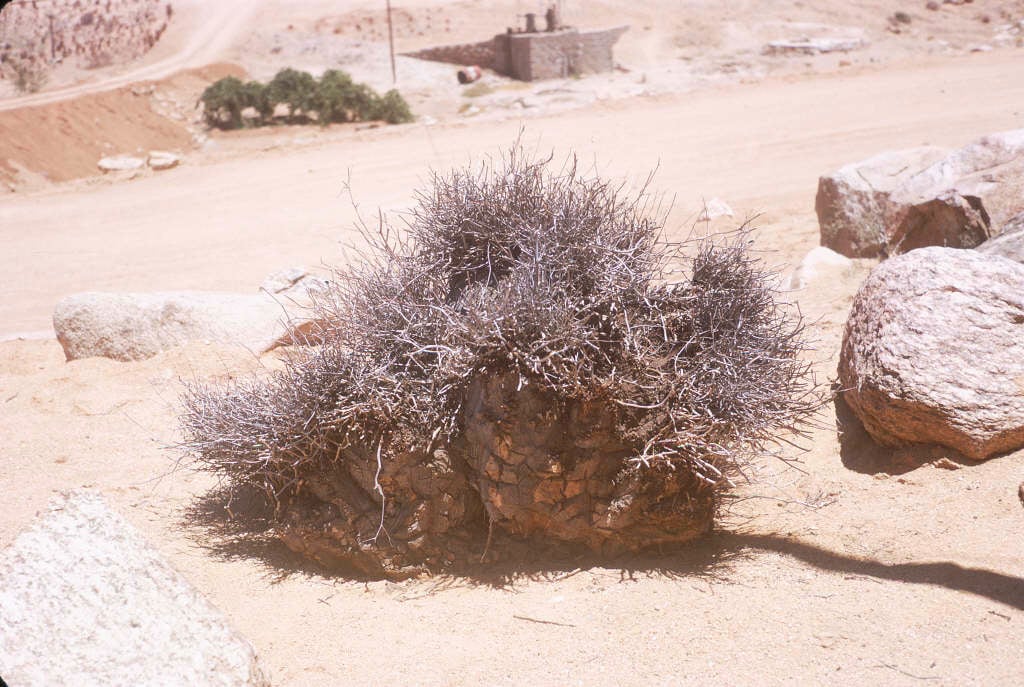
Dioscorea elephantipes

RHS Plant Profile
elephant's foot
elephant's foot RHS 1970

Other common names

tortoise plant

Synonyms

Testudinaria elephantipes

Award of Garden Merit
Climber Wall Shrub Conservatory Greenhouse

A deciduous climbing perennial growing from a large, partly exposed, rugged woody tuber, with heart-shaped blue-green leaves and racemes of tiny yellow flowers

Position

Full sun

Soil Types

Loam, Sand

Max Height

0.5-1 metres

Max Spread

0.5-1 metres

Size

Time to Maturity
5–10 years
Max Spread
0.5-1 metres
Max Height
0.5-1 metres

Growing Conditions

Loam Sand
Moisture
Well–drained
pH
Acid or Alkaline or Neutral

Position

Full sun
Aspect
South–facing or East–facing
Exposure
Sheltered
Hardiness
H1C

Colour & Scent

Season Stem Flower Foliage Fruit
Spring
Summer
Autumn
Winter

Botanical Details

Family
Dioscoreaceae
Native to GB/Ireland
No
Foliage
Deciduous
Habit
Climbing
Potentially harmful
TOXIC if eatenskin irritant. Wear gloves and other protective equipment when handling Pets (dogs): TOXIC if eatenskin irritant - see the HTA guide to potentially harmful plants for further information and useful contact numbers
Genus
Dioscorea can be evergreen or deciduous, twining perennials with tuberous roots and simple or palmate leaves and small bell-shaped greenish or yellow flowers in racemes from the leaf axils
Name Status
Correct
Plant Range
South Africa

How to Grow

Cultivation

Under glass grow in gritty, very well-draining potting compost mulched with grit in full light. Water moderately when in growth and apply a balanced liquid fertiliser every two or three weeks; keep completely dry in winter. Suitable for a desert garden

Propagation

Propagate by seed at 19 to 24°C in spring or take softwood cuttings as young shoots arise from the tuber in spring

Suggested planting locations and garden types

  • Patio and container plants

Pruning

Pruning group 11 in spring

Pests

May be susceptible to aphids and froghoppers

Diseases

Generally disease-free