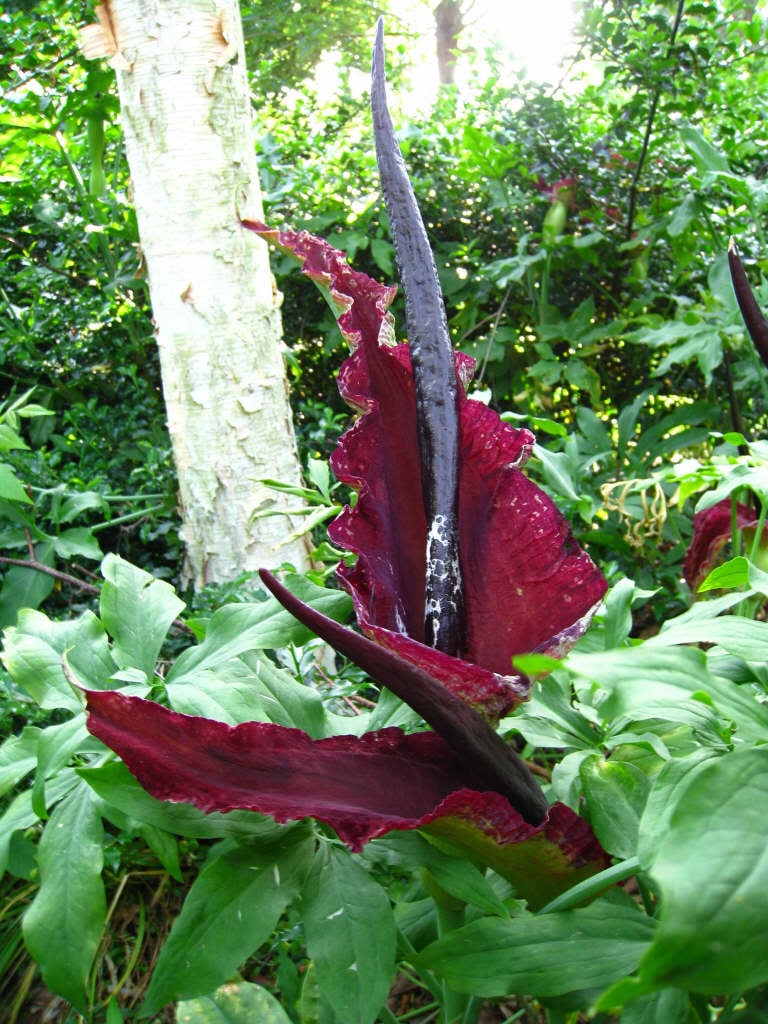
Dracunculus vulgaris

RHS Plant Profile
dragon arum
dragon arum RHS

Other common names

brook leek, dragon, dragon's female, edderwort, faverole, Indian turnip, snake plant

Synonyms

Arum dracunculus

Herbaceous Perennial

A handsomely purple-spotted stem with several leaves 30cm wide or more, the narrow lobes sometimes splashed with silver; the flower consists of a hood-like deep purple spathe to 60cm long, with a blackish-purple spadix

Position

Full sun, Partial shade

Soil Types

Chalk, Clay, Loam, Sand

Max Height

1-1.5 metres

Max Spread

0.5-1 metres

Size

Time to Maturity
2–5 years
Max Spread
0.5-1 metres
Max Height
1-1.5 metres

Growing Conditions

Chalk Clay Loam Sand
Moisture
Well–drained
pH
Acid or Alkaline or Neutral

Position

Full sun Partial shade
Aspect
South–facing or West–facing or East–facing or North–facing
Exposure
Sheltered
Hardiness
H3

Colour & Scent

Fragrance Flower
Season Stem Flower Foliage Fruit
Spring
Summer
Autumn
Winter

Botanical Details

Family
Araceae
Native to GB/Ireland
No
Foliage
Deciduous
Habit
Bushy
Potentially harmful
Humans/Pets: Harmful if eatenskin/eye irritant. Wear gloves and other protective equipment when handling For further information and contact numbers regarding pets, see the HTA guide to potentially harmful plants
Genus
Dracunculus are tuberous deciduous perennials with attractive leaves divided into several narrow, finger-like segments, and dramatic, foul-smelling, arum-type flowers in spring or summer; the plant dies down after flowering
Name Status
Correct
Plant Range
Mediterranean

How to Grow

Cultivation

Plant tubers 15cm (6in) deep in autumn or spring in humus-rich, well-drained soil that dries out in summer. Grows best in full sun but will tolerate partial shade. Protect with a dry winter mulch. Grows well in in open glades in sheltered woodland or at the base of a sunny wall. Consider the smell of the flowers when siting

Propagation

Separate offsets in autumn or spring

Suggested planting locations and garden types

  • Architectural
  • Cottage and informal garden
  • Banks and slopes
  • Flower borders and beds

Pruning

No pruning required

Pests

Generally pest-free

Diseases

Generally disease-free