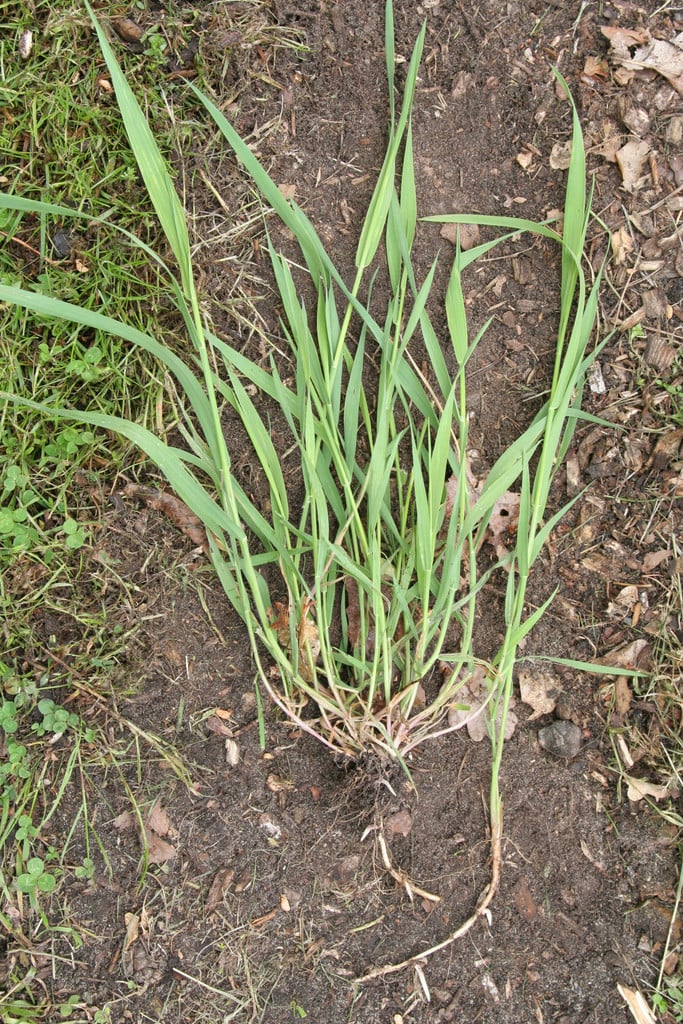
Elymus repens

RHS Plant Profile
couch grass
couch grass RHS

Other common names

felt, lagoon grass, quack grass, quitch grass, scutch, shelly grass, skally grass, squitch grass, twitch, twitch grass, witch grass

Synonyms

Elytrigia repens
Triticum repens
Agropyron repens

Grass Like

A fast-growing perennial grass with pale, hairy sheaths on the lower leaves and flat green leaf blades to 40cm long. Produces upright flower spikes to 120cm high in late summer. Each plant forms a dense network of pale yellow or straw-coloured rhizomatous roots, which enable it to spread rapidly in lawns and borders

Position

Full sun, Partial shade

Soil Types

Chalk, Clay, Loam, Sand

Max Height

1-1.5 metres

Max Spread

0.5-1 metres

Size

Time to Maturity
1 year
Max Spread
0.5-1 metres
Max Height
1-1.5 metres

Growing Conditions

Chalk Clay Loam Sand
Moisture
Moist but well–drained or Well–drained or Poorly–drained
pH
Acid or Alkaline or Neutral

Position

Full sun Partial shade
Aspect
East–facing or South–facing or West–facing or North–facing
Exposure
Exposed or Sheltered
Hardiness
H6

Colour & Scent

Season Stem Flower Foliage Fruit
Spring
Summer
Autumn
Winter

Botanical Details

Family
Poaceae
Native to GB/Ireland
Yes
Foliage
Deciduous
Habit
Clump forming
Genus
Elymus can be tufted or rhizomatous perennial grasses, with linear, deciduous leaves, sometimes attractively coloured, and flattened flower spikes in summer and autumn
Name Status
Correct
Plant Range
Temp. N. Hemisphere

How to Grow

Cultivation

Growth begins early in spring, which can allow this plant to out-compete others that may need warmer temperatures. Because of this, and its ability to spread rapidly underground, it is often considered a weed. However, it is a food plant for the caterpillars of several moths and butterflies, so can be tolerated in rough areas. See couch grass for more information

Propagation

Propagates predominantly by spreading rhizomes (underground stems), although seed is also produced and can remain viable in the soil for some years

Suggested planting locations and garden types

  • Wildlife gardens

Pruning

No pruning needed; cutting can encourage tillering (spreading by horizontal stems)

Pests

Generally pest-free

Diseases

Generally disease-free