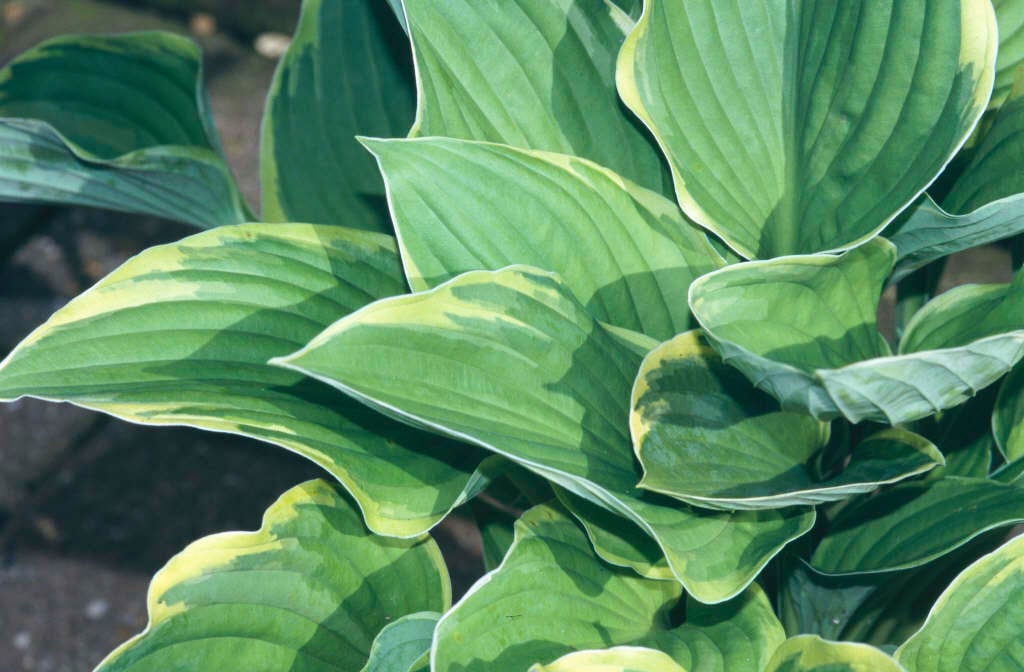
Hosta fortunei var. aureomarginata (v)

RHS Plant Profile
gold-edged plantain lily
gold-edged plantain lily RHS 2002

Synonyms

Hosta 'Aureomarginata' (_fortunei_)
Hosta 'Yellow Edge' (_fortunei_)
Hosta fortunei var. obscura 'Aureomarginata'
Hosta 'Obscura Marginata' (_fortunei_)

Award of Garden Merit
Herbaceous Perennial

H. fortunei var. aureomarginata forms a compact clump of broad, heart-shaped leaves 20-25cm in length, with conspicuous veins and irregular yellow margins. Funnel-shaped mauve flowers are borne on leafy stems to 75cm in length

Position

Partial shade

Soil Types

Clay, Loam

Max Height

0.5-1 metres

Max Spread

0.5-1 metres

Size

Time to Maturity
2–5 years
Max Spread
0.5-1 metres
Max Height
0.5-1 metres

Growing Conditions

Clay Loam
Moisture
Moist but well–drained
pH
Acid or Neutral

Position

Partial shade
Aspect
North–facing or West–facing or East–facing
Exposure
Sheltered
Hardiness
H7

Colour & Scent

Season Stem Flower Foliage Fruit
Spring
Summer
Autumn
Winter

Botanical Details

Family
Asparagaceae
Native to GB/Ireland
No
Foliage
Deciduous
Habit
Clump forming
Genus
Hosta are clump-forming herbaceous perennials with simple, ovate or lance-shaped leaves, often attractively coloured or variegated, and erect racemes of nodding, funnel or bell-shaped flowers in early summer
Name Status
Correct

How to Grow

Cultivation

Grow in fertile, moist but well-drained soil in part shade with shelter from cold, dry winds. See hosta cultivation

Propagation

Propagate by division in late summer or early spring

Suggested planting locations and garden types

  • City and courtyard gardens
  • Patio and container plants
  • Cottage and informal garden
  • Cut flowers
  • Flower borders and beds
  • Underplanting of roses and shrubs
  • Ground cover

Pruning

Remove spent foliage as required and clear up dead foliage when it dies back at the end of the growing season

Pests

May be susceptble to slugs and snails; plants in pots may be susceptible to vine weevil

Diseases

May be susceptible to a virus