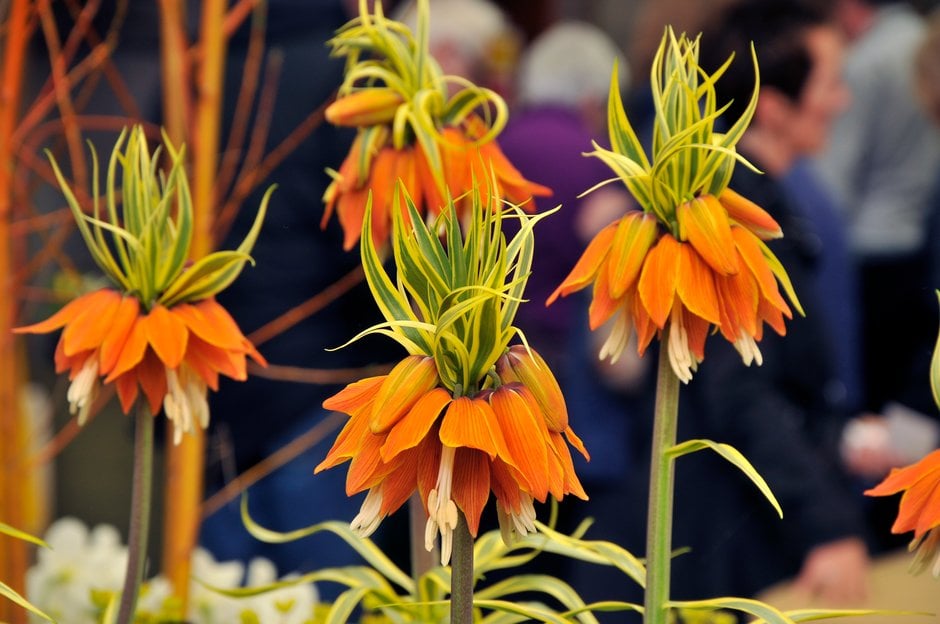
Fritillaria imperialis 'Aureomarginata' (v)

RHS Plant Profile
crown imperial 'Aureomarginata'
crown imperial 'Aureomarginata' RHS
Bulbs

A bulbous perennial with stout, erect stems bearing whorled, lance-shaped leaves with deep yellow margins.In early summer produces a terminal umbel of hanging, bell-shaped, orange flowers beneath a crown of variegatedbracts

Position

Full sun

Soil Types

Chalk, Loam, Sand

Max Height

1-1.5 metres

Max Spread

0.1-0.5 metres

Size

Time to Maturity
2–5 years
Max Spread
0.1-0.5 metres
Max Height
1-1.5 metres

Growing Conditions

Chalk Loam Sand
Moisture
Well–drained
pH
Acid or Alkaline or Neutral

Position

Full sun
Aspect
South–facing or West–facing
Exposure
Exposed or Sheltered
Hardiness
H7

Colour & Scent

Season Stem Flower Foliage Fruit
Spring
Summer
Autumn
Winter

Botanical Details

Family
Liliaceae
Native to GB/Ireland
No
Foliage
Deciduous
Habit
Columnar upright
Potentially harmful
Ornamental bulbs, not to be eaten. Wear gloves and other protective equipment when handling. Pets: Ornamental bulbs, not to be eaten - see the HTA guide to potentially harmful plants for further information and useful contact numbers
Genus
Fritillaria are bulbous herbaceous perennials with lance-shaped or linear leaves and nodding bell-shaped or bowl-shaped flowers that may be solitary or in racemes or umbels
Name Status
Accepted

How to Grow

Cultivation

Grows well in most fertile, well-drained soils. Handle the fragile bulbs carefully and plant at four times own depth See crown imperial cultivation.

Propagation

Propagate by seed, sown in pots in a cold frame in autumn. Needs exposure to winter cold for germination in spring. Divide offsets in late summer

Suggested planting locations and garden types

  • Cottage and informal garden
  • Flower borders and beds

Pruning

No pruning required

Pests

May be susceptible to slugs and lily beetle

Diseases

Generally disease-free