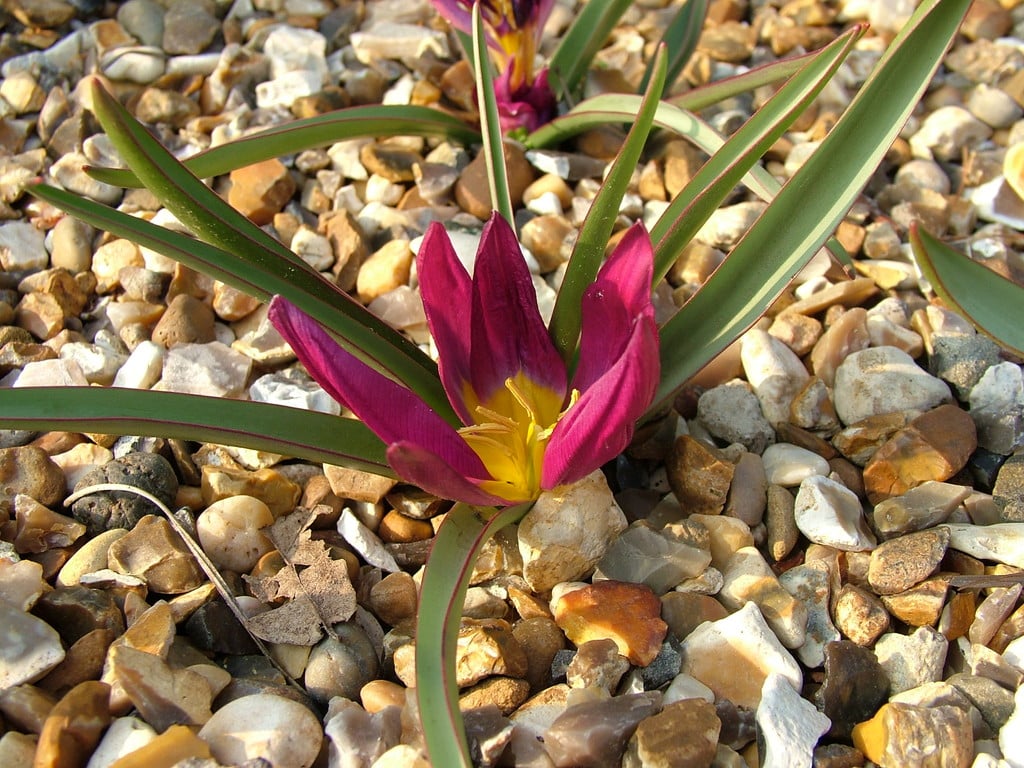
Tulipa humilis 'Odalisque' (15)

RHS Plant Profile
tulip 'Odalisque'
tulip 'Odalisque' RHS

Synonyms

Tulipa pulchella 'Odalisque'

Bulbs

A bulbous perennial, 10-15cm high, with linear leaves and flowers in early to mid spring. Pointed-tipped tepals are purplish-pink with a darker band on the outside and yellow bases

Position

Full sun

Soil Types

Chalk, Loam, Sand

Max Height

0.1-0.5 metres

Max Spread

0.1-0.5 metres

Size

Time to Maturity
1–2 years
Max Spread
0.1-0.5 metres
Max Height
0.1-0.5 metres

Growing Conditions

Chalk Loam Sand
Moisture
Well–drained
pH
Alkaline or Neutral

Position

Full sun
Aspect
South–facing or East–facing or West–facing
Exposure
Sheltered
Hardiness
H5
Drought Resistance
Yes

Colour & Scent

Season Stem Flower Foliage Fruit
Spring
Summer
Autumn
Winter

Botanical Details

Family
Liliaceae
Native to GB/Ireland
No
Foliage
Deciduous
Habit
Clump forming
Potentially harmful
Harmful if eatenskin allergen. Wear gloves and other protective equipment when handling. Pets: Harmful if eatenskin allergen - for further information and contact numbers regarding pets, see the HTA guide to potentially harmful plants
Genus
Tulipa are bulbous perennials with characteristic flowers, in a wide range of colours, in spring
Name Status
Accepted
Horticultural Group
Miscellaneous tulips include all species and hybrids not otherwise classified

How to Grow

Cultivation

Plant 15-20cm deep from mid-autumn to late autumn, in a rock garden or in containers, in fertile, preferably neutral or alkaline soil that is free-draining but also able to hold moisture when the bulbs are in full growth, in full sun and with shelter from strong winds; in summer, remove old yellow foliage, and keep soil dry; for more advice, see tulip cultivation

Propagation

Propagate by division of offsets, re-planting the larger bulbs and growing on the smaller bulbs in a nursery bed, or by bulb propagation

Suggested planting locations and garden types

  • City and courtyard gardens
  • Rock garden
  • Cottage and informal garden
  • Gravel garden
  • Patio and container plants
  • Cut flowers
  • Flower borders and beds

Pruning

No pruning required

Pests

May be susceptible to slugs, aphids and stem and bulb eelworm; squirrels may eat the bulbs

Diseases

May be susceptible to tulip fire and bulb rot in poorly drained soil