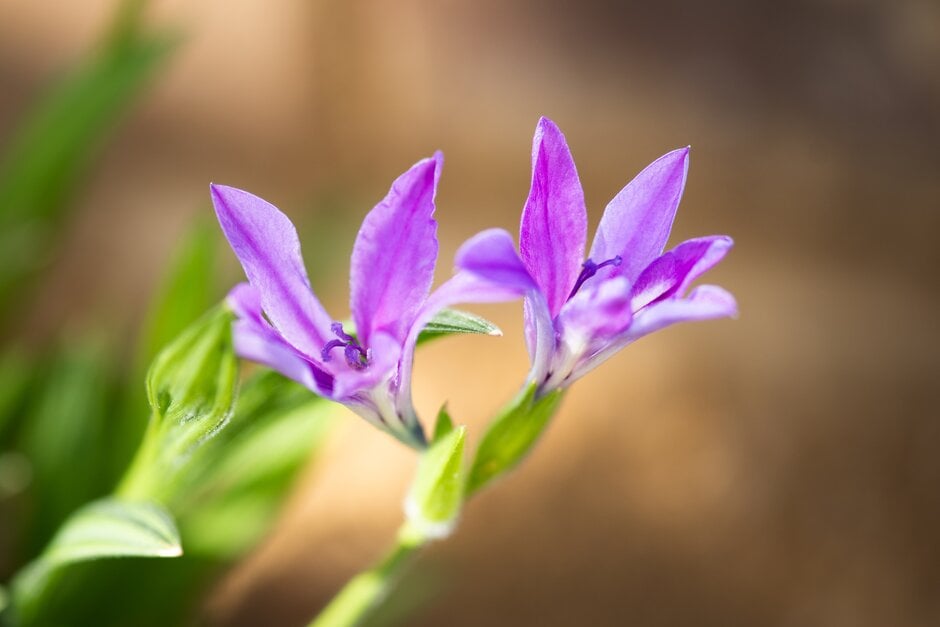
Babiana nana

RHS Plant Profile
dwarf baboon flower
dwarf baboon flower RHS / Joanna Kossak

Synonyms

Gladiolus nanus

Bulbs Herbaceous Perennial

A rare, compact cormous perennial with lance-shaped ribbed green leaves and large rose-violet scented blue or purple flowers with white markings appearing in the spring

Position

Full sun

Soil Types

Loam, Sand

Max Height

0.1-0.5 metres

Max Spread

0.1-0.5 metres

Size

Time to Maturity
1 year
Max Spread
0.1-0.5 metres
Max Height
0.1-0.5 metres

Growing Conditions

Loam Sand
Moisture
Well–drained
pH
Neutral

Position

Full sun
Aspect
South–facing or West–facing
Exposure
Sheltered
Hardiness
H2

Colour & Scent

Fragrance Flower
Season Stem Flower Foliage Fruit
Spring
Summer
Autumn
Winter

Botanical Details

Family
Iridaceae
Native to GB/Ireland
No
Foliage
Deciduous
Habit
Bushy
Genus
Babiana are cormous perennials with ribbed, erect, narrowly lance-shaped leaves and spikes of often fragrant, funnel-shaped flowers
Name Status
Correct
Plant Range
South Africa (Cape)

How to Grow

Cultivation

Grow under glass from corms in autumn. Plant into peat-free John Innes No 2 compost and grow on in full light. Apply a weak, balanced liquid fertiliser every 3 weeks before flowering. Dry off as the leaves die down in summer. Corms can also be bought in spring for planting outside for a one off summer blooming, but after this, would need to be grown under glass and allowed to winter grow. Plant corms 15cm (6in) deep

Propagation

Propagate by seed as soon as ripe in autumn in a temperature of 13°C-15°C (55°F-59°F). Remove offsets when the corms are dormant in autumn. Pot into equal parts peat-free, loam-based compost and sharp sand

Suggested planting locations and garden types

  • City and courtyard gardens
  • Cottage and informal garden
  • Patio and container plants
  • Flower borders and beds
  • Wall side borders

Pruning

No pruning required

Pests

May be susceptible to glasshouse red spider mite

Diseases

Generally disease-free