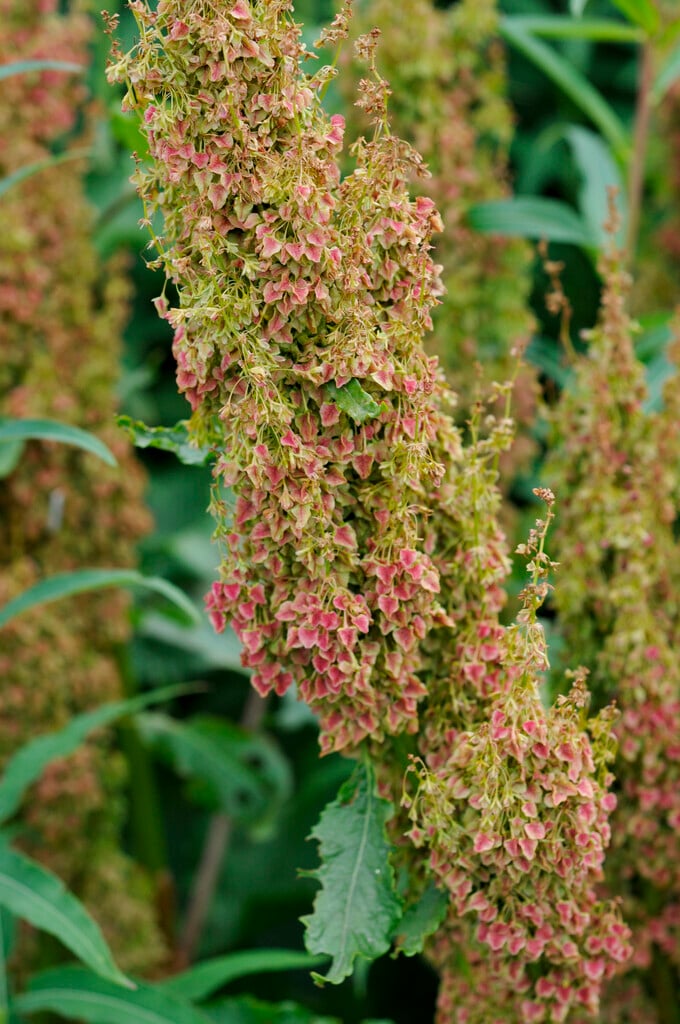
Rumex alpinus

RHS Plant Profile
monk's rhubarb
monk's rhubarb visionspictures.com

Other common names

mountain rhubarb

Bogs Herbaceous Perennial

A leafy, creeping rhizomatous herbaceous perennial dock to around 2m in height with very large, oval green leaves. It is mainly found on farmland, roadsides, areas of wasteland and in damper areas by streams and rivers. Pinkish-green flowers appear on tall, upright stems in July. Leaves are edible with a lemony taste but should not be eaten in large quantity. They also have medicinal properties

Position

Full sun, Partial shade

Soil Types

Chalk, Clay, Loam, Sand

Max Height

1.5-2.5 metres

Max Spread

0.1-0.5 metres

Size

Time to Maturity
1 year
Max Spread
0.1-0.5 metres
Max Height
1.5-2.5 metres

Growing Conditions

Chalk Clay Loam Sand
Moisture
Moist but well–drained or Well–drained
pH
Alkaline or Neutral

Position

Full sun Partial shade
Aspect
East–facing or South–facing or West–facing
Exposure
Exposed or Sheltered
Hardiness
H4

Botanical Details

Family
Polygonaceae
Native to GB/Ireland
Yes
Foliage
Deciduous
Habit
Clump forming
Potentially harmful
Harmful if eaten in large amounts. Wear gloves and other protective equipment when handling Pets: Harmful if eaten in large amounts - for further information and contact numbers regarding pets, see the HTA guide to potentially harmful plants
Genus
Rumex can be annuals, biennials or perennials with mostly basal, simple leaves and erect panicles or racemes of small greenish or reddish flowers followed by reddish-brown, triangular fruits
Name Status
Correct

How to Grow

Cultivation

Grows best in moist but well drained soil. Self-seeds freely and also spreads from the roots so can be difficult to control or eradicate. See the advice page on controlling sheep's sorrel for more details

Propagation

Propagate by seed

Suggested planting locations and garden types

  • Wildflower meadow

Pruning

No pruning required

Pests

May be susceptible to slugs and aphids

Diseases

Generally disease-free