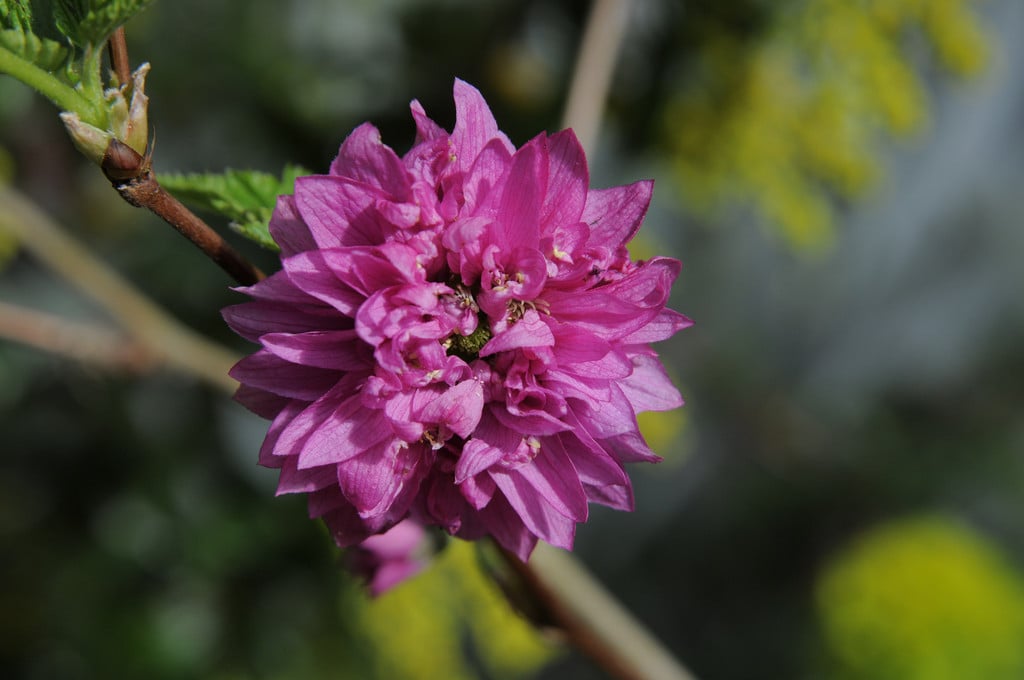
Rubus spectabilis 'Olympic Double' (d)

RHS Plant Profile
salmonberry 'Olympic Double'
salmonberry 'Olympic Double' RHS

Synonyms

Rubus spectabilis 'Flore Pleno'

Shrubs

'Olympic Double' is a thicket-forming shrub with upright prickly shoots and palmate leaves to 15cm long, composed of ovate, glossy, mid-green leaflets. Very showy, double bright purple-pink flowers 5cm across open in mid-spring

Position

Full sun

Soil Types

Chalk, Loam, Sand

Max Height

1.5-2.5 metres

Max Spread

1.5-2.5 metres

Size

Time to Maturity
5–10 years
Max Spread
1.5-2.5 metres
Max Height
1.5-2.5 metres

Growing Conditions

Chalk Loam Sand
Moisture
Moist but well–drained or Well–drained
pH
Acid or Alkaline or Neutral

Position

Full sun
Aspect
West–facing or South–facing or East–facing
Exposure
Exposed or Sheltered
Hardiness
H6

Colour & Scent

Season Stem Flower Foliage Fruit
Spring
Summer
Autumn
Winter

Botanical Details

Family
Rosaceae
Native to GB/Ireland
No
Foliage
Deciduous
Habit
Suckering
Genus
Rubus can be deciduous or evergreen shrubs, often scrambling with bristly or prickly stems bearing simple, lobed, palmate or pinnate leaves and 5-petalled flowers followed by juicy, sometimes edible fruits
Name Status
Accepted

How to Grow

Cultivation

This plant is listed on Schedule 9 of the UK Wildlife & Countryside Act as an invasive non-native species. Although not banned from sale, it is an offence to plant or cause these to grow in the wild in NORTHERN IRELAND and the REPUBLIC OF IRELAND. Gardeners possessing them should undertake measures to control them. See RHS advice on invasive non-native species for further information Grow in well-drained moderately fertile soil in full sun. This species is listed on Schedule 9 of The Wildlife (Northern Ireland) Order (1985) as amended, and on Schedule 3 of the EU (Birds and Natural Habitats) Regulations 2011 in the Republic of Ireland as an invasive non-native species. While this does not prevent it from being sold or being grown in gardens in Ireland, the RHS encourages those that do grow it to take great care with managing it and with disposing of unwanted material. The RHS also encourages gardeners to find alternative plants to grow to those listed

Propagation

Please see cultivation notes

Pests

Generally pest-free

Diseases

May be susceptible to grey moulds and honey fungus (rarely)