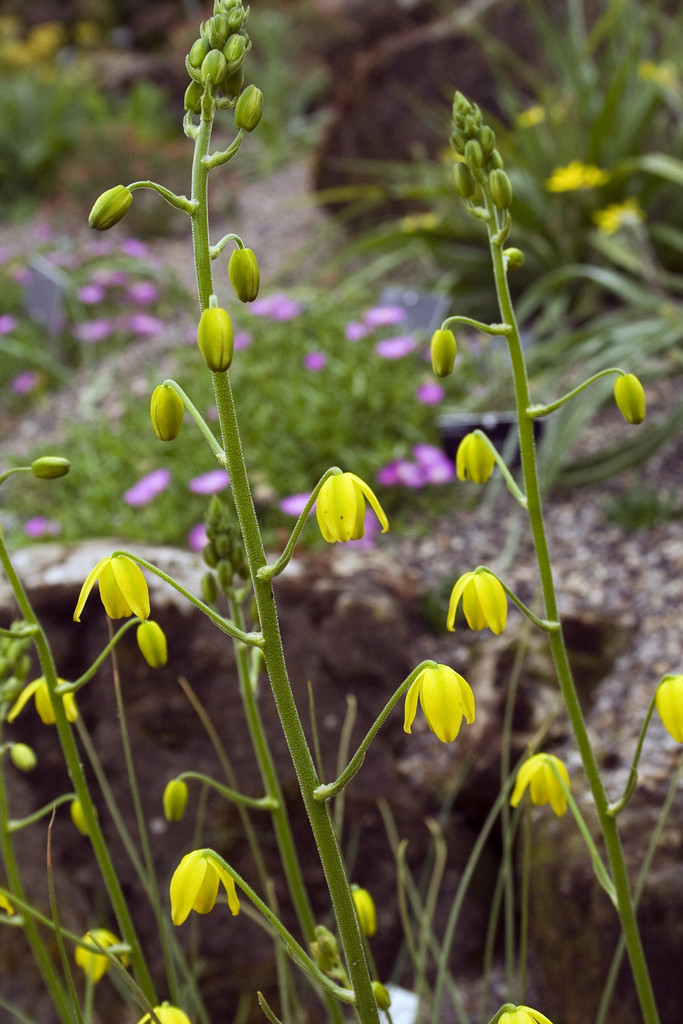
Albuca shawii

RHS Plant Profile
Shaw's albuca
Shaw's albuca RHS
Bulbs Herbaceous Perennial

A deciduous species with very narrow, fleshy, slightly sticky leaves and slender, erect flower stems, to 30cm, bearing many nodding, yellow flowers with green stripes for quite a long season in summer. Flowers are almond-scented, and foliage slightly aromatic

Position

Full sun

Soil Types

Chalk, Loam, Sand

Max Height

0.1-0.5 metres

Max Spread

0-0.1 metre

Size

Time to Maturity
2–5 years
Max Spread
0-0.1 metre
Max Height
0.1-0.5 metres

Growing Conditions

Chalk Loam Sand
Moisture
Well–drained
pH
Acid or Alkaline or Neutral

Position

Full sun
Aspect
South–facing
Exposure
Sheltered
Hardiness
H3

Colour & Scent

Fragrance Flower Foliage
Season Stem Flower Foliage Fruit
Spring
Summer
Autumn
Winter

Botanical Details

Family
Asparagaceae
Native to GB/Ireland
No
Foliage
Deciduous
Habit
Matforming
Potentially harmful
Harmful if eatenskin irritant. Wear gloves and other protective equipment when handling Pets (dogs, cats): Harmful if eatenskin irritant - see the HTA guide to potentially harmful plants for further information and useful contact numbers
Genus
Albuca are bulbous perennials with linear or narrowly lance-shaped leaves and loose racemes of yellow or white flowers, with three spreading tepals and three forming a tube, each often marked with green or brown on the reverse
Name Status
Correct
Plant Range
S Africa, Lesotho

How to Grow

Cultivation

Plant bulbs 8-10cm (3-4in) deep in spring. Any sunny position in a well-drained, fertile soil is suitable. Under glass, grow in containers of peat-free John Innes No 2 potting compost with added sharp sand and leafmould. A position in full light is ideal. Water moderately when the bulbs are in growth and apply a balanced liquid fertiliser monthly. When dormant, keep bulbs dry

Propagation

Propagate by seed at 13-18°C (55-64F) as soon as ripe or remove offsets when the plant is dormant

Suggested planting locations and garden types

  • Cottage and informal garden
  • Patio and container plants
  • Rock garden
  • City and courtyard gardens
  • Coastal
  • Gravel garden
  • Mediterranean climate plants
  • Flower borders and beds

Pruning

No pruning required

Pests

Generally pest-free

Diseases

Generally disease-free