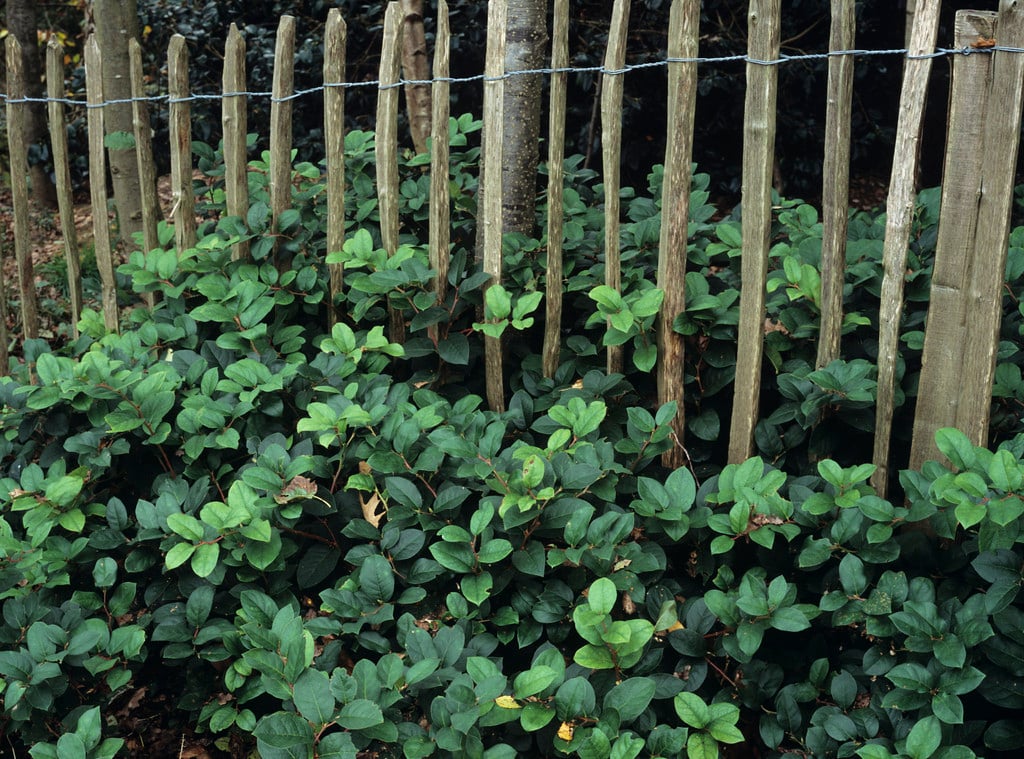
Gaultheria shallon

RHS Plant Profile
shallon
shallon RHS

Other common names

salal, shallon bush

Shrubs

An evergreen shrub that reaches around 1.2m tall and spreads by underground stems. It has heart-shaped or ovate leaves borne on bristly stems that are reddish when young becoming rough and brown with age. Small, pendant bell-shaped flowers in light pink and white appear in early summer. Hairy, dark-purple fruits ripen in late summer

Position

Full shade, Partial shade

Soil Types

Clay, Loam, Sand

Max Height

1-1.5 metres

Max Spread

0.5-1 metres

Size

Time to Maturity
5–10 years
Max Spread
0.5-1 metres
Max Height
1-1.5 metres

Growing Conditions

Clay Loam Sand
Moisture
Moist but well–drained or Well–drained
pH
Acid or Neutral

Position

Full shade Partial shade
Aspect
West–facing or East–facing or South–facing or North–facing
Exposure
Exposed or Sheltered
Hardiness
H5

Colour & Scent

Season Stem Flower Foliage Fruit
Spring
Summer
Autumn
Winter

Botanical Details

Family
Ericaceae
Native to GB/Ireland
No
Foliage
Evergreen
Habit
Suckering
Potentially harmful
Fruit are ornamental - not to be eaten. Although the fruit is edible, this plant is generally grown for ornamental purposes in nurseries and not for edible use. Wear gloves and other protective equipment when handling. Pets: Fruit are ornamental - not to be eaten - see the HTA guide to potentially harmful plants for further information and useful contact numbers
Genus
Gaultheria are evergreen, often dioecious, shrubs with simple, leathery leaves and small, bell-shaped white or pink flowers, followed by long lasting fleshy fruits in various colours
Name Status
Correct
Plant Range
Western N America

How to Grow

Cultivation

Grow in moist or dry acidic soils in shade or partial shade where it will make good groundcover. Can colonise when planted in the landscape, for example on heathland as game cover

Propagation

Propagate by seed or by division of plants. Pot up with soil attached for best results

Suggested planting locations and garden types

  • Cottage and informal garden
  • Gravel garden
  • Rock garden
  • City and courtyard gardens
  • Patio and container plants
  • Low Maintenance
  • Banks and slopes
  • Cut flowers
  • Flower borders and beds
  • Edible fruit

Pruning

Pruning group 8

Pests

Generally pest-free

Diseases

May be susceptible to honey fungus in gardens where it is present but insufficient data to determine degree of susceptibility