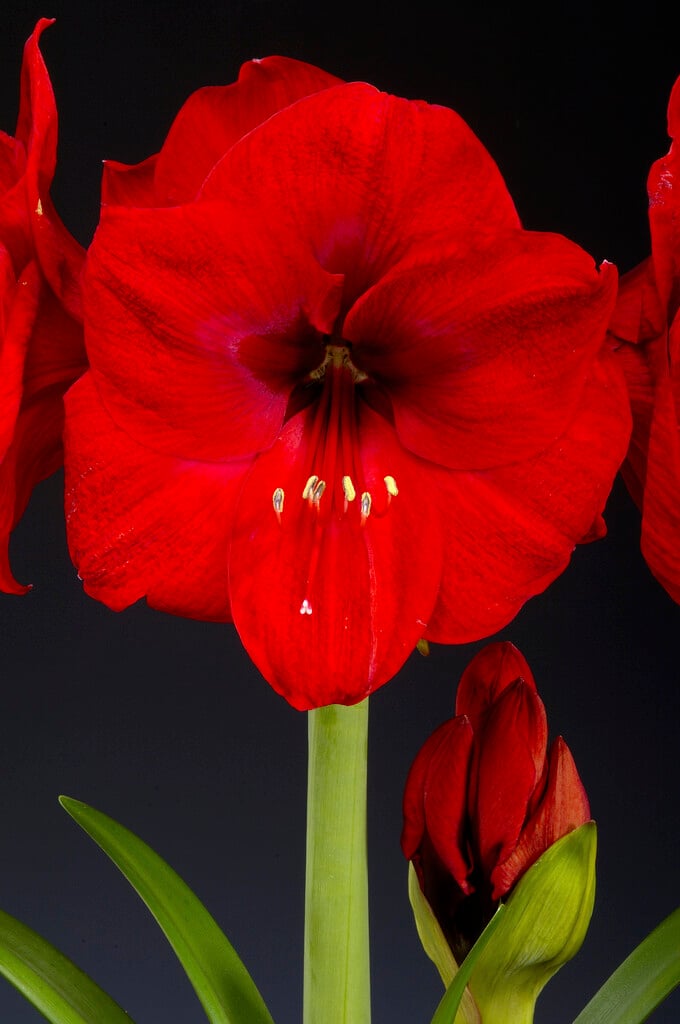
Hippeastrum (Galaxy Group) 'Red Lion'

RHS Plant Profile
amaryllis 'Red Lion'

Synonyms

Amaryllis 'Red Lion'

Award of Garden Merit
Bulbs Houseplants

A bulbous perennial most commonly grown as a winter-flowering pot plant. The large bulb produces 2-3 stout, upright stems, 60cm tall, each bearing 4-5 large, showy, crimson flowers

Position

Full sun, Partial shade

Soil Types

Loam

Max Height

0.1-0.5 metres

Max Spread

0.1-0.5 metres

Size

Time to Maturity
1–2 years
Max Spread
0.1-0.5 metres
Max Height
0.1-0.5 metres

Growing Conditions

Loam
Moisture
Moist but well–drained
pH
Acid or Alkaline or Neutral

Position

Full sun Partial shade
Aspect
East–facing or South–facing or West–facing
Exposure
Sheltered
Hardiness
H2

Colour & Scent

Season Stem Flower Foliage Fruit
Spring
Summer
Autumn
Winter

Botanical Details

Family
Amaryllidaceae
Native to GB/Ireland
No
Foliage
Deciduous
Habit
Columnar upright
Potentially harmful
Harmful if eaten. Wear gloves and other protective equipment when handling. Pets (dogs, cats): Harmful if eaten. For further information and contact numbers regarding pets, see the HTA guide to potentially harmful plants
Genus
Hippeastrum are deciduous bulbous perennials with slightly fleshy, strap-shaped leaves and stout, leafless stems bearing umbels of large, funnel-shaped flowers usually in winter or spring
Name Status
Accepted

How to Grow

Cultivation

Plant bulbs in autumn in peat-free, loam-based potting compost with the neck and shoulders above the soil surface. Place in bright filtered or full light and water sparingly until in active growth, then water freely and apply a dilute, balanced liquid fertiliser every 2 weeks. After flowering reduce watering as the leaves die off; keep dry when dormant. Pot on every 3-5 years in autumn. See hippeastrum cultivation and bulbs for Christmas flowering for further information

Propagation

Propagate by removing offsets in autumn. Sow seed as soon as ripe at 16-18°C; keep seedlings growing without a dormant period to encourage earlier flowering

Suggested planting locations and garden types

  • Houseplants
  • Conservatory and greenhouse
  • Cut flowers

Pruning

No pruning required

Pests

May be susceptible to bulb scale mite and large narcissus bulb fly

Diseases

May be susceptible to fungal diseases