 RHS
RHS Bulbs

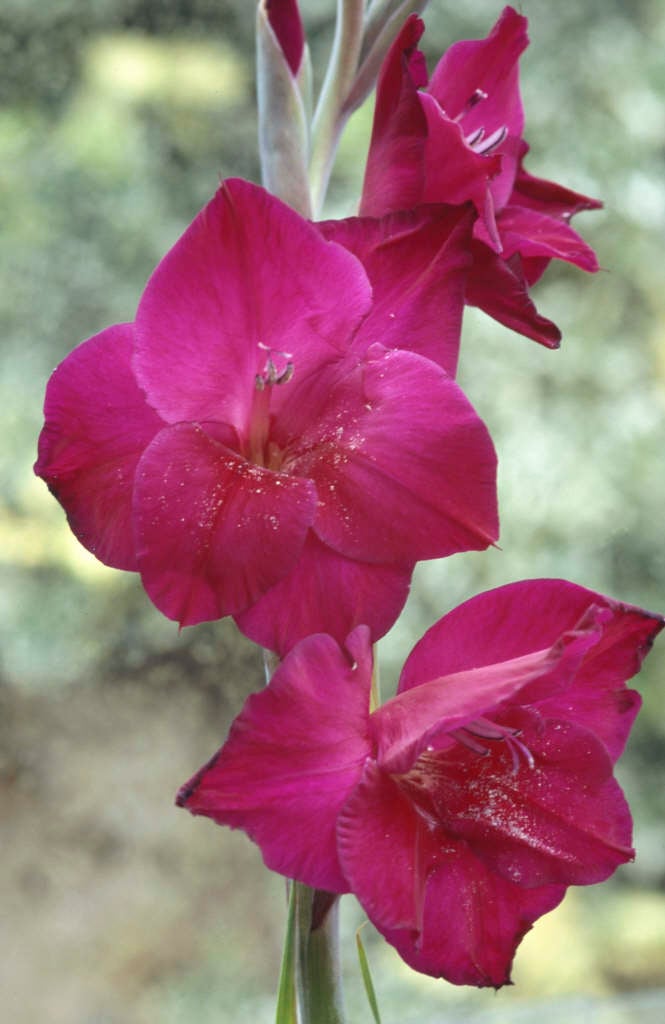
A tall cormous perennial with spikes of rich plum-purple flowers to 14cm across, in early and mid-summer
Position
Full sun
Soil Types
Chalk, Loam, Sand
Max Height
1-1.5 metres
Max Spread
0-0.1 metre
RHS A tall cormous perennial with spikes of rich plum-purple flowers to 14cm across, in early and mid-summer
1-1.5 metres
0-0.1 metre
| Season | Stem | Flower | Foliage | Fruit |
|---|---|---|---|---|
| Spring | ||||
| Summer | ||||
| Autumn | ||||
| Winter |
Plant 10 to 16cm deep on a bed of sharp sand in fertile, well-drained soil. Lift when foliage dies back, discard old corms and store new corms in a dry frost-free place until planting in the spring. In milder areas a thick dry winter mulch may suffice
Propagate by separating cormlets when dormant
No pruning required
May be susceptible to Gladiolus thrip, aphids and slugs
May be susceptible to gladiolus corm rot, grey moulds (Botrytis), Fusarium bulb rot, gladiolus core rot, gladiolus dry rot, gladiolus scab and neck rot, fungal leaf spot, and virus diseases