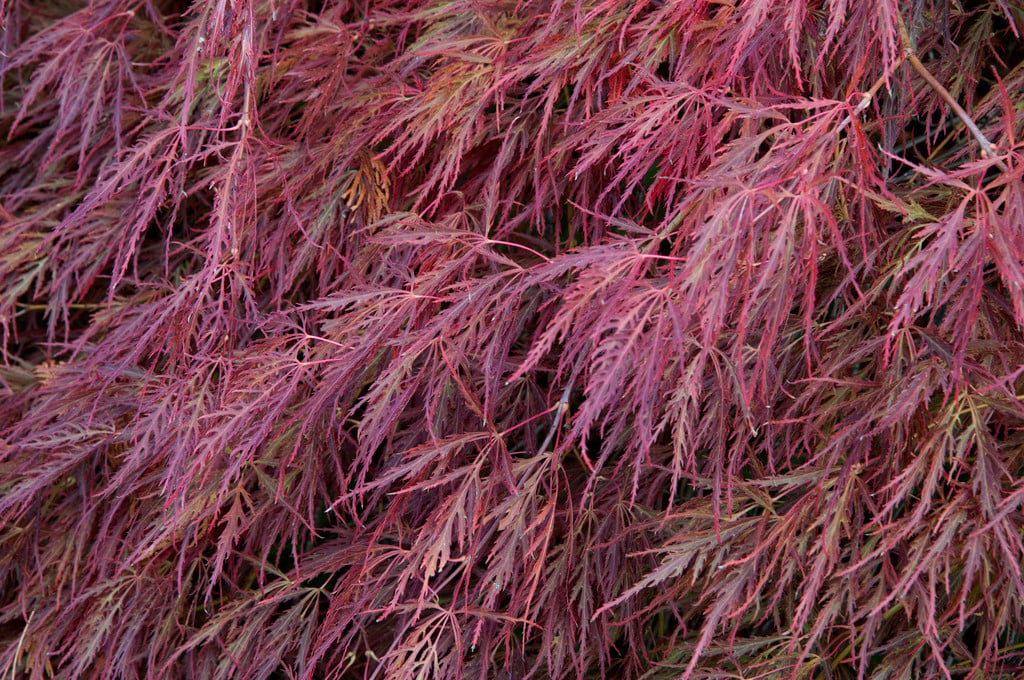
Acer palmatum 'Dissectum Nigrum' (D)

RHS Plant Profile
Japanese maple 'Dissectum Nigrum'
Japanese maple 'Dissectum Nigrum' RHS

Synonyms

Acer palmatum 'Dissectum Nigrum'
Acer palmatum 'Ever Red'

Shrubs

A small to medium-sized shrub with a dense, spreading habit that reaches a height of around 2.5m. The deeply-cut leaves emerge in spring covered with a silvery down and coloured a deep bronze to burgundy red, maturing to an olive green and bronze colour in summer before turning red in autumn. Small red flowers in spring are followed by winged fruits in autumn

Position

Full sun, Partial shade

Soil Types

Clay, Loam

Max Height

1.5-2.5 metres

Max Spread

1.5-2.5 metres

Size

Time to Maturity
10–20 years
Max Spread
1.5-2.5 metres
Max Height
1.5-2.5 metres

Growing Conditions

Clay Loam
Moisture
Moist but well–drained
pH
Acid or Neutral

Position

Full sun Partial shade
Aspect
West–facing or East–facing or South–facing
Exposure
Sheltered
Hardiness
H6

Colour & Scent

Season Stem Flower Foliage Fruit
Spring
Summer
Autumn
Winter

Botanical Details

Family
Sapindaceae
Native to GB/Ireland
No
Foliage
Deciduous
Habit
Bushy
Genus
Acer can be deciduous trees or large shrubs with paired, often palmately-lobed leaves and small flowers followed by characteristic winged fruits. Many have fine autumn colour, and some have ornamental stems
Name Status
Accepted
Horticultural Group
Acers in this dissectum group have fine, feathery, deeply divided leaves with finely serrated edges

How to Grow

Cultivation

Grow in a moist but well-drained soil. Water in summer if necessary. Leaf colour is best in partial shade, although full sun can be tolerated. Leaf scorch can be caused by lack of soil moisture, drying winds or late spring frost. See Japanese maple cultivation

Propagation

Propagate by grafting or softwood cuttings

Suggested planting locations and garden types

  • Architectural
  • Cottage and informal garden
  • Patio and container plants
  • City and courtyard gardens
  • Rock garden
  • Low Maintenance

Pruning

Pruning group 1

Pests

May be susceptible to Acer gall mite, aphids, caterpillars and horse chestnut scale

Diseases

May be susceptible to Verticillium wilt and a canker