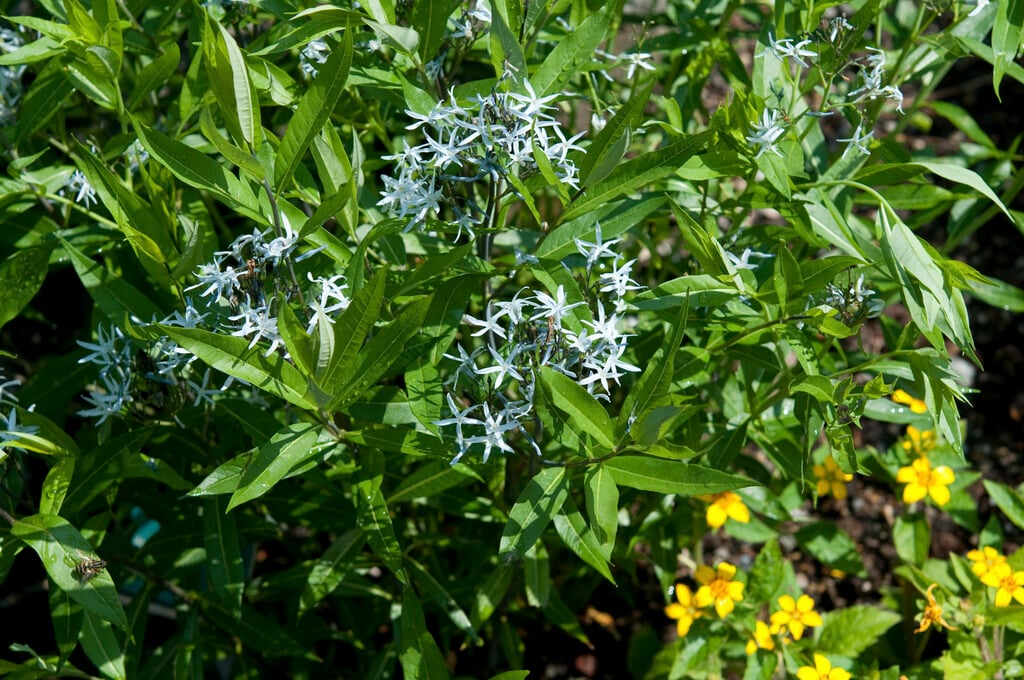
Apocynum androsaemifolium

RHS Plant Profile
American flytrap
American flytrap visionspictures.com

Other common names

American ipecac, black Indian hemp, buckbrush, common dogbane, honeybloom, spreading dogbane, wandering milkweed, western wallflower, wild ipecac, American ipecacuanha, bitter root, catchfly, milkweed, rheumatism root

Herbaceous Perennial

Bushy, branching perennial about 75cm tall, the spreading dogbane, native to North American wild areas. Opposite, oval, mid-green leaves and small clusters of fragrant, small, pink, bell-shaped flowers striped inside with darker pink, borne near the branch tips during summer are followed by seed pods containing silky-haired seeds

Position

Full sun, Partial shade

Soil Types

Chalk, Loam, Sand

Max Height

0.5-1 metres

Max Spread

0.1-0.5 metres

Size

Time to Maturity
2–5 years
Max Spread
0.1-0.5 metres
Max Height
0.5-1 metres

Growing Conditions

Chalk Loam Sand
Moisture
Well–drained
pH
Acid or Alkaline or Neutral

Position

Full sun Partial shade
Aspect
East–facing or South–facing or West–facing
Exposure
Exposed or Sheltered
Hardiness
H6

Colour & Scent

Season Stem Flower Foliage Fruit
Spring
Summer
Autumn
Winter

Botanical Details

Family
Apocynaceae
Native to GB/Ireland
No
Foliage
Deciduous
Habit
Bushy
Potentially harmful
All parts of the plant are highly toxic if eaten and toxins may be absorbed through skin contact with the milky sapwear gloves and other protective equipment when handling
Genus
A small genus of bushy, herbacious perennials, native to North America, temperate Asia and southeastern Europe, with lance-shaped or oval green foliage and clusters of bell-shaped greenish-white to pink-purple red flowers which may be fragrant
Name Status
Correct

How to Grow

Cultivation

Widely distributed through North America where it can be invasive in some instances, Grow in any well-drained soil in full sun or part shade

Propagation

Propagate by seed

Suggested planting locations and garden types

  • Cottage and informal garden
  • Prairie planting
  • Wildlife gardens

Pruning

No pruning required

Pests

Generally pest-free

Diseases

Generally disease-free