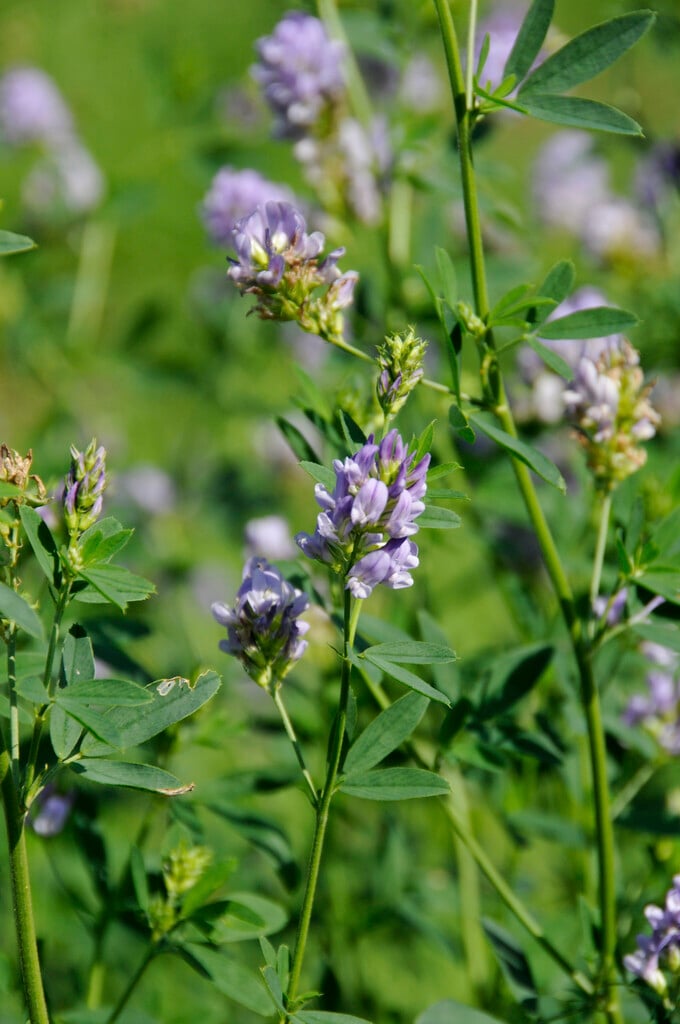
Medicago sativa

RHS Plant Profile
lucerne
lucerne visionspictures.com

Other common names

afalfa, alfafa, alfalfa, American buffalo grass, Burgundy trefoil, common medick, holy hay, purple medick, sainfoin, saintfoin

Herbaceous Perennial Annual Biennial

Also known as 'alfalfa'or 'purple medic' this herbaceous perennial legume with a deep tap-root and clover-like green foliage produces small purple flowers in the summer followed by flat pea-like fruits. Used in many countries as animal food or as a green crop as it improves nutrient levels in the soil and also soil quality by reducing compaction, also reducing the need for synthetic fertilisers

Position

Full sun, Partial shade

Soil Types

Chalk, Clay, Loam, Sand

Max Height

0.5-1 metres

Max Spread

0.5-1 metres

Size

Time to Maturity
1–2 years
Max Spread
0.5-1 metres
Max Height
0.5-1 metres

Growing Conditions

Chalk Clay Loam Sand
Moisture
Moist but well–drained or Well–drained
pH
Acid or Alkaline or Neutral

Position

Full sun Partial shade
Aspect
East–facing or North–facing or South–facing or West–facing
Exposure
Exposed or Sheltered
Hardiness
H7

Colour & Scent

Season Stem Flower Foliage Fruit
Spring
Summer
Autumn
Winter

Botanical Details

Family
Fabaceae
Native to GB/Ireland
Yes
Foliage
Deciduous
Habit
Bushy
Genus
Medicago are annuals, perennials or small shrubs. Leaves have three leaflets and may be light, yellow-, mid- or blue-green. Their short sprays of pea-like flowers are attractive to bees and butterflies
Name Status
Correct

How to Grow

Cultivation

Will grow in most situations including poor, dry soil

Propagation

Propagate from seed sown in autumn

Suggested planting locations and garden types

  • Wildflower meadow
  • Wildlife gardens

Pruning

No pruning required

Pests

May be susceptible to alfalfa weevil, leafhoppers and spotted aphids

Diseases

May be susceptible to bacterial wilt