Kennedia nigricans

RHS Plant Profile
black bean
black bean RHS 2003

Other common names

black coral pea

Climber Wall Shrub Conservatory Greenhouse

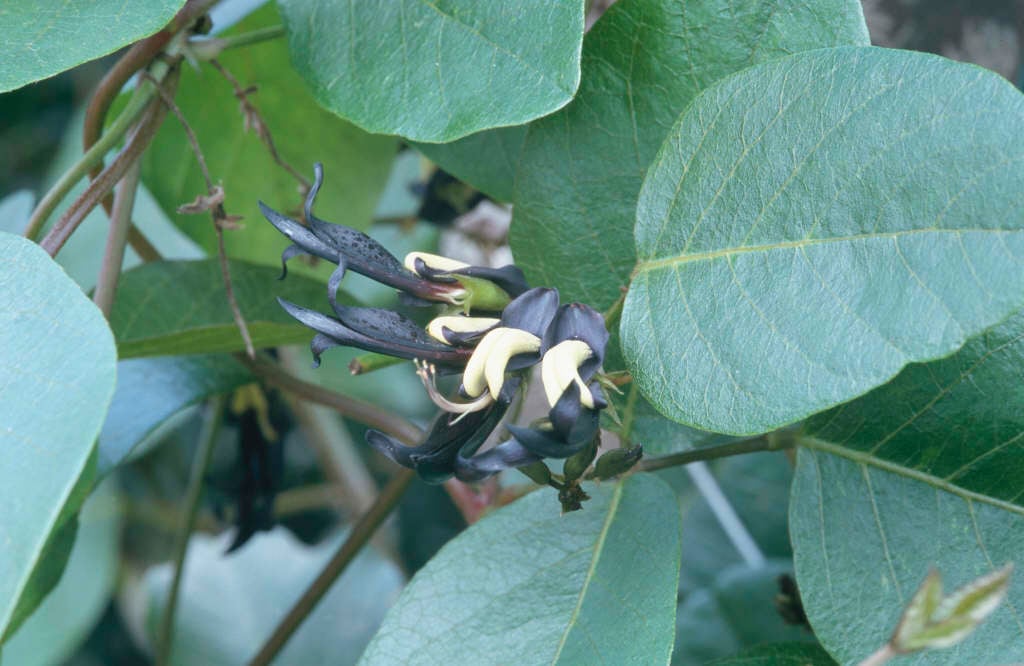
A vigorous twining climber with trifoliate, dark green leaves and axillary racemes of blackish-purple pea-like flowers 3cm across, marked yellow on the standard petal, in late winter and spring

Position

Partial shade

Soil Types

Chalk, Loam, Sand

Max Height

1.5-2.5 metres

Max Spread

0.5-1 metres

Size

Time to Maturity
5–10 years
Max Spread
0.5-1 metres
Max Height
1.5-2.5 metres

Growing Conditions

Chalk Loam Sand
Moisture
Moist but well–drained
pH
Acid or Alkaline or Neutral

Position

Partial shade
Aspect
South–facing
Exposure
Sheltered
Hardiness
H1C

Colour & Scent

Season Stem Flower Foliage Fruit
Spring
Summer
Autumn
Winter

Botanical Details

Family
Fabaceae
Native to GB/Ireland
No
Foliage
Deciduous
Habit
Climbing
Genus
Kennedia can be herbaceous or woody, twining climbers with trifoliate leaves and pea-like flowers which may be solitary, in pairs, umbels or racemes in the leaf axils
Name Status
Correct
Plant Range
W Australia

How to Grow

Cultivation

Grow outdoors in fertile, moist but well-drained soil in partial shade in a frost-free area with shelter from cold drying winds. Will grow well in poor sandy soil. Grow under glass in peat-free, loam-based compost with added sharp sand in bright filtered light

Propagation

Propagate by seed

Suggested planting locations and garden types

  • Coastal
  • Low Maintenance
  • Wall side borders

Pests

May be susceptible to glasshouse red spider mite and glasshouse whitefly under glass

Diseases

May be susceptible to honey fungus in gardens where it is present but insufficient data to determine degree of susceptibility