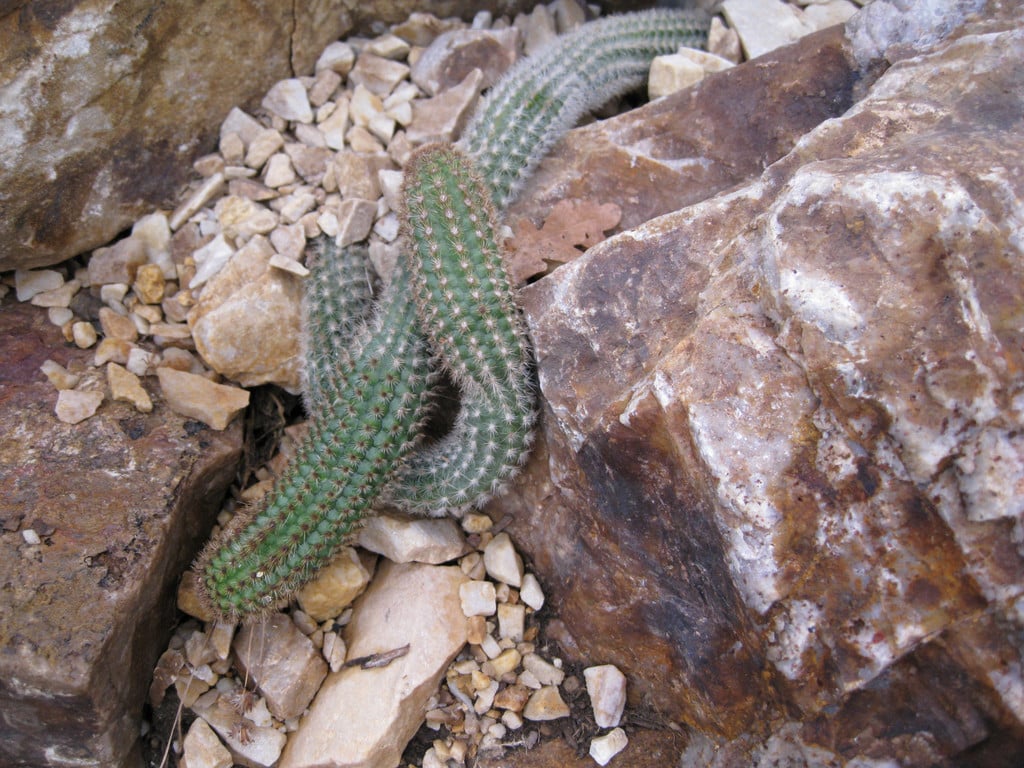
Cleistocactus samaipatanus

<em>Cleistocactus</em> <em>samaipatanus</em> RHS

Synonyms

Bolivicereus samaipatanus
Borzicactus samaipatanus
Akersia rosieflora

Award of Garden Merit
Cactus Succulent Conservatory Greenhouse

A tall, narrow, columnar cactus, with light green stems, bearing 14 – 17 ribs and stiff pale yellow spines 0.5 – 3 cm long. Mature plants branch freely from the base, producing several upright stems to 1.5 m high, with each stem up to 5 cm in diameter. The flowers are brilliant red, to 5 cm (2 in) long and 2.5 cm (1 in) wide. The reddish fruits are small and spherical, to 1cm long and wide, bearing dense white and brown hairs

Position

Full sun

Soil Types

Loam, Sand

Max Height

1-1.5 metres

Max Spread

0.5-1 metres

Size

Time to Maturity
10–20 years
Max Spread
0.5-1 metres
Max Height
1-1.5 metres

Growing Conditions

Loam Sand
Moisture
Well–drained
pH
Acid or Alkaline or Neutral

Position

Full sun
Aspect
South–facing or East–facing or West–facing
Exposure
Sheltered
Hardiness
H2

Colour & Scent

Season Stem Flower Foliage Fruit
Spring
Summer
Autumn
Winter

Botanical Details

Family
Cactaceae
Native to GB/Ireland
No
Foliage
Evergreen
Habit
Columnar upright
Genus
Cleistocactus are erect columnar cacti with ribbed, eventually branched, cylindrical stems bearing dense spines and tubular flowers
Name Status
Correct
Plant Range
Bolivia

How to Grow

Cultivation

Grow under glass in a standard cactus compost, in full light. Provide low humidity. Water freely when in growth and keep completely dry at other times. Apply a dilute low nitrogen fertilizer fortnightly during late spring and summer

Propagation

Propagate by seed or stem cuttings

Suggested planting locations and garden types

  • Architectural
  • Patio and container plants
  • Low Maintenance

Pruning

No pruning required

Pests

May be susceptible to glasshouse red spider mite, glasshouse whitefly and mealybugs

Diseases

Generally disease-free