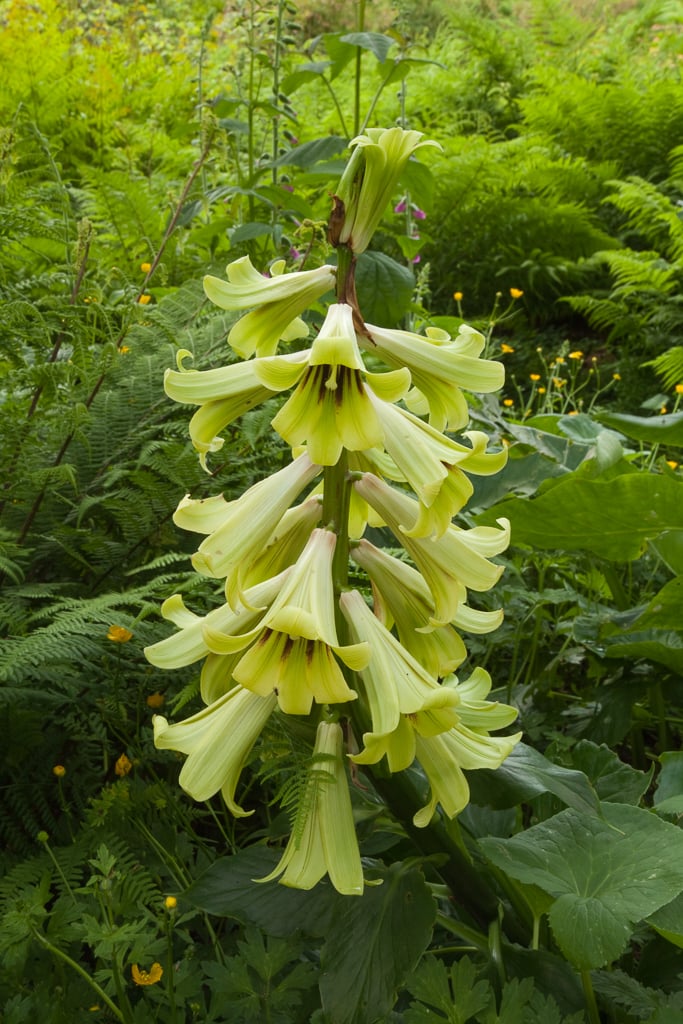
Cardiocrinum giganteum var. yunnanense

<em>Cardiocrinum</em> <em>giganteum</em> var. <em>yunnanense</em> John Fielding

Synonyms

Cardiocrinum var. yunnanense

Bulbs

A bulbous perennial with basal rosettes of large, glossy, purple-green leaves to 45cm long. Smaller leaves are produced on the 3m tall, purple flower stems. In summer up to 20 trumpet-shaped, strongly-scented flowers are produced; the petals are white with a green flush and maroon stripes within

Position

Partial shade

Soil Types

Chalk, Clay, Loam, Sand

Max Height

2.5-4 metres

Max Spread

0.1-0.5 metres

Size

Time to Maturity
2–5 years
Max Spread
0.1-0.5 metres
Max Height
2.5-4 metres

Growing Conditions

Chalk Clay Loam Sand
Moisture
Moist but well–drained
pH
Acid or Alkaline or Neutral

Position

Partial shade
Aspect
East–facing or North–facing or South–facing or West–facing
Exposure
Sheltered
Hardiness
H5

Colour & Scent

Fragrance Flower
Season Stem Flower Foliage Fruit
Spring
Summer
Autumn
Winter

Botanical Details

Family
Liliaceae
Native to GB/Ireland
No
Foliage
Deciduous
Habit
Columnar upright
Genus
Cardiocrinum are large bulbous perennials with heart-shaped leaves and trumpet-shaped flowers resembling lilies, folowed by erect oblong seed capsules. Monocarpic, the bulbs dying after flowering
Name Status
Correct
Plant Range
W. and C. China

How to Grow

Cultivation

Plant bulbs just below the soil surface in autumn, in a cool, partially shaded, sheltered site in deep, fertile, humus-rich, moist but well-drained soil. Water freely in dry conditions and apply a balanced liquid fertiliser 2-3 times when in growth. Topdress annually with leaf mould. Provide a deep winter mulch

Propagation

Propagate by seed sown in deep trays in a cool, shaded bulb frame as soon as ripe. Remove offsets after flowering. Offsets may take 4-5 years to flower; seed raised plants take 7 years or more

Suggested planting locations and garden types

  • Architectural
  • Flower borders and beds
  • Wall side borders

Pruning

No pruning required

Pests

May be susceptible to slugs

Diseases

May be susceptible to lily viruses