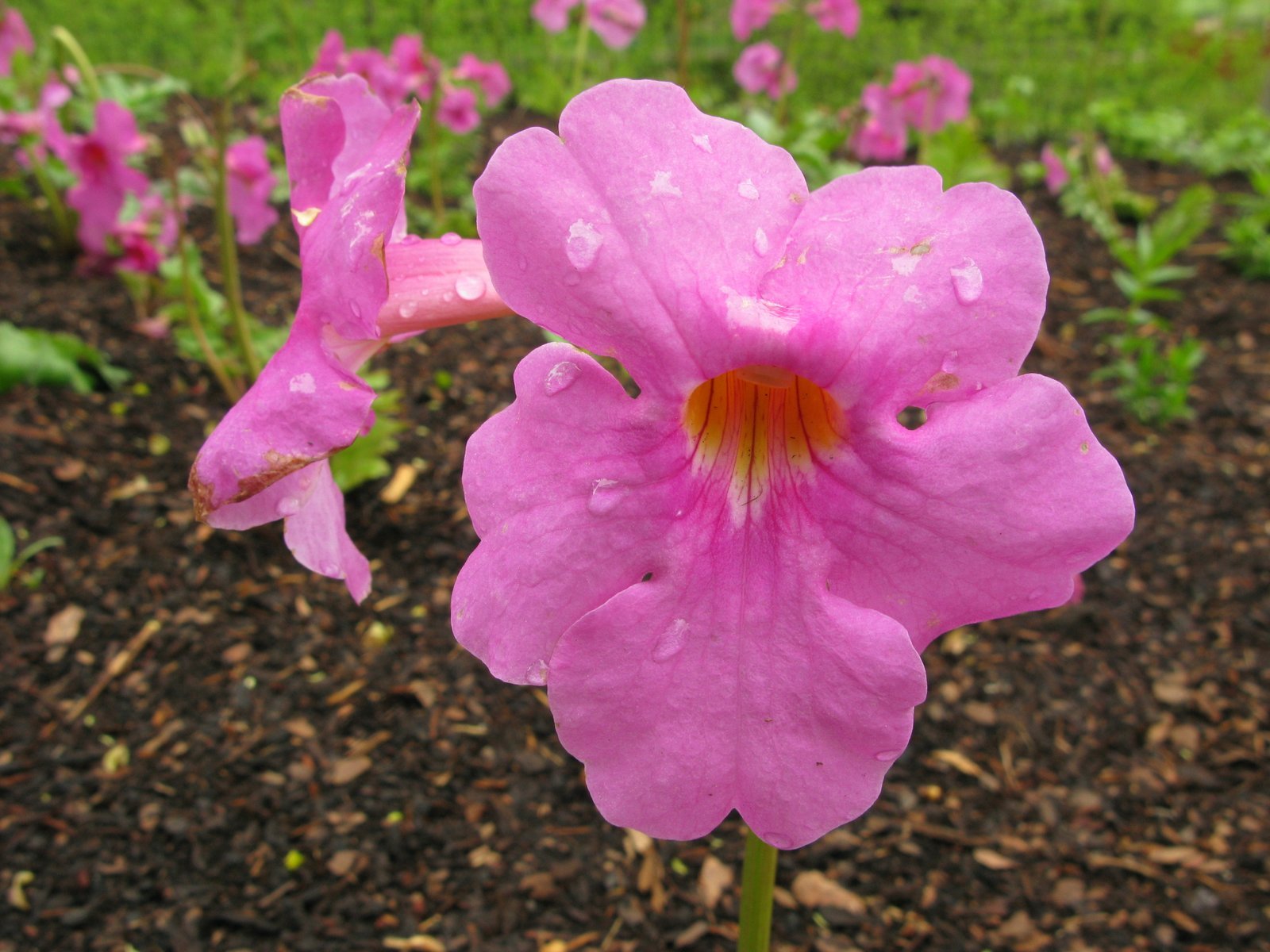
Incarvillea delavayi

RHS Plant Profile
Delavay hardy gloxinia
Delavay hardy gloxinia Janet Cubey

Other common names

Chinese trumpet flower, flowering fern

Herbaceous Perennial

A herbaceous perennial producing a basal rosette of leaves up to 30cm long, with six or more pairs of leaflets. Clusters of showy, trumpet-shaped, deep pink flowers with a yellow throat appear in early and mid-summer

Position

Full sun

Soil Types

Chalk, Loam, Sand

Max Height

0.5-1 metres

Max Spread

0.1-0.5 metres

Size

Time to Maturity
2–5 years
Max Spread
0.1-0.5 metres
Max Height
0.5-1 metres

Growing Conditions

Chalk Loam Sand
Moisture
Moist but well–drained
pH
Acid or Alkaline or Neutral

Position

Full sun
Aspect
East–facing or West–facing
Exposure
Sheltered
Hardiness
H5

Colour & Scent

Season Stem Flower Foliage Fruit
Spring
Summer
Autumn
Winter

Botanical Details

Family
Bignoniaceae
Native to GB/Ireland
No
Foliage
Deciduous
Habit
Bushy
Genus
Incarvillea are annuals or perennials grown for their tubular, trumpet-shaped flowers. Some species are suited to rock gardens whilst others can be grown in a mixed, herbaceous border.
Name Status
Correct
Plant Range
SW China

How to Grow

Cultivation

Grow in fertile, moist but well-drained soil in full sun, but ideally with some summer shade. Will not tolerate winter wet. Mulch over crown in cold areas

Propagation

Propagate by seed, or take basal stem cuttings in spring

Suggested planting locations and garden types

  • Cottage and informal garden
  • Patio and container plants
  • City and courtyard gardens
  • Flower borders and beds

Pruning

Cut back at the end of the season

Pests

May be susceptible to slugs and snails

Diseases

Generally disease-free