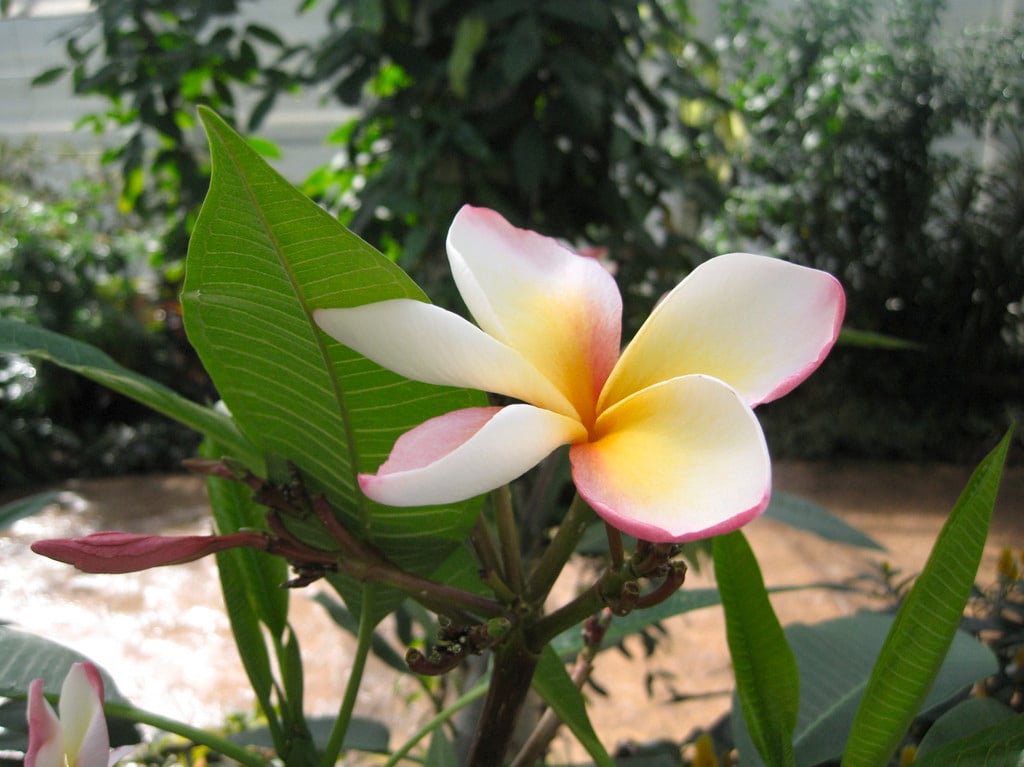
Plumeria rubra

RHS Plant Profile
frangipani
frangipani RHS

Other common names

jasmine mango, red nosegay tree, temple flower, temple tree, West Indian jasmine, pagoda tree

Award of Garden Merit
Conservatory Greenhouse

A deciduous shrub with few succulent branches bearing oblong leaves to 40cm long, and terminal panicles of highly fragrant, yellow-centred rose-pink flowers to 9cm across, in late summer and autumn

Position

Full sun

Soil Types

Loam, Sand

Max Height

2.5-4 metres

Max Spread

1.5-2.5 metres

Size

Time to Maturity
10–20 years
Max Spread
1.5-2.5 metres
Max Height
2.5-4 metres

Growing Conditions

Loam Sand
Moisture
Well–drained
pH
Acid or Alkaline or Neutral

Position

Full sun
Aspect
South–facing or East–facing or West–facing
Exposure
Sheltered
Hardiness
H1B

Colour & Scent

Fragrance Flower
Season Stem Flower Foliage Fruit
Spring
Summer
Autumn
Winter

Botanical Details

Family
Apocynaceae
Native to GB/Ireland
No
Foliage
Deciduous
Habit
Bushy
Potentially harmful
Harmful if eatenskin/eye irritant. Wear gloves and other protective equipment when handling Pets: Harmful if eatenskin/eye irritant - see the HTA guide to potentially harmful plants for further information and useful contact numbers
Genus
Plumeria can be deciduous or semi-evergreen shrubs or small trees, with succulent stems bearing simple leaves towards the apex, and fragrant, salver-shaped flowers in terminal clusters in summer and autumn
Name Status
Correct
Plant Range
Mexico to Panama

How to Grow

Cultivation

Grow under glass in a well-drained, peat-free, loam-based compost with the addition of extra grit or sharp sand. Provide full light and a minimum temperature of 10°C (50F). Water moderately when in growth, but keep almost dry during the winter months. Feed once a month with a balanced liquid fertilser during the growing season

Propagation

Propagate by seed sown in containers at 18°C (64F) in spring. Take ripe cuttings of leafless stem tips in early spring. Allow these to dry thoroughly at the base before inserting them into the rooting medium

Suggested planting locations and garden types

  • Patio and container plants

Pruning

When grown under glass, size may be reduced by pruning back to a branch junction or fork in early spring. Wounds can be prone to rotting however so pruning should be kept to a minimum. Mature plants do not respond well to renovation

Pests

May be susceptible to glasshouse red spider mite

Diseases

May be susceptible to rot in cold conditions