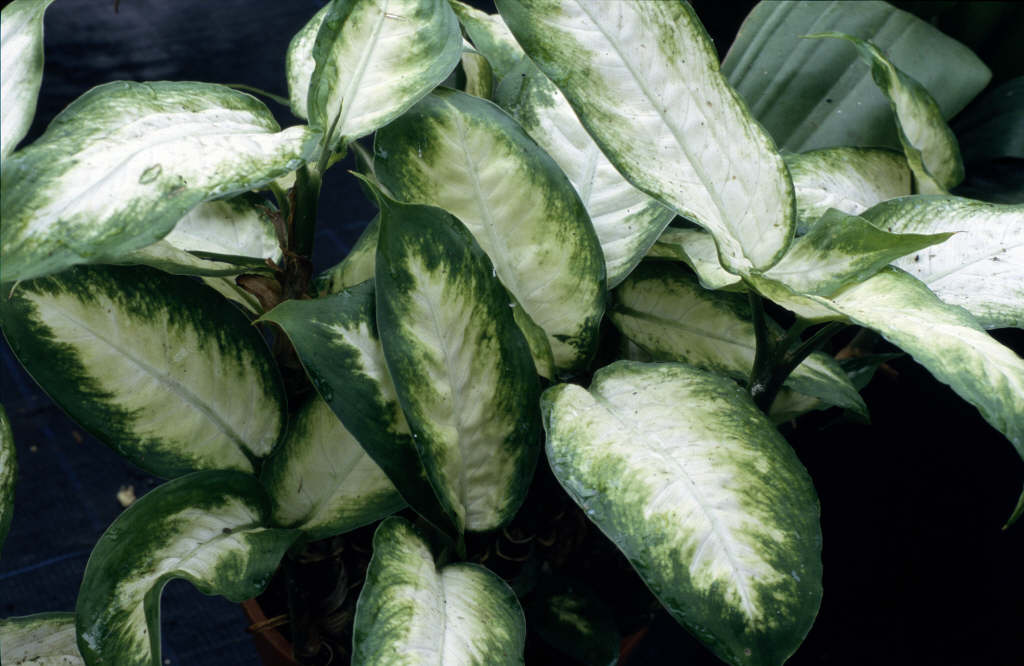
Dieffenbachia 'Camille' (v)

RHS Plant Profile
dumb cane 'Camille'
dumb cane 'Camille' RHS 2002
Award of Garden Merit
Conservatory Greenhouse Houseplants

A perennial growing to about 80cm, with cream leaves to 40cm in length, edged with bright green

Position

Partial shade

Soil Types

Chalk, Clay, Loam, Sand

Max Height

0.5-1 metres

Max Spread

0.5-1 metres

Size

Time to Maturity
2–5 years
Max Spread
0.5-1 metres
Max Height
0.5-1 metres

Growing Conditions

Chalk Clay Loam Sand
Moisture
Moist but well–drained
pH
Acid or Alkaline or Neutral

Position

Partial shade
Aspect
South–facing or West–facing or East–facing
Exposure
Sheltered
Hardiness
H1A

Colour & Scent

Season Stem Flower Foliage Fruit
Spring
Summer
Autumn
Winter

Botanical Details

Family
Araceae
Native to GB/Ireland
No
Foliage
Evergreen
Habit
Bushy
Potentially harmful
TOXIC if eatenskin/eye irritant. Wear gloves and other protective equipment when handling TOXIC to pets - see the HTA guide to potentially harmful plants for further information and useful contact numbers
Genus
Dieffenbachia are evergreen perennials with large, ovate leaves which are usually attractively mottled with white or yellow; flowering spathes are seldom produced in cultivation
Name Status
Accepted

How to Grow

Cultivation

Under glass grow in peat-free, loam-based potting compost in bright filtered light with high humidity. Water moderately and apply a balanced liquid fertiliser monthly when in growth and keep just moist in winter

Propagation

Propagate by root tip cuttings in spring or summer or by air layering

Suggested planting locations and garden types

  • Patio and container plants
  • Low Maintenance

Pruning

No pruning required

Pests

May be susceptible to aphids

Diseases

Generally-disease free