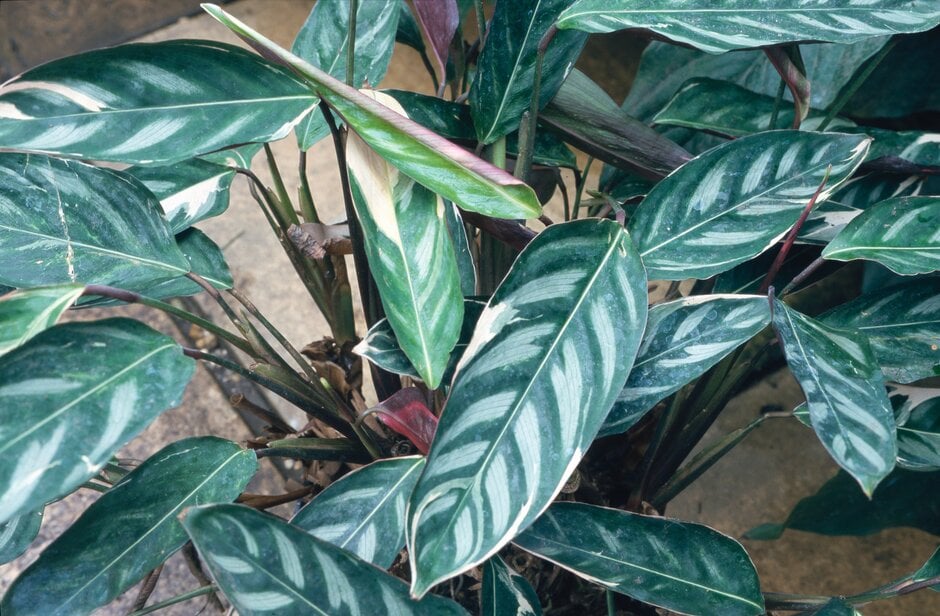
Ctenanthe oppenheimiana

<em>Ctenanthe</em> <em>oppenheimiana</em> RHS

Synonyms

Calathea oppenheimiana

Conservatory Greenhouse Houseplants

A vigorous, bushy evergreen perennial about 1m tall, with lance-shaped, dark green leathery leaves marked with V-shaped silvery patterns, wine-red beneath. Produces spikes of white flowers randomly through the year. Image shows Ctenanthe oppenheimiana 'Tricolor'

Position

Partial shade

Soil Types

Loam

Max Height

0.5-1 metres

Max Spread

0.5-1 metres

Size

Time to Maturity
5–10 years
Max Spread
0.5-1 metres
Max Height
0.5-1 metres

Growing Conditions

Loam
Moisture
Moist but well–drained
pH
Acid or Alkaline or Neutral

Position

Partial shade
Aspect
East–facing or West–facing
Exposure
Sheltered
Hardiness
H1B

Colour & Scent

Season Stem Flower Foliage Fruit
Spring
Summer
Autumn
Winter

Botanical Details

Family
Marantaceae
Native to GB/Ireland
No
Foliage
Evergreen
Habit
Bushy
Genus
Ctenanthe are bushy evergreen perennials grown for their usually strikingly patterned, lance-shape to obovate leaves; irregular and usually inconspicuous tubular white or yellow flowers are borne in short racemes intermittently throughout the year
Name Status
Correct
Plant Range
Brazil

How to Grow

Cultivation

Grow indoors in a peat-free, loam-based potting compost (JI No.2) in bright, indirect light. Water freely and apply a general liquid fertiliser monthly from spring to summer. Provide high humidity by placing the container on a tray of moist gravel. Water to keep compost moist in winter, and keep draught-free at a constant temperature. Repot annually in late spring or early summer. See houseplant cultivation for further advice

Propagation

Propagate by seed sown at 19 to 24°C in spring as soon as ripe, or by division in spring

Suggested planting locations and garden types

  • Houseplants
  • Sub-tropical
  • Conservatory and greenhouse

Pruning

No pruning required

Pests

May be susceptible to mealybugs

Diseases

Generally disease-free